
Nurture Development Managing Director, Cormac Russell, explains what Asset-Based Community Development (ABCD) is. Nurture Development. [3’28”]
The Indigenous world view vs. Western world view
March 6, 2021 by
How we see the world determines how we act. Western thought sees us at war with each other over resources. Indigenous philosophy, we are all related as individuals in balance with nature. wc nativenews. [5’26”]
Owning One’s Past and Committing to One’s Future
March 6, 2021 by
Michael Chandler speaks about the eight variables that affect owning one’s past and committing to one’s future, especially as they relate to Aboriginal communities and the preservation of culture. TRU, Open Learning. [2’58”]
The Stolen Generations
March 6, 2021 by
The history of forced removal of Aboriginal and Torres Strait Islander children from their families in Australia. National Museum of Australia. [18’00”]
Don Coyhis: 2009 Purpose Prize Winner
March 6, 2021 by
Don Coyhis developed the grassroots Wellbriety Movement that provides culturally based healing for Indigenous people. The mission of The Wellbriety Movement is to disseminate culturally based principles, values, and teachings to support healthy community development and servant leadership, and to support healing from alcohol, substance abuse, co-occurring disorders, and intergenerational trauma. Encore.org. [3’12”]
Sustainable community development: from what’s wrong to what’s strong | Cormac Russell | TEDxExeter
March 6, 2021 by
How can we help people to live a good life? Instead of trying to right what’s wrong within a community Cormac argues we need to start with what’s strong. We need to help people discover what gifts they have and to use those gifts to enrich those around them. TEDx Talks. [18’07”]
Bringing them home: separation of Aboriginal and Torres Strait Islander children from their families
March 6, 2021 by
This resource is based on ‘Bringing them home’ , the report of the National Inquiry into the Separation of Aboriginal and Torres Strait Islander Children from Their Families, and on the history of forcible separation and other policies which have impacted on the lives of Indigenous Australians. Australian Human Rights Commission. [32’29”]
My stolen childhood, and a life to rebuild | Sheila Humphries | TEDxPerth
March 6, 2021 by
“This story is not a pretty one” begins Sheila Humphries who, as a child, was taken from her parents and placed in an orphanage by authorities who thought they knew best. One voice of the stolen Generation, Sheila, with many other indigenous Australian children, suffered cruelty and neglect that has shaped her as an adult, for good and for ill. The effects are still writ large on Sheila’s life and it’s a part of Australian history we must never forget. TEDx Talks. [14’50”]
Brené Brown on Empathy
March 6, 2021 by
What is the best way to ease someone’s pain and suffering? In this beautifully animated RSA Short, Dr Brené Brown reminds us that we can only create a genuine empathic connection if we are brave enough to really get in touch with our own fragilities. RSA. [2’52’]
Shocking history impacts on health and wellbeing
March 6, 2021 by
For generations, Aboriginal people have been fearful of a particular area of the river in York, Western Australia. Marion Kickett, Director of the Centre for Aboriginal Studies at Curtin University in Perth, reveals shocking events that have generated this fear and describes how such they still influence how some Aboriginal people behave in health settings. Sharing Culture. [9’04”]
‘What is Recovery?: David Best
March 4, 2021 by
 Here is a blog I wrote about David Best in May 2013. At that time, he had done a huge amount for the addiction recovery field and for the Recovery Movements in the UK and Australia, in terms of his research, writings, advocacy and a wide range of other recovery-based activities. Where he gets his energy from, I have no idea?
I thought it was worth showing what David thinks about the question, ‘What is Recovery’. I’ve followed his arguments and included quotes from his excellent book, Addiction Recovery: A Movement for Social Change and Personal Growth in the UK.
Read More ➔
Why the Need for Recovery-based Care?
March 4, 2021 by
 A resonating message I have picked from many people affected by serious substance use problems over the years is their desperate need for hope (that they can recover) and understanding (of how to recover). Here is a blog I originally posted in May 2013.
There is a dearth of readily accessible information on how to achieve recovery, information that is also relevant to the day-to-day struggles and obstacles that people face in trying to overcome addiction and related problems. Many people do not know anyone who has recovered from addiction. Many find the treatment system to be disempowering and lacking in hope.
Read More ➔
‘What is Recovery?’: Julie Repper & Rachel Perkins
March 4, 2021 by
 In my blogs, I will explore the nature of recovery and will sometimes focus on the ideas of someone else (or a group of people). I’ve previously looked at how David Best has talked about ‘What is Recovery?’ David described key principles underlying addiction recovery.
In this blog, first posted on this website in June 2103, I am going to look at what Julie Repper and Rachel Perkins have to say about ‘What is Recovery?, as described in their excellent book Social Inclusion and Recovery: A Model for Mental Health Practice. They include a number of quotes about recovery, some of which I will use here.
‘How Do I Know a Treatment Service is Recovery-oriented?’: Mark Ragins
March 4, 2021 by
Some treatment services today say they are doing recovery—using recovery-based care—when they are not in fact doing so. So how do you know that you are going to receive genuine recovery-based care when you sign up to a treatment service claiming to be recovery-oriented?
Here is some help from Mark Ragins, a leading figure in the mental health recovery field, about what to look for in a service offering recovering-based care. Mark may be talking about mental health recovery, but what he says is of relevance to addiction recovery. I first posted this blog back in June 2103.
Key Factors Facilitating Indigenous Healing
March 4, 2021 by
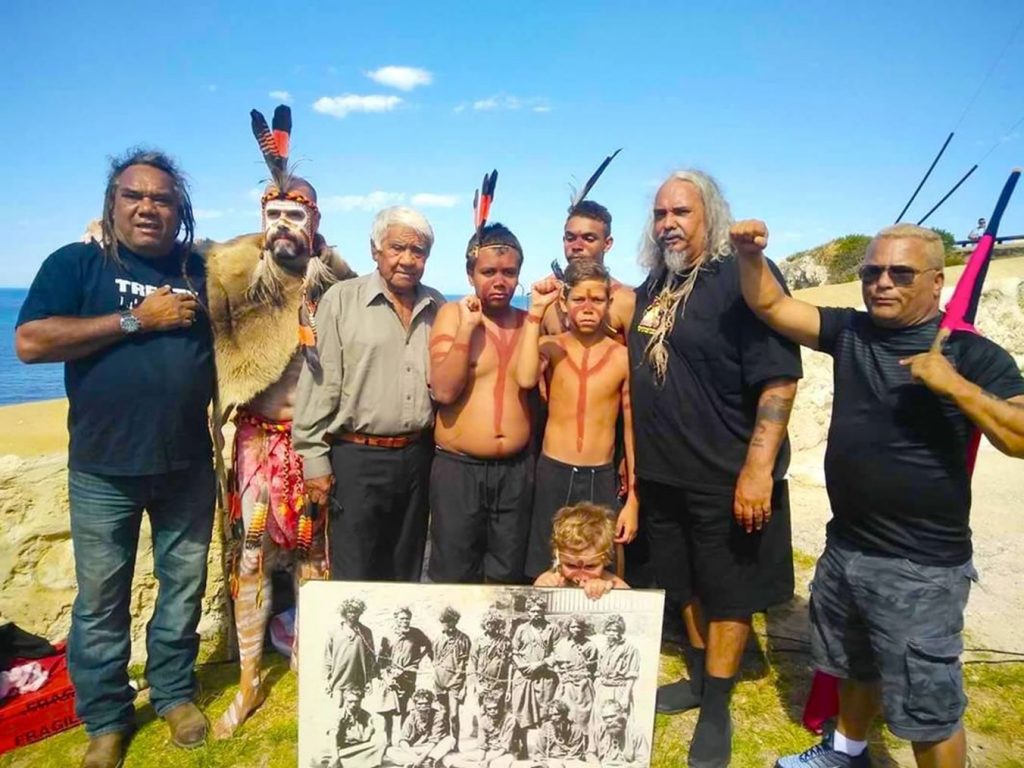 When I first developed the educational healing resource Sharing Culture back in 2014, I did a great deal of reading about the healing of trauma and historical trauma. I summarised what I considered to be 12 principles of healing, which are relevant to Aboriginal people here in Australia and other Indigenous peoples around the world.
1. The Human Rights of Indigenous Peoples must be recognised and respected
Recognition of, and respect for, the Human Rights of Indigenous peoples is fundamental to improving their health and wellbeing. Society must ensure that Indigenous peoples have full and effective participation in decisions that directly or indirectly affect their lives.
Read More ➔
‘A Day With Dave’ by Annalie Clark
March 4, 2021 by
I posted this originally in July 2013, a day before lovely daughter Annalie headed back to the UK tomorrow, having spent a year here in Perth working as a doctor (along with her boyfriend Max) in the emergency department of a local hospital. Over seven years later, Annalie is a psychiatrist working in the UK.
Here’s an article that Annalie wrote in the summer of 2005, when she had just finished her first year of medical training at the University of Edinburgh. It appeared in a June edition of Drink and Drugs News. The article is about Dave Watkins who used to be a top-class support worker at a treatment centre in Swansea.
‘RSA Shorts: The Power of Empathy’ with Brené Brown
March 4, 2021 by
An awesome short animation from the RSA involving one of my favourite ladies, Brené Brown. I posted this blog in December 2013.
‘What is the best way to ease someone’s pain and suffering? In this beautifully animated RSA Short, Dr Brené Brown reminds us that we can only create a genuine empathic connection if we are brave enough to really get in touch with our own fragilities.
‘Community Recovery’: Bill White
March 4, 2021 by
 An excellent paper by Arthur Evans, Roland Lamb and Bill White, highlighted in a blog by the latter, which I originally posted in December 2013.
‘In the Red Road to Wellbriety, the individual, family and community are not separate; they are one. To injure one is to injure all; to heal one is to heal all.’ The Red Road to Wellbriety, 2002
As a field, we have long known that the effects of personal addiction ripple through families, social networks and organizations. But might whole communities and whole cultures be so wounded by prolonged alcohol and other drug problems that they are themselves in need of a sustained recovery process? This suggestion is the premise of a new paper co-authored by Dr. Arthur Evans, Jr., Roland Lamb and myself just published in Alcoholism Treatment Quarterly.
Andy Puddicombe: All it Takes is 10 Mindful Minutes
March 4, 2021 by
When is the last time you did absolutely nothing for 10 whole minutes? Not texting, talking or even thinking?
Mindfulness expert Andy Puddicombe describes the transformative power of doing just that: Refreshing your mind for 10 minutes a day, simply by being mindful and experiencing the present moment. (No need for incense or sitting in uncomfortable positions)
Reflections on Healing: A Canadian Aboriginal Perspective
March 4, 2021 by
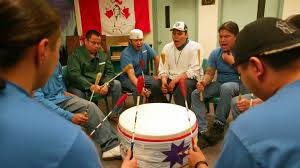 I’ve been reading a fascinating article from the Aboriginal Healing Foundation in Canada entitled Aboriginal Healing in Canada: Studies in Therapeutic Practice and Meaning. What of course is said in this article is relevant to recovery in the western world. Here are some interesting thoughts about healing:
‘The first thing that emerges from our work is that healing is a concept that is difficult to articulate, in part, because most [people participating in the research – DC] seem to feel that there is no need to articulate it and/or simply have never been asked to.
