I Am Not Anonymous: Ellie, ‘Come With Me’

EllieTextBlog-1024x682A Story from the excellent I Am Not Anonymous website is long overdue. Here is Ellie’s Story“:

‘When I was drinking, my life was ruled by shame.  It’s exhausting, living a double life. On the outside I was a put-together, active, intelligent woman.  I made sure my outside always looked okay, so nobody would look too closely at what was really going on, at my dirty secret.

Inside, I was a crumbling mess.  I felt less-than, unworthy and insecure.  I strove for perfection in all things, which of course is unattainable, and this left me feeling empty and ashamed.

I drank to fill the cracks, the emptiness.  I drank to numb out, escape.  I drank to feel okay with myself.  I found myself in my late thirties, a shell of a person, hollow and feeling desperately alone, even though I had a beautiful family, a job, and people who loved me. 

Read More ➔

‘Is Depression Who I Am or What I Have?’ by Douglas Bloch

In this video, author and depression counselor Douglas Bloch talks about separating your feelings about being depressed from your sense of self worth.

Learn the Signs and Symptoms of PTSD, with Dr. Bessel van der Kolk

One of the world’s foremost psychiatrists specializing in PTSD, Dr. Bessel van der Kolk visits Big Think to discuss the history of the disorder, its varying effects on sufferers of all ages, and forms of treatment that can “help people to come back to life.”

To understand PTSD, says Dr. van der Kolk, you have to understand the nature of trauma and the ways in which traumatic triggers can vaporize anyone’s joie de vivre.

20 Ways To Facilitate Indigenous Healing, Part 2

P4061087-220x1646. The Healing Ritual of Storytelling
Storytelling is a healing ritual amongst Indigenous people.

In a culturally safe environment (e.g. healing circle), Indigenous people can share experiences by telling their Story (which is often a trauma Story), help each other come to terms with the emotional pain caused by what has happened to them in their past, and make sense of their personal story in relationship to the collective, communal Story.

7. Pride in Surviving Colonisation
Learning history from an Indigenous perspective, illustrating how conditions for social and psychological discontent have developed, helps Indigenous people understand why they have problems.

It also shows them that they retain the necessary agency to change their lives for the better. It helps them deal with shame and blame, factors that impact negatively on social and emotional wellbeing.

Read More ➔

20 Ways To Facilitate Indigenous Healing, Part 1

2007_0118walpole01151-220x164Some of you will know I also run the Sharing Culture website, which focuses on Indigenous healing. Today, I thought I would upload the same blog onto both websites. My action reflects the importance I attach to this area.

Society has the knowledge to facilitate Indigenous healing. This knowledge comes from individuals who have overcome great adversity and undergone a healing process (the lived solution); successful Indigenous healing initiatives, and scientific research demonstrating key principles underlying healing.

Sadly, however, this knowledge is neither disseminated well, nor implemented enough by government and health care, social welfare and criminal justice systems. As a result, society is not helping Indigenous people improve their health and wellbeing to the level it should.

In this and forthcoming blogs, I shall briefly describe 20 ways to facilitate Indigenous healing. Here are the first five.

Read More ➔

‘Willingness To Be Puzzled’ by Gabor Maté

Dr. Gabor Maté talks about how important it is to be puzzled and to ask the question “what’s really going on here?” rather than assuming that we know all the answers.

‘Without a life story, a child is adrift, disconnected and vulnerable’ – Dr Bruce Perry on the value and power of the Life Story approach

UnknownHere is a powerful piece of writing by Dr Bruce Perry, which is adapted from the Foreword to the new book, Life Story Therapy with Traumatized Children, by Richard Rose. It is fundamental to what I am doing with our new initiative Sharing Culture, which is focused on helping Indigenous people heal from intergenerational trauma and its consequences.

‘A fundamental and permeating strength of humankind is the capacity to form and maintain relationships – the capacity to belong. It is in the context of our clan, community and culture that we are born and raised.

The brain-mediated set of complex capacities that allow one human to connect to another form the very basis for survival and has led to the ‘success’ of our species on this planet. Without others or without belonging, no individual could survive or thrive.

Read More ➔

Classic Blog: ‘Why Your Critics Aren’t The Ones Who Count’ by Brené Brown

If you are trying to do something creative then you’re going to get your arse kicked. So sayeth Brené Brown. If you’re trying to do something creative in this field and help improve the way that we help people overcome addiction and mental health, you will get your arse kicked. So sayeth I.

This talk is essential viewing for learning how to deal with getting your arse kicked. Or at least deal with the people trying to kick your arse.

‘There is nothing more frightening than the moment we expose our ideas to the world. Author and vulnerability researcher Brené Brown shows us how to deal with the critics and our own self-doubt by refusing to “armor up” and shut ourselves off. “Not caring what people think,” she says, “is its own kind of hustle.”

Instead we must “reserve a seat” for the critics and our own self-doubt. “Tell them, I see you, I hear you, but I’m going to do this anyway.”’

‘7 Steps to Creating a Healing Affirmation’ by Douglas Bloch

Depression counselor and survivor Douglas Bloch talks about seven steps you can follow to create your own healing affirmation. Douglas’s Healing channel on Youtube is an excellent resource.

‘Healing From Trauma: Owning Your Self’ by Bessel van der Kolk

UnknownThe Body Keeps the Score: Brain, Mind, and Body in the Healing of Trauma by Bessel Van Der Kolk is one of the best books I have read in a very long time. It is essential reading for anyone interested in the healing of trauma. Here’s a short excerpt:

‘Nobody can “treat” a war, or abuse, or rape, molestation, or any other horrendous event, for that matter; what has happened cannot be undone.

But what can be dealt with are the imprints of the trauma on body, mind and soul: the crushing sensations in your chest that you may label as anxiety or depression; the fear of losing control; always being on alert for danger or rejection; the self-loathing; the nightmares and flashbacks; the fog that keeps you from staying on task and engaging fully in what you are doing; being unable to fully open your heart to another human being.

Trauma robs you of the feeling that you are in charge of yourself, of what I will call self-leadership in the chapters to come.

Read More ➔

The dilemma of residential rehab

I first met psychologist Pavel Nepustil from the Czech Republic nearly ten years ago in Cardiff when he came to meet us and find out more about Wired In. We got on really well and have kept in contact since that time.

Pavel has a keen interest in Stories and in recovery from addiction. He has spent time working in the UK, USA, Mexico, Netherlands and Austria, and is still closely linked with the Taos Institute. His PhD thesis was entitled ‘The process of adjustment after the end of long-term meth use without professional help’.

Here, Pavel listens to Markéta tell her story about meth and heroin using. About what helped her to stop. And what did not help. 

Read More ➔

Psychiatry Must Stop Ignoring Trauma, with Dr. Bessel van der Kolk

Acclaimed psychiatrist Bessel van der Kolk explores his field’s long, complex, and stubborn history with trauma. Dr. van der Kolk explains how psychiatry as a whole avoided progress, often misdiagnosing trauma as hysteria or, in the case of shell-shocked soldiers, malingering.

The experiences of abused women and children were more or less ignored for a century. They’re still being ignored in ways, he says.

‘One Gutsy Woman’ by Daisy Anderson

dandersonAn inspiring, beautifully-written story from Mad in America about being drugged by the biological psychiatry industry and a courageous battle through drug withdrawal to recovery. I first posted this story on Recovery Stories in early 2015.

‘Part One: Becoming Psychiatric: Easy as 1-2-3
Living with a mental illness is hard work. I know because I lived as a psychiatric patient for over thirty-seven years. Working to become well turned out to be even harder. I know because it took everything I had to recover. Even though eighteen psychiatrists treated me, my health only got worse. I recovered completely after hiring a private psychologist. Now, I take no psychiatric drugs and see no psychiatrists.

My almost-completed book, which I call The Daisy Project, tells the story of how I first became a patient in my home province of British Columbia, Canada, why I was sick for so long, and the hurdles I went through to fully recover. This blog provides a brief overview of my journey.

Read More ➔

‘A Personal Tribute: Ernie Kurtz, 1935 – 2015’ by Bill White

EK Photo 2008‘Ernest Kurtz, who made landmark contributions to the study of addiction recovery, died January 19, 2015 of pancreatic cancer. Following publication of Not-God:  A History of Alcoholics Anonymous in 1979, Kurtz focused his studies on the growing varieties of recovery experience, the healing of shame and guilt, and the role of spirituality in addiction recovery.

 
Ernest Kurtz was born in Rochester, New York, September 9, 1935 – only two months after the meeting of two desperate alcoholics in Akron, Ohio marked the birth of Alcoholics Anonymous.  Kurtz attended St. Bernard’s Seminary and College and was then ordained as a Catholic Priest in 1961.

Following five years of parish work, he began his graduate studies at Harvard University where he completed an M.A. in philosophy and a Ph.D. in the history of American civilization. His Ph.D dissertation on the history of A.A. marked a turning point in the scholarly study of A.A. and the larger arenas of addiction recovery and recovery mutual aid societies, both legitimizing such studies and setting a benchmark by which future studies would be evaluated.

Read More ➔

“Transcend Depression Through Serving Others” by Douglas Bloch

“It is one of the most beautiful compensations of this life that no man can sincerely try to help another without helping himself.” Ralph Waldo Emerson

Douglas Bloch’s YouTube channel on healing depression is an excellent self-care resource, as are his website and book Healing Depression.

‘In this video, author and depression counselor Douglas Bloch talks about how giving of your time to help others can draw you out of depression and transcend the “prison of self.”‘

‘From Surviving to Thriving: Unleashing Creativity’ by Madeline Goldstein

IMG_20140827_133352_975-5-300x293Many things can facilitate healing and people need to find what helps them to heal. Here is a beautiful story about the power of photography, and creativity in general, by Madeline Goldstein from Mad in America.

“Adversity has effect of eliciting talents, which in prosperous circumstances would have lain dormant”
Horace

It started out innocently enough, with no preconceived ideas or expectations. I had no idea that what began as giving a gift would change my life forever.

I live in beautiful Boulder, Colorado. It is a college town nestled in the foothills of the Rocky Mountains. As of this writing, I am eighteen months drug free after having been on Xanax for twenty years.

Read More ➔

‘2015 – The Year of Reinventing the Wellbriety Movement’ by Don Coyhis

5de8955239fe8af6972c6889e71ffa26Don Coyhis posted this powerful message on the White Bison website recently. As some of you know, I think very highly of Don and the amazing Native American Wellbriety Movement.

‘As some of you know, I had a stroke on May 11, 2014, Mothers Day. Given the reality of the event, we made some choices and decisions regarding White Bison and the Wellbriety Movement.

We hired Carlos Rivera as the Executive Director, promoted Kateri Coyhis as the Director of the Wellbriety Training Institute, and I moved to Chairman of the Board to provide support to the new White Bison team.

Thanks to the prayers of so many, my recovery was touched by a miracle.   I had excellent therapists and moved from a wheelchair, to a walker, threw away the cane in August and was back to 90% recovery by September and have continued to recover since then.

Read More ➔

A great loss: RIP Ernie Kurtz

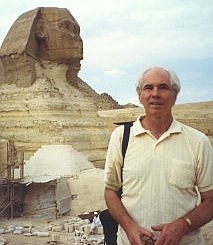
ernie_kurtz_egyptI was saddened to recently hear that Ernie Kurtz passed away on 19th January. Ernie was a brilliant and inquisitive man who helped very large numbers of people better understand AA and spirituality. Bill White recently described Ernie in the following way:

‘One of the distinctive voices within the modern history of addiction recovery is that of Harvard-trained historian Ernie Kurtz.

Spanning the 1979 publication of his classic Not-God: A History of Alcoholics Anonymous to the just-released Experiencing Spirituality (with Katherine Ketcham), Kurtz has forged a deep imprint in studies of the history of A.A. and other recovery mutual aid groups, the varieties of recovery experience, the role of spirituality in addiction recovery, and the personal and clinical management of shame and guilt.

Read More ➔

‘MIA Continuing Education: Help Us Get The Word Out’ by Robert Whitaker

Unknown-1Mad in America (MIA) is one of my very favourite websites and I check it out for new content every day. Robert Whitaker, who developed the website, is one of favourite writers – his books Anatomy of an Epidemic: Magic Bullets, Psychiatric Drugs, and the Astonishing Rise of Mental Illness in America and Mad in America: Bad Science, Bad Medicine, and the Enduring Mistreatment of the Mentally Ill.

What Bob and his colleagues have done at MIA is amazing! They have really challenged the psychiatry and mental health fields to have a serious rethink about they way things are done. They have challenged the very worrying trend of assuming that all emotional distress is biological and needs ‘drugging’. They have challenged the power of drug companies and biological psychiatry. They are trying to put humanity back into human conditions.

I spent 25 years as a neuroscientist before changing career, because I felt that the field did not have the solutions for helping people recover from addiction and mental health conditions. I was also disillusioned by the misinformation that was circulated in the field and to the general public – and the outright fraud that I came across. Fifteen years of working in the ‘real’ world, I feel that I made the right decision.

Read More ➔

The Recovery Scholarship of Ernie Kurtz

Ernie GLAATC InterviewHere’s some great reading for you, from one great scholar and storyteller about another. Bill White starts the New Year with this excellent posting on his blog. Enjoy!

‘One of the distinctive voices within the modern history of addiction recovery is that of Harvard-trained historian Ernie Kurtz.

Spanning the 1979 publication of his classic Not-God: A History of Alcoholics Anonymous to the just-released Experiencing Spirituality (with Katherine Ketcham), Kurtz has forged a deep imprint in studies of the history of A.A. and other recovery mutual aid groups, the varieties of recovery experience, the role of spirituality in addiction recovery, and the personal and clinical management of shame and guilt.

Read More ➔