
Blog

Recovery Stories Blog

Box Set of Healing Cards: Indigenous Healing as Mindfulness Practice

As some of you know, I was inspired to start working in the healing of intergenerational trauma field after reading Judy Atkinson’s book Trauma Trails: Recreating Song Lines – The Transgenerational Effects of Trauma in Indigenous Australia. A section of this website is devoted to the healing of trauma and intergenerational (sometimes known as transgenerational or historical) trauma. I believe strongly that Indigenous peoples have a lot to teach non-indigenous peoples about the healing of trauma and its consequences (e.g. addiction, mental health problems).

Emeritus Professor Judy Atkinson is Patron / Elder Advisor of the wonderful Aboriginal healing initiative We Al-li Programs. Her daughter Dr Caroline Atkinson is the Chief Executive Officer.

We Al-li have recently started selling a box set of Healing Cards based on their healing approach. These Healing Cards and their accompanying booklet are very special. Here is the information that Carlie provided me about the box set.

Read More ➔

My Friend Natalie

I first met Natalie in my early days of working in the addiction field in the community. I still remember clearly her telling me that when she was using heroin, she did not know how to stop. She could find no information about how to stop using heroin. She knew no one who had stopped using.

Fortunately, Natalie accessed a high-quality treatment agency (WGCADA) and she found recovery. When we met, she told me that there needed to be stories of people who had found recovery available so that people with a drug and/or alcohol problem could read and learn from them.  I asked her if we could write her Story. She agreed.

Read More ➔

The Power of Story: Lewis Mehl-Madrona

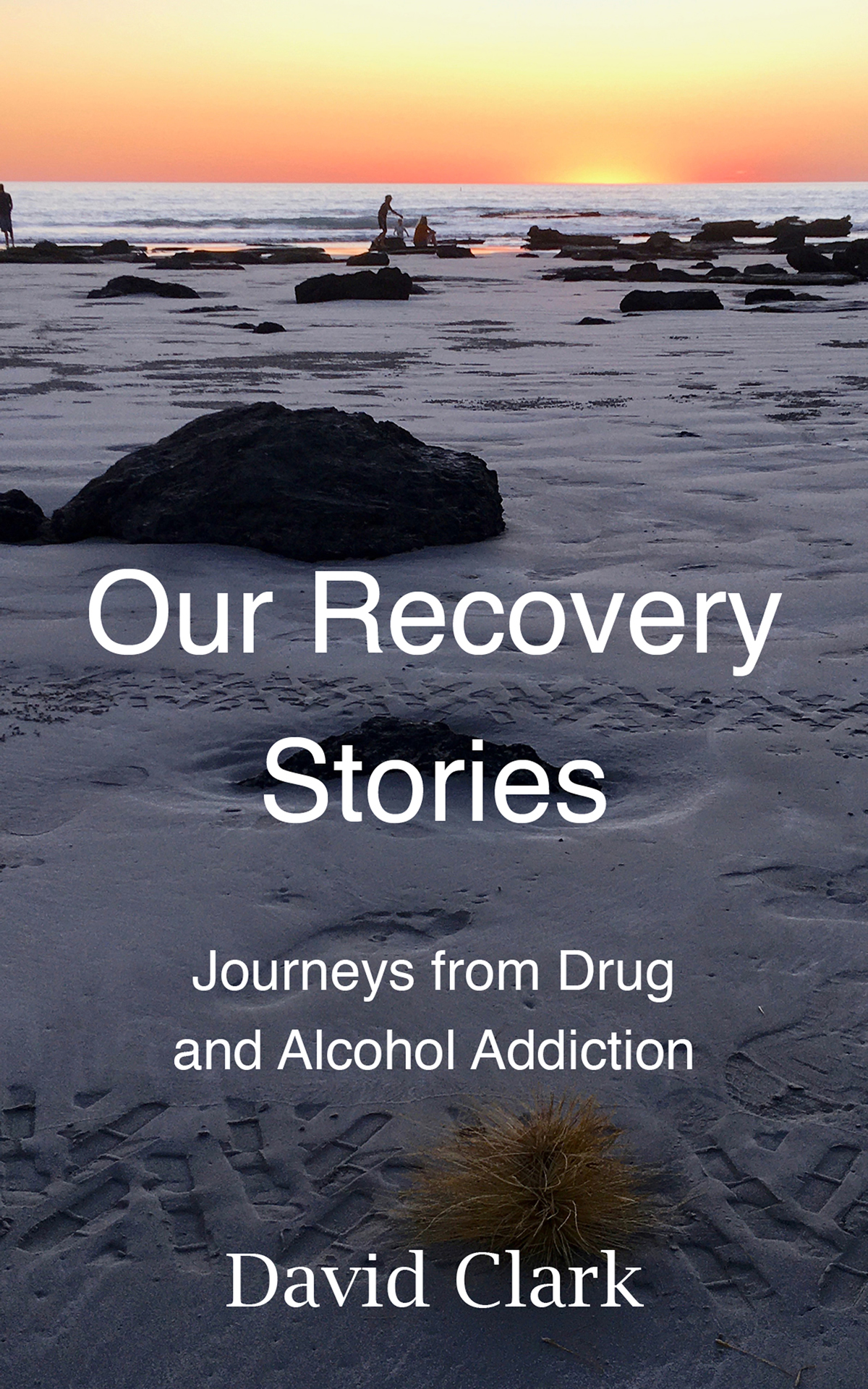
Counting down the days now to the release of my new eBook Our Recovery Stories: Journeys from Drug and Alcohol Addiction on Friday 9th April. The book is available via Apple, Amazon or Kobo (price: £4.99, A$8.99, US$6.99, €5.99). Apple users can purchase and download the book through their Books app on their device.

In his interesting book Healing the Mind Though the Power of Story: The Promise of Narrative Psychiatry, Dr Lewis Mehl-Madrona, who I hold in very high regard, emphasises the importance of story. Here are some of his reflections about story (pp. 2 – 4).

Stories help us develop empathy. They allow us understand another person’s world from their perspective. Stories give us unique access to the inner lives and motivations of others. They contain so much more information than we can convey in the statement of facts.

Read More ➔

We are not the Slaves of our Brains: Peter Kinderman

In my last blog post, I criticised the approach of the National Institute of Drug Abuse (NIDA) in the USA in treating addiction as a medical disorder. Of course, it is not just addiction that is thought to be due to brain dysfunction by many neuroscientists, psychiatrists and other medical practitioners. Mental health problems are considered to reflect neurotransmitter dysfunction by many people in these professions. And Big Pharma (the drug industry) encourages this view.
I am reading a fascinating book at the moment, A Manifesto for Mental Health: why we need a revolution in mental health care by Clinical Psychologist and academic Peter Kinderman. I thought the following quote from Peter’s book to be particularly appropriate to what I said about brain and behaviour in my last blog post. [I have shortened Peter’s paragraphs to make the quote easier to read online.]

Read More ➔

‘Addiction is a Medical Disorder’: No Way!

In my last blog, I described how I spent the first 25 years of my career as a neuroscientist studying brain function. After working in Sweden and the USA, I returned to the UK to set up my own neuroscience laboratory in the Department of Psychology, University of Reading in 1986. Six years later, I moved the laboratory to the Department of Psychology, University of Wales Swansea (later Swansea University).

At the time, the National Institute of Drug Abuse (NIDA) in the USA was receiving large sums of government money to fund neuroscience research focused on drug and alcohol addiction. NIDA considered addiction to be a brain disease and addictive drugs were thought to ‘hijack’ the brain’s reward system, which was thought to use dopamine as a neurotransmitter. 

Read More ➔

Brain Chemicals to Human Connection, Part 1

My career has been quite a journey. Some of you will know I initially spent 25 years working as a neuroscientist, studying the role of the brain neurotransmitter dopamine in normal behaviour and in so-called ‘disorders’ such as schizophrenia, Parkinson’s disease and addiction.

I had a great time as a neuroscientist and loved my work. I was lucky enough to spend three years (1981-84) as a postdoctoral fellow with Arvid Carlsson, the ‘father’ of dopamine and recipient of The Nobel Prize in Physiology or Medicine in 2000. I had such an amazing time in Gothenburg (Sweden) and our research was truly very exciting.

Read More ➔

Learning from the Experts

When I was a teenager, I competed in chess competitions around the UK, including the British Under-18 championship on two occasions. I was my county junior champion. To be competitive, I had to study chess theory and practice. I learnt from those people who were champions at what they did, including world champions. Not by being in the same room as them—although I did play Anatoly Karpov, who was later to be world champion, in a simultaneous exhibition—but by their games and introspections. I learnt from the experts.

You would have thought that people working in the addiction field would also be learning from the experts—the people who are in recovery, or are recovering, from a serious substance use problem. Many do. But… you’d be surprised to know that this goes on far too little, at least from my experience.

Read More ➔

Recovery Stories Website: Aims

It’s good to be back writing for my ‘Recovery Stories’ blog after such a long time away. I plan to post on the blog at least every weekday, as there is plenty that I want to cover. I’ve already loaded up over 40 blog posts ready to save me some time in the future. My old blog posts are still available.

You will see the website contains other sections: Stories, Articles, Film, Resources, Healing, Book and About. I’ll be adding to each of these sections, and hope over time to also build two educational sections focused on recovery and on the healing of intergenerational trauma.

One of my aims with Recovery Stories is to help create positive social change through activating and ‘arming’ people at a grassroots level. I am convinced that real positive social change comes from the ground up through people cultivating the grassroots—it doesn’t come from politicians.

Read More ➔

Recovery Stories Blog

As some of you know, I first launched Recovery Stories in May 2013, with the aim of helping individuals and families recover from addiction and mental health problems. A core element of the website was a series of 15 Recovery Stories related by people who had been affected by a serious substance use problem, either directly or indirectly.

In addition to these Stories, I uploaded over 700 posts on my blog, as well as a wealth of other content over the following two years. Although the website was still available for viewing after that time, I stopped posting on my blog whilst I worked on other projects, including the educational initiative Sharing Culture which focused on the healing of intergenerational trauma. Addiction and mental health problems are two consequences of trauma.

Read More ➔

‘Our Recovery Stories’ Update

I just wanted to let you know that the eBook Our Recovery Stories: Journeys from Drug and Alcohol Addiction will be available from 9th April 2021. It will be available via Apple, Amazon or Kobo (price: £4.99, A$8.99, US$6.99, €5.99). I will provide links and any other relevant information shortly.

I have chosen this date for release, as it is my youngest son Sam’s birthday and is a day before Michael Scott’s, of Michael’s Story, 43rd Sober Anniversary. And I then learn that the 9th April is the 60th birthday of Kevan Martin, of Kevan’s Story. Couldn’t have chosen a better date.

Please note that the book will have to be read on a phone, tablet or a computer. I hope to publish a hard copy version at a later date. Here is what I have said in the publicity material:

Read More ➔

Website Developments

I just wanted to warn you that Ash Whitney and I are overhauling the website at the moment ready for my return to regular blogging. I’m also wanting to get this overhaul complete for when I launch my new book, Our Recovery Stories: Journeys from Drug and Alcohol Addiction later this month.

As some of you may know, I launched Recovery Stories in May 2013. I posted over 700 blogs, as well as a wealth of other content, over the following two years. Although the website was still available for viewing after that time, I stopped blogging whilst I worked on various other projects, mainly around the healing of intergenerational trauma. Addiction and mental health problems are two consequences of trauma.

Read More ➔

‘What is Recovery?: David Best

Here is a blog I wrote about David Best in May 2013. At that time, he had done a huge amount for the addiction recovery field and for the Recovery Movements in the UK and Australia, in terms of his research, writings, advocacy and a wide range of other recovery-based activities. Where he gets his energy from, I have no idea?

I thought it was worth showing what David thinks about the question, ‘What is Recovery’. I’ve followed his arguments and included quotes from his excellent book, Addiction Recovery: A Movement for Social Change and Personal Growth in the UK.

Read More ➔

Why the Need for Recovery-based Care?

A resonating message I have picked from many people affected by serious substance use problems over the years is their desperate need for hope (that they can recover) and understanding (of how to recover). Here is a blog I originally posted in May 2013.

There is a dearth of readily accessible information on how to achieve recovery, information that is also relevant to the day-to-day struggles and obstacles that people face in trying to overcome addiction and related problems. Many people do not know anyone who has recovered from addiction. Many find the treatment system to be disempowering and lacking in hope.

Read More ➔

‘What is Recovery?’: Julie Repper & Rachel Perkins

In my blogs, I will explore the nature of recovery and will sometimes focus on the ideas of someone else (or a group of people). I’ve previously looked at how David Best has talked about ‘What is Recovery?’ David described key principles underlying addiction recovery.

In this blog, first posted on this website in June 2103, I am going to look at what Julie Repper and Rachel Perkins have to say about ‘What is Recovery?, as described in their excellent book Social Inclusion and Recovery: A Model for Mental Health Practice. They include a number of quotes about recovery, some of which I will use here.

Read More ➔

‘How Do I Know a Treatment Service is Recovery-oriented?’: Mark Ragins

Some treatment services today say they are doing recovery—using recovery-based care—when they are not in fact doing so. So how do you know that you are going to receive genuine recovery-based care when you sign up to a treatment service claiming to be recovery-oriented?

Here is some help from Mark Ragins, a leading figure in the mental health recovery field, about what to look for in a service offering recovering-based care. Mark may be talking about mental health recovery, but what he says is of relevance to addiction recovery. I first posted this blog back in June 2103.

Read More ➔

Key Factors Facilitating Indigenous Healing

When I first developed the educational healing resource Sharing Culture back in 2014, I did a great deal of reading about the healing of trauma and historical trauma. I summarised what I considered to be 12 principles of healing, which are relevant to Aboriginal people here in Australia and other Indigenous peoples around the world.

1. The Human Rights of Indigenous Peoples must be recognised and respected
Recognition of, and respect for, the Human Rights of Indigenous peoples is fundamental to improving their health and wellbeing. Society must ensure that Indigenous peoples have full and effective participation in decisions that directly or indirectly affect their lives.

Read More ➔

‘A Day With Dave’ by Annalie Clark

I posted this originally in July 2013, a day before lovely daughter Annalie headed back to the UK tomorrow, having spent a year here in Perth working as a doctor (along with her boyfriend Max) in the emergency department of  a local hospital. Over seven years later, Annalie is a psychiatrist working in the UK.

Here’s an article that Annalie wrote in the summer of 2005, when she had just finished her first year of medical training at the University of Edinburgh. It appeared in a June edition of Drink and Drugs News. The article is about Dave Watkins who used to be a top-class support worker at a treatment centre in Swansea.

Read More ➔

‘RSA Shorts: The Power of Empathy’ with Brené Brown

An awesome short animation from the RSA involving one of my favourite ladies, Brené Brown. I posted this blog in December 2013.

‘What is the best way to ease someone’s pain and suffering? In this beautifully animated RSA Short, Dr Brené Brown reminds us that we can only create a genuine empathic connection if we are brave enough to really get in touch with our own fragilities.

Read More ➔

‘Community Recovery’: Bill White

An excellent paper by Arthur Evans, Roland Lamb and Bill White, highlighted in a blog by the latter, which I originally posted in December 2013.

‘In the Red Road to Wellbriety, the individual, family and community are not separate; they are one.  To injure one is to injure all; to heal one is to heal all.’ The Red Road to Wellbriety, 2002

As a field, we have long known that the effects of personal addiction ripple through families, social networks and organizations.  But might whole communities and whole cultures be so wounded by prolonged alcohol and other drug problems that they are themselves in need of a sustained recovery process?  This suggestion is the premise of a new paper co-authored by Dr. Arthur Evans, Jr., Roland Lamb and myself just published in Alcoholism Treatment Quarterly.

Read More ➔

Andy Puddicombe: All it Takes is 10 Mindful Minutes

When is the last time you did absolutely nothing for 10 whole minutes? Not texting, talking or even thinking?

Mindfulness expert Andy Puddicombe describes the transformative power of doing just that: Refreshing your mind for 10 minutes a day, simply by being mindful and experiencing the present moment. (No need for incense or sitting in uncomfortable positions)

Read More ➔