
Blog

Recovery Stories Blog

Factors Facilitating Recovery: Understanding

Here is the next section from my chapter Factors Facilitating Recovery in  my eBook Our Recovery Stories: Journeys from Drug and Alcohol Addiction.

Understanding is essential for recovery. People with substance use problems and those on a recovery journey need information and education about a variety of matters, including: the nature of addiction and their own substance use problems; the range of interventions they can use to help them overcome or manage these problems; opportunities that allow them to exercise their strengths and assets; supports they can use to facilitate their recovery journey, and self-management skills that help them cope with situations that might lead to relapse. 

Recovering people are a major source of information that can facilitate another person’s recovery journey.

Read More ➔

Can a Cambodian Cow Facilitate Healing?

One of the best book I have read on mental health has to be Lost Connections: Uncovering the Real Causes of Depression – and the Unexpected Solutions by Johann Hari. I can strongly recommend the book, which focuses on a ‘radical’—and very sensible way—of viewing depression and overcoming the problem.

Depression is NOT caused by a chemical imbalance in the brain, as is argued by drug companies and many biologically-oriented psychiatrists and large numbers of doctors. Moreover, there is little, if any, ‘genuine’ scientific evidence that ‘antidepressants’ alleviate depression. Johann Hari talks about social factors that cause depression and considers new socially-related ways of alleviating the problem. I will be talking about the book more in a future blog.

Read More ➔

‘Neutralising Suffering: How the Medicalisation of Distress Obliterates Meaning and Creates Profit’ by Joanna Moncrieff

jmoncrieffThere is so much great content on Mad in America. Here’s an excellent article from British psychiatrist Joanna Moncrieff, one I wholeheartedly endorse. On the one hand, society discourages people from taking psychoactive drugs, and even prosecutes them for doing so, whilst on the other hand it encourages people to take psychoactive (prescription) drugs. Sometimes, they are the same drugs or very similar-acting.

‘People have used psychoactive substances to dull and deaden pain, misery and suffering since time immemorial, but only recently, in the last few decades, have people been persuaded that what they are doing in this situation is rightly thought of as taking a remedy for an underlying disease.

The spread of the use of prescription drugs has gone hand in hand with the increasing medicalization of everyday life, and a corresponding loss of the previous relationship that people had with psychoactive substances.

Read More ➔

Historical Perspectives: Opium, Morphine and Opiates

I’ve always been interested in historical perspectives surrounding the use of psychoactive drugs. Drug use, and views about drug use, have not always been the same across time. In April 2005, I wrote the first of a short series on the historical use of opium, morphine and opiates for Drink and Drugs News, the leading UK magazine focused on drug and alcohol treatment.

Here is that first article, along with links to the following two articles. You can also find these articles in my Background Briefings section of Articles on this website.

“Opiate, or opioid, refers to any drug, either natural or synthetic, that has properties similar to opium or its main active ingredient, morphine. Opium comes from one type of poppy, Papaver Somniferum.

Read More ➔

Factors Facilitating Recovery: Involvement in Meaningful Activities

Another important factor facilitating recovery involves the development of valued social roles through involvement in meaningful activities. Through these activities, recovering people gain a sense a purpose and direction in their life—they find a niche in the community. 

These meaningful activities may involve employment or volunteering, engagement in hobbies or other leisure activities, or connecting with other organisations or groups. Employment is a central way in which people can achieve more meaning and purpose in their lives and is therefore a key pathway to recovery. As described in a previous post, impacting on the lives of other people in a positive manner, ‘giving back’ as it is often called, is also important for personal recovery.

Read More ➔

What Happens to Women in Recovery: Stephanie Brown

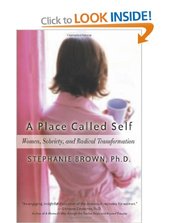
In the Resources section of the website, I have a series of my posts under the title Stephanie Brown on Recovery. These posts are based on Stephanie Brown’s wonderful 2004 book A Place Called Self: Women, Sobriety, and Radical Transformation. In her book, Stephanie talks about what happens to women in recovery, how they think, how they feel, their problems, the good things, etc. (The book is relevant to men as well!) Here is the main part of the first of my posts, entitled ‘What is Recovery’, according to Stephanie Brown (Part 1).

“‘Recovery has held so many surprises for me. Some good. Some bad. I didn’t know I could hurt so much. But I also didn’t know I could love so much and be so loved. I had no idea that recovery was also learning how to be in intimate relationships, learning how to have close, wonderful friends. Then there’s my marriage. My husband and I have developed a rich life together. And get this – I really like myself now. Learning about who I am and accepting me, that’s been the hardest part of recovery – and the best. I wouldn’t trade this path for anything in the world.’ Anne, Recoveree

Read More ➔

Factors Facilitating Recovery: Mutual Support

I continue with my series of blog posts relating to the factors that facilitate recovery from addiction, which I have detailed in the second last chapter of my eBook Our Recovery Stories: Journeys from Drug and Alcohol AddictionThese factors are also relevant to recovery from mental health problems.

“Acceptance is just one aspect of the fifth key factor underlying recovery, being supported by others. People in recovery stress the importance of having someone believe in them, particularly when they don’t believe in themselves. They also stress the importance of having a person in recovery as a mentor or role model as they travel their journey.

Read More ➔

Healing Section of Recovery Stories

HealingThe aim of the Healing section of Recovery Stories is to take you on a journey into the fascinating field relating to the healing of intergenerational trauma, sometimes called transgenerational or historical trauma. The section ‘operates’ differently to other parts of the website. If you are new to this field and are keen to learn, I suggest you start reading my first post, entitled Indigenous Trauma and Healing. You can then access the second post by clicking the link at the bottom of the page…. and so on.

At present, there are sixteen posts, mostly relating to intergenerational trauma (rather than healing) at this stage. I will gradually add more and more posts over time. Here is the current list:

Read More ➔

Ash Whitney and Wired In Websites

This blog post continues the story of my ‘change in career’ early in the new millennium, from neuroscientist working in my research laboratory in a university, to addiction recovery advocate working in the community in Swansea and beyond.

When I first developed Wired In, a primary aim of our grassroots initiative was to provide information and tools that help people better understand and use the options they have to overcome the problems caused by their own, or a loved one’s, substance use. I also wanted to help ensure that practitioners working in the addiction field, be they specialists or generalists, had access to high quality information about addiction to drugs and alcohol and how it could be overcome.

I wanted to develop a strong Wired In presence on the internet. My aim was realised once I met web designer Ash Whitney in 2000. Ash, who lives in Cilfrew, near Neath in South Wales, built the first Wired In website. Daily Dose was a news and information portal that focused on drug and alcohol problems.

Read More ➔

Learning About Addiction Treatment, Part 5

I continue my series of blogs, starting here, about my journey into the addiction recovery field after I changed ‘career’ in 2000 from being a neuroscientist to working in the community. At the same time, I was still working as a Professor in the Department of Psychology, University of Wales Swansea (now Swansea University) in the UK.

In an earlier blog, I briefly described how I led the national team that evaluated all projects funded by the National Assembly of Wales’s Drug and Alcohol Treatment Fund (DATF) for two years from mid-2000. Here is what I wrote in my recently published book Our Recovery Stories: Journeys from Drug and Alcohol Addiction about the DATF evaluation and my views about the UK drug treatment system at the time.

Read More ➔

Background Briefings

For a period of four years from 15th November 2004, I wrote a series of Background Briefings—short educational pieces on a variety of issues and themes relating to drugs, alcohol, addiction, recovery and treatment—for Drink and Drugs News (DDN), the leading UK magazine focused on drug and alcohol treatment.

Drink and Drugs News was developed and run by Claire Brown and Ian Ralph, and was so urgently required at the time of its launch. Claire and Ian, and their team, have done a remarkable job with Drink and Drugs News over the years, and the magazine is highly appreciated by the field. Today, it still remains a magazine of the highest quality.

Read More ➔

Factors Facilitating Recovery: A Sense of Belonging

I’ve emphasised the importance of hope, empowerment and self-responsibility in facilitating recovery. The fourth important factor is gaining a sense of belonging. Here is what I wrote in my new eBook Our Recovery Stories: Journeys from Drug and Alcohol Addiction.

“Recovery cannot be achieved in isolation. In fact, many people with serious substance problems have become isolated and alienated and this has a further debilitating effect on their already vulnerable psychological state. People who have had such problems need to belong and feel part of something. They need to feel the acceptance, care and love of other people, and to be considered a person of value and worth.

Read More ➔

Learning About Me: Paul

In a previous series of blogs starting here, I have emphasised that the effects of a psychoactive drug are not just dependent on its biochemical actions in the brain. They are related to the drug, set (person) and setting (social context). The problems that arise from drug-taking, such as addiction and dependence, are not just related to the drug—it’s drug, set and setting. And the same is true of recovery.

In an earlier blog, I revealed how Brad had been told by a  colleague that his drinking problem was not just due to alcohol. It was about him. In this blog, I’ll use the words of Paul to describe how he learnt the same truth in relation to his drug problem, a drug problem that was a ‘little’ different to what most people experience.

Read More ➔

Factors Facilitating Recovery: Self-Responsibility

In my last blog posting focused on factors that facilitate recovery, I discussed empowerment. This is a key factor, as it the person with the problem who does the work in recovery.

The flip side of the fact that ‘recovery is something done by the person with the substance use problem’, is that the person has to take charge of their own recovery. Although people generally need to be supported in their recovery, they can’t be care-taken or protected into recovery. Setting one’s own goals and pathways, taking one’s own risks, and learning one’s own lessons are essential parts of a recovery journey. No one else can do the work. Self-responsibility is therefore a key factor facilitating recovery.

Read More ➔

‘What Happened to You?: Conversations on Trauma, Resilience, and Healing’

Recently, I read one of the best books I have read relevant to my work. The book, What Happened to You?: Conversations on Trauma, Resilience, and Healing, is written by Bruce D. Perry M.D., Ph.D. and Oprah Winfrey. The book is essential reading for anyone interested in trauma and the healing of trauma. Many people who become addicted to drugs have experienced childhood trauma.

The book was informative, inspirational and deeply-moving. Bruce has put together so well what he has learnt throughout his career (including a great deal from the young people he has worked alongside), and has described his theories of how we function as human beings, and how trauma can have such a devastating impact on us. He describes the many ways we can facilitate the healing of trauma. The use of storytelling—Bruce’s clinical experiences and Oprah’s personal experiences—is very powerful.

Read More ➔

Journeys – Making Recovery from Addiction Visible

Huseyin Djemil from the UK has this week launched a new podcast focused on recovery from addiction, which he describes as such:

‘A new series from Towards Recovery CIC – making recovery from addiction visible.

Huseyin Djemil speaks to people who have lived experience of recovery from addiction, people who have been affected by addiction and those working in the addiction and recovery field – in its many contexts. There is a lot of information about addiction, but people get better and their stories need to be visible to give others hope.

Recovery is not a linear path from A to B, it’s more of a winding road and we want to explore those journeys and get those stories heard, because our stories have power.’

Read More ➔

Factors Facilitating Recovery: Empowerment

Following on from my post about Hope, I include another section, this time on Empowerment, from the second last chapter, ‘Factors That Facilitate Recovery’, of my recently published eBook, Our Recovery Stories: Journeys from Drug and Alcohol Addiction.

‘As emphasised throughout this book, recovery is something done by the person with the substance use problem, not by a treatment practitioner or other person. The major sources of power driving the recovery process are the person’s own efforts, energies, strengths, interests and hope. Treatment practitioners, and others involved in the person’s recovery journey, can facilitate the recovery process by encouraging and supporting the person’s own hopes, strengths, interests, energies and efforts.

Read More ➔

Factors Facilitating Recovery: Hope

In an earlier blog, I described the nature of addiction recovery, using what was written in the second last chapter, ‘Factors That Facilitate Recovery’, of my recently published eBook, Our Recovery Stories: Journeys from Drug and Alcohol Addiction.

It  is important to emphasise that everyone’s recovery is different and deeply personal. However, whilst there are a multitude of pathways to recovery, there are a number of key factors that facilitate recovery from serious substance use problems. The importance of these factors has been illustrated in the narratives of recovering people about their journeys into and out of addiction. 

In this and future blog posts, I will describe a number these factors, illustrating their importance using primarily quotes from the Stories in my book. It should be noted that many of these factors are inter-related, so there will be some degree of repetition.

Read More ➔

A Life-Changing Time

In an earlier series of blogs starting here, I described what I initially learnt about addiction treatment at a local treatment agency in Swansea, West Glamorgan Council on Alcohol and Drug Abuse (WGCADA) in the early 2000s. Later, in 2005, I was commissioned to write a profile of the agency, which ended up being over 180 pages long and containing a number of Stories. Here’s is one such Story, of someone recovering from a serious alcohol problem:

‘I am writing about an amazing two years in my life. It has truly been a life-changing time. Not only have I stopped drinking (and that in itself I would never have believed possible!), but I’ve really begun to live life more fully and have been able to put my life back together again in a very positive way. Throughout this time, I have had great support and help from WGCADA. I can’t speak highly enough about the organisation and the staff I have been in contact with…. so please read on…

Read More ➔

Pathways from Heroin Addiction: Recovery Without Treatment, Part 4

The research conducted by Patrick Biernacki, with 101 former heroin addicts, showed some of the courses that people take in their lives when they give up using the drug without the aid of treatment. This is the last part of this series of blog posts.

When people resolve to stop using heroin, they face a variety of problems that go beyond the cravings for the drug and the temptation to use again. These additional problems are related to their attempts to fashion new identities and social involvements in worlds that are not associated with drug use.

As Biernacki pointed out, ‘The manner of termination and the course [or courses] that follow withdrawal from opiates are closely related to the degree that the addicts were involved in the world of addiction, to the exclusion of activities in other, more ordinary worlds, and to the extent that they had ruined conventional social relationships and spoiled the identities situated in them.’

Read More ➔