
 In two recent blog posts starting here, I focused on a qualitative research project we conducted with family members who have been indirectly affected by substance use problems.
Years after this research was conducted, I received a story written by Anna, who lives here in Australia, which relates how her family coped with her brother’s heroin addiction. I published Anna’s Story on Recovery Stories and recently updated it in my eBook Our Recovery Stories: Journeys from Drug and Alcohol Addiction. Anna’s story highlights the need for family members to accept that they cannot take ownership of their loved one’s addiction. They are not responsible for the addiction and they cannot do recovery for their loved one.
 Welcome to the second of my Recovery Stories Weekly reviews. My blog posts during the past week covered a wide range of topics:
 It’s hard to believe that it is over seven years ago since I launched
  Douglas Husak, a Distinguished Professor of Philosophy at Rutgers University in the US, combines hard fact and rigorous moral reasoning in his cogent analysis of the drug law debate in his excellent book
  People who decide to stop taking drugs or drinking alcohol after using or drinking for long periods of time, need to be aware that they might experience withdrawal effects which can be irritating, debilitating and even life-threatening.
 Continuing the qualitative research project conducted by Gemma Salter, a talented undergraduate student working with me back in 2004. The research involved interviewing nine parents and one grandparent (who had assumed the role of parent) of people with a drug and/or alcohol problem. The participants were recruited from West Glamorgan Council on Alcohol and Drug Abuse (WGCADA) in Swansea and Drug and Alcohol Family Support (DAFS) in Blaenau Gwent, South Wales.
 Continuing to look back at my career in the addiction recovery field and what I have learnt. After reading the excellent book Beating the Dragon: The Recovery from Dependent Drug Use by James McIntosh and Neil McKeganey in 2003, I made the decision to start a research programme involving qualitative analysis of interviews. The first piece of research, which focused on the effects of substance use problems on the family, was conducted by Gemma Salter, a third year undergraduate. Gemma was awarded the prize for the project of the year in my Psychology department.
 This is eighth post in this particular Series, which comes from my book
  I thought I’d start a weekly column linking to the blog posts and other content loaded on Recovery Stories in the past week. I’ll also include any other news. It will give readers a chance to catch up on what has been going on.
 I met Mike Blanche in around 2003 and he was the first person to help me understand the impact of a person’s substance use problem on family members. Mike was an inspiring figure who had played a key role in the setting up of
  Throughout history there have been all sorts of attempts to regulate or control the use of certain drugs. It is generally assumed and rarely argued that it is all done for the greatest good, to help reduce the health and social problems caused by drugs. However, a closer look at the origins of prohibition reveals a more complicated picture. Ideological, political and economic interests play a major role.
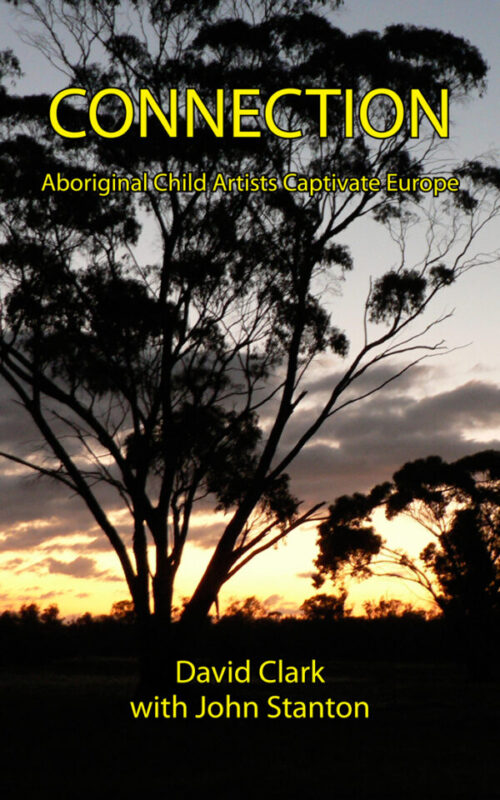
 When I came to live in Australia in December 2008, I knew little about the past government policy of removing Australian Aboriginal and Torres Strait Islander children from their families. This policy was introduced by Federal and State government acts in order to assimilate Aboriginal and Torres Strait Islander children into the white-dominated society of Australia. In essence, to help ‘make’ these children ’white’. Children taken from their families as a result of this policy are now known as the ‘Stolen Generations’.
 People with serious substance use problems lose a lot of the roles or personal characteristics that help define their normal identity (e.g. loving son, athlete, generosity, intelligence) as their dependence on their substance(s) increases, relationships wither and isolation increases. Eventually, their identity as viewed by others may become ‘a useless, dirty addict’. They will also have personal views of what they have become and these views can lead to lowered self-esteem or even intense hatred of oneself.
 One of the things I will be doing over the coming months is to ‘bring back’ some of the classic blogs from our online community
  When I first became interested in Indigenous healing a number of years ago, I did a great deal of reading about the healing of trauma and intergenerational trauma. I summarised what I considered to be 12 principles of healing, which are relevant to Aboriginal people here in Australia and other Indigenous peoples around the world. I first posted about these principles on
  Two of my favourite people that I have met on my Wired In journey are Ian and Irene MacDonald. I first met Ian in 2007 at a Federation of Drug & Alcohol Professionals (FDAP) meeting, although we had been corresponding earlier. Ian and Irene had lost their son Robin to a heroin overdose in 1997 and were now running a family support group, CPSG (Carer and Parent Support Gloucestershire).
 Here’s an article on asset-based community development which I wrote some years ago. This approach can facilitate healing in a community.
 One of the highlights of my career has been the development of
  When I developed Wired In and worked in the addiction recovery field, I was living in South Wales. When my daughter Annalie was in medical school in Edinburgh, I used to fly up from Cardiff to visit her. I soon came to love Edinburgh. That positive feeling for the city increased greatly when I met Dr David McCartney.