
This part of Bill’s excellent talk focuses on identity, social stigma and recovery styles. He describes how some people hide behind anonymity because they are ashamed of themselves.
‘Experiencing Recovery – Part 5′ by William L. White: Recovery Identity & Cultural Affiliation
July 9, 2014 by
‘Experiencing Recovery – Part 4′ by William L. White: Frameworks of Recovery
July 8, 2014 by
In this part of his talk, Bill White discusses the degrees/depths of recovery. He describes how some better people feel ‘better than well’ after recovery.
He goes on to describe different types of recovery initiation/maintenance framework and different styles of recovery.
‘Experiencing Recovery – Part 3′ by William L. White: Toward a Recovery Paradigm
July 7, 2014 by
More of Bill White’s talk that he gave at the Harvard Addiction Conference in 2012, the Norman E. Zinberg Memorial Lecture.
Bill talks about the disconnection between recovery and treatment, and asks what do we know about the science of recovery. And how do we define recovery? He tells us how little neuroscience has told us about recovery.
‘Experiencing Recovery – Part 2′ by William L. White: The Rise of Modern Addiction Treatment
July 6, 2014 by
I continue Bill White’s talk that he gave at the Harvard Addiction Conference in 2012, the Norman E. Zinberg Memorial Lecture. An amazing history of recovery and treatment for alcohol and drug addiction.
‘Experiencing Recovery – Part 1’ by William L. White: Early History of Recovery in the US
July 5, 2014 by
Last week, I highlighted the fact that a new edition of Bill White’s classic book Slaying the Dragon: The History of Addiction Treatment and Recovery in America has just rolled off the presses. I can tell you that this is one of the best (and most fascinating) books that you will ever read.
To celebrate the ‘rolling of the presses’ and Bill’s remarkable career in the recovery field, I am going to show a talk Bill gave at the Harvard Addiction Conference in 2012, the Norman E. Zinberg Memorial Lecture. I will show one part a day for the next 10 days, taken from Bill’s excellent website.
In the first part, Bill describes shows just how far back recovery goes historically in the US – to Native American Indians in the 1730s!
‘6 Secrets to Moving On From Serious Struggles’ by Beth Burgess
July 4, 2014 by
 “Never be ashamed of a scar. It simply means you were stronger than whatever tried to hurt you.” ~ Unknown
‘People who knew me ten years ago would probably expect me to be dead now. They wouldn’t expect me to have escaped my problems. They wouldn’t expect me to have stopped drinking, drugging, taking overdoses, and cutting my arms.
People who knew me ten years ago saw a scared shell of a girl, terrified of her own shadow and on a mission to self-destruct. They wouldn’t expect me to have turned my life around completely. They certainly wouldn’t expect me to be sharing my story and helping others to let go of their struggles, too.
‘The Year of the Dragon’ by Bill White
July 1, 2014 by
 If you are interested in this field, this is quite simply one of the best books you will ever read. Bill, thank you!
‘A new edition of Slaying the Dragon: The History of Addiction Treatment and Recovery in America has just rolled off the presses. The first edition (1998) went through multiple printings and has been used as a text in collegiate addictions studies programs.
Of even greater import has been how this history helped many people in recovery see themselves as “a people” and contributed to the rise of a new recovery advocacy movement in the U.S..
It is ironic with all I have sought to do professionally within the addictions field that my most lasting contribution will likely come from my hobby – four decades of investigating the history of addiction treatment and recovery. It is thus fitting that one of my final acts of professional service will be releasing this new edition.
Holding Space
June 27, 2014 by
 I’m reading a very interesting and inspiring book at the moment, Healing the Mind Through the Power of Story: The Promise of Narrative Psychiatry by Lewis Mehl-Madrona. I love the concept Lewis describes below:
“Holding Space is an important and rarely discussed concept. When we hold space for someone, we bear witness to them, their stories, and their pain.
We serve as a supportive audience member, sometimes a coach, sometimes a warm shoulder for comfort.
We hold the vision of the person being well, being happy, having recovered. The more people who hold that vision, the more possible recovery becomes.
I Am Not Anonymous: Kristina, ‘Change is Freedom’
June 25, 2014 by
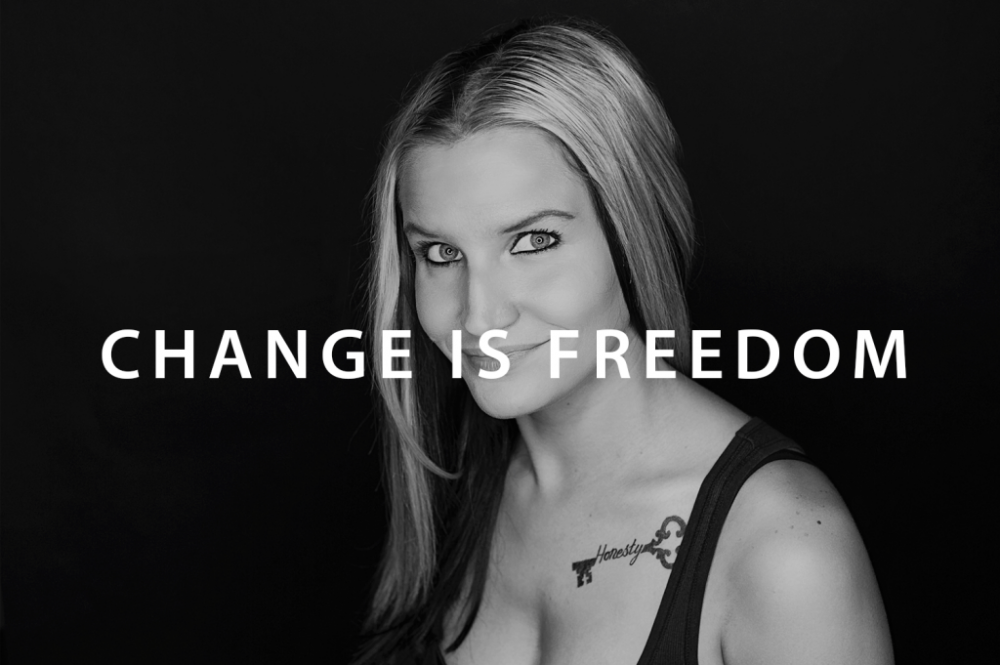 ‘Recovery goes far beyond its definition or interpretation. It’s about embarking on a process; a journey of fulfillments, enriching lives without the use of mind or mood altering substances.
Before ever being introduced to this process I was left with my own devices. After years of struggle and degradation, and the lives I’ve hurt as well as my own brought me to my knees. Everyone and everything seemed to have vanished within a blink of an eye, as if I woke up from a bad dream laying in the fetal position. My body was aching in pain and I couldn’t recall much of anything.
Crying out in desperation I felt helpless and my vulnerability was eating me alive. I hadn’t bathed, ate or slept in days. I was nothing but a mere existence of skin and bone who had lost her soul.
Your Recovered Life: Tim Harrington, Intervention Specialist & Recovery Advocate
June 23, 2014 by
‘Tim Harrington is fiercely committed to the world of recovery. He helps people get and stay sober – in whatever way works best for them AND takes daily actions aimed at reducing the shame and stigma of addiction.
The first time I saw Tim in action was at a big conference on addiction treatment. It was during a panel discussion that he raised his hand and asked a simple question.
He referenced how we, who understood addiction and treatment, were all there to learn more…but what about all the people ‘out there’ who weren’t in the know? Especially those whose lives addiction crashed into and who hadn’t a clue about the disease and even LESS about recovery. What if we had a conference for THOSE people?
‘An Open Letter to Persons Self-Identifying as Mentally Ill’ by Andrew L Yoder
June 20, 2014 by
 A brilliant and empathic blog off Mad In America. Thank you, Andrew.
‘Hello, My name is Andrew, and like you I have experienced severe cognitive and emotional distress in my life. This distress was sufficient that I once received a psychiatric diagnosis of Major Depressive Disorder and Generalized Anxiety Disorder, though I imagine other diagnosis could have easily been applied as well.
I know what panic attacks feel like. I know how it feels to experience a “dissociative episode” from the inside out. I know what it feels like to believe that you are going crazy. I know what it feels like to convulse in sobs so intensely that you tear muscles. I know what it feels like to want to die.
‘Spirituality and recovery’ by djmac
June 13, 2014 by
 ‘Spirituality and recovery – do they go together? Hang on a second; what is spirituality and why are scientific articles on the place of spirituality in recovery falling into my inbox on a regular basis? Yes, I’m calling them scientific articles because they appear in peer-reviewed journals.
I was at a graduate art show last night and got talking to a hospital chaplain about the nature of spirituality. I don’t come across hospital chaplains too much in my day-to-day life, but oddly enough, I’d been listening to one on Radio 4’s ‘Thought for the day’ slot only a day or two before.
I was quite surprised by the lack of religious content to the job. The minister on the radio was much more focused on supporting people as they faced challenges, on helping them get through and on finding meaning in the difficulties they were experiencing.
Last night’s chaplain explained that in the ‘old days’ the hospital chaplain was expected to be ‘a witness for Christ’.
Now the focus was on helping ill people and their families find spiritual health and address social and practical need too. It’s about holistic health. I talked about the growing evidence of the link between spirituality and recovery and began to realise as we talked that spirituality can be part of building recovery capital.
‘The Power Of The Narrative’ by Peter Bullimore
June 12, 2014 by
This is a brilliant talk about an amazing life! A must-watch with lessons to be learnt. Thank you, Peter.
Here is a bio taken from a website I’ll be profiling soon:
‘Peter heard his first voice aged seven, after suffering sexual abuse at the hands of a child minder. But as the abuse went on the voices increased in number, eventually turning sinister and aggressive.
By his mid-twenties Peter had lost his business, his family, his home, everything. Peter spent more than a decade after that on heavy medication, but the voices never went away. He had to get out of the psychiatric system to recover.
‘A personal and social model of recovery’ by David Best
June 12, 2014 by
 Here’s another excellent article from David Best which is essential reading for people trying to facilitate recovery.
‘There has been a subtle change to the role of recovery in UK addictions research, policy and practice in recent years, with a transition from the periphery to centre stage. But it can be argued that, for all the bluster, we still have a limited evidence base and we have not come far in developing an integrated or testable theoretical model.
Humphreys and Lembke (2013) have done a good job in summarising the ‘what works’ of recovery – focusing on three areas: peer-inclusive interventions, recovery housing and mutual-aid groups – so this article will not revisit that evidence.
What I will do is overview three key component parts of a theoretical model of recovery, then draw them together to derive conclusions about what we should do next to make policy and practice stronger in this area.
- Recovery capital – personal and social resources – the journey of growth
- Social identity and social contagion in recovery – the role of friends and connections
- Therapeutic landscapes of recovery – the role of location.
Marta’s Story: Recovering from benzodiazepine addiction
June 11, 2014 by
 Here is a benzo story from the excellent Recovery Road website.
‘My benzo story started over 26 years ago with a panic attack. I was a very active person, I had 2 beautiful children, a good hubby. Life was good, my children had just started school, I was sad about it, I didn’t want to let them go, but I had to of course. I worked when I wanted to so that was good and I had a very busy social life.
I suddenly started getting panic attacks. They were frightening and I thought I was about to die. I went to my GP and was given 60 diazepam 2 mg pills. She said take one, twice a day.
I took one 2 mg pill a day, my panic attacks stopped and I got on with life. I was grateful that the med was stopping further panic attacks. At no point did my doctor warn me of any dangers, I thought it was okay to keep taking them, and in the early days it stopped my fear of another panic attack.
Family Stories, Secrets and Survival: Dr. Judith Landau at TEDxVailWomen
June 10, 2014 by
I can strongly recommend this extraordinary talk from Dr Judith Landau. It’s one of my favourites, found only this morning. Thank you BDawg!
This talk will provide you with insights into intergenerational trauma and how addiction arises as a coping response. It will show you a way forward to recovery and healing, through Story. Understanding the past can help us deal with the present and help create a better future.
Judith, thank you for this wonderful talk! Here is the Youtube intro:
‘Dr. Judith Landau tells the story of trauma and recovery through generations and gives clues along the way for healthier families.
‘The Language of Recovery Advocacy’ by Bill White
June 9, 2014 by
 “Words are important. If you want to care for something, you call it a “flower”; if you want to kill something, you call it a “weed”. Don Coyhis”
Some will question why we as recovery advocates should invest valuable time debating the words used to convey alcohol and other drug (AOD) problems and their solutions when there are suffering individuals and families that need to be engaged, recovery support resources that need to be created, communities that need to be educated, and regressive, discriminatory policies that need to be changed.
We must invest this time because achieving our broader goals depends on our ability to forge a recovery-oriented vocabulary.
Words have immense power to wound or heal. The wrong words shame people with AOD problems and drive them into the shadows of subterranean cultures. The wrong words, by conveying that people are not worthy of recovery and not capable of recovery, fuel self-destruction and prevent or postpone help-seeking.
’emotional-CPR Overview’ by National Empowerment Center
June 5, 2014 by
Here’s a great new video from the National Empowerment Centre (NEC) in the US. I can strongly recommend both the video and the approach. Here is what the NEC has to say.
‘What is eCPR?
Emotional CPR (eCPR) is an educational program designed to teach people to assist others through an emotional crisis by three simple steps:
- C = Connecting
- P = emPowering, and
- R = Revitalizing.
The Connecting process of eCPR involves deepening listening skills, practicing presence, and creating a sense of safety for the person experiencing a crisis.
‘A Rendezvous With Hope’ by Bill White
June 2, 2014 by
 ‘Through my early tenure in the addictions field, the question of readiness for treatment and recovery was thought to be a pain quotient. We then believed that people didn’t enter recovery until they had “hit bottom.” If a person did not show evidence of such pain-induced readiness, they were often refused admission to treatment. Then we recognized that the reason it took people so long to “hit bottom” was that they were protected from the painful consequences of their alcohol and other drug use by people we called “enablers.” We then set about teaching enablers to stop rescuing and protecting their beloved but addicted family members.