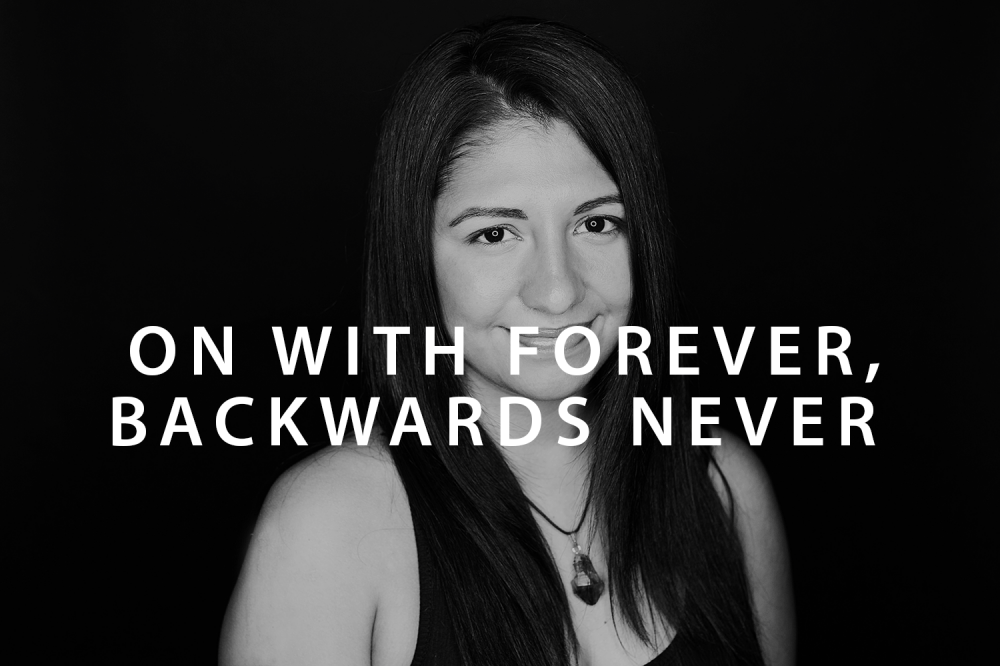
Tatiana’s Story: ‘On with Forever , Backwards Never’

TatianaText(pp_w1000_h666)Here is another of those beautiful Stories from the I Am Not Anonymous website.

‘My name is Tatiana and I am person in long-term recovery. My sobriety date is April 19th 2011.

What does it mean to be an addict? Some people may shrug with a look of disgust on their face when you ask this question. Those who do actually understand are riveted with compassion and love for the addict. Its funny how a complete misconception can create such a divide amongst people.

Many people still believe that addiction is a behavioral issue and that addicts are just “bad” people with a weak will. Although it may appear this way to the naked eye, this is so far from the truth.

Read More ➔

‘Recovering from Psychiatry – Tips and Some Hope For Those in Psychiatric Drug Withdrawal’ by Laura Delano

This video offers tips, suggestions, and hope for those in psychiatric drug withdrawal from ex-“Bipolar” patient and psychiatric liberation writer and activist, Laura Delano. An excellent video.

‘Emotional Unmanageability’ by Veronica Valli

A nice short blog from Veronica Valli to reflect upon at the start of the week.

ID-10084481-300x198‘Unmangagbility and alcoholism are talked about a lot in recovery circles. When unmanageability was explained to me, it was described an outside occurrence; unpaid bills, DUI’s, divorce, car crashes, damaged furniture, broken bones etc.

That wasn’t something I related to, my life was a little chaotic but by no means unmanageable. My inner life was another story, that was then I realized in relation to alcoholism it is emotional unmanageability that causes the real problems.

To some degree, the alcoholic may be able to create some sense of order in their outside world. They may be able to work and pay their mortgage, for instance. This is how some alcoholics can convince themselves they don’t have a problem; because they have a job and a car they believe things can’t be that bad.

Read More ➔

Psychiatric Epidemic (Part 1): The Roots – Robert Whitaker

The Psychiatric Epidemic – does long-term use of medication decrease the chance of recovery?

PsykoVision in Denmark has recently translated and published Robert Whitaker’s book, “Anatomy of an Epidemic”. In honor of this, PsykoVison has invited Whitaker to speak at a small conference in Copenhagen.

This is Part 1: The Roots of the Epidemic, where Robert Whitaker guides us through the history of psychiatric medication and presents the scientific evidence that proves that the common wisdom about theses drugs is mostly based on falsehoods.

Today, I am Alive

The drugs made me feel ‘normal’. They drowned out the feelings and the negative, self-destructive thoughts.  They were my medication to the real problem. The problem was ME.

Samantha_Paulus_Text-1024x681(pp_w1000_h665)Please check out this beautiful story on I Am Not Anonymous.

‘Where to begin…My life today is a beautiful thing.  It has reached measures and consistency that I could have never imagined.

I am currently 261 days into my journey and I am finally feeling awake and alive.  Today, I am conscious of myself, of the happiness of others and I have a love for life that I never thought possible.

Read More ➔

‘Spirituality and Recovery’ by Bill White

Experiencing SpiritualityA new book, Experiencing Spirituality, co-authored by Ernest Kurtz and Katherine Ketcham, has just been released.  It will find a broad and appreciative audience and will be of particular interest to addiction professionals, recovery support specialists, and people in recovery.

It is not a treatise on how to recover, but it offers profound insights about how to live one’s life in recovery.  Brilliantly conceived and beautifully written, Experiencing Spirituality is one of those rare books readers will return to again and again as a balm for old and fresh wounds and as a meditation on how to live a life of greater balance, fulfillment, and self-acceptance.

Kurtz is best known to readers of this site for his classic text, Not-God:  A History of Alcoholics Anonymous, Ketcham for her co-authorship of Under the Influence and Beyond the Influence.

In 1992, Kurtz and Ketcham co-authored The Spirituality of Imperfection, which used classic stories to explore the spiritual legacies of Alcoholics Anonymous.  The Spirituality of Imperfection is one of my all-time favorite books. 

Read More ➔

ManyFaces1Voice: Patrick Fogarty

Unknown-4Check out the latest filmed Recovery Story from ManyFaces1Voice.

‘Patrick Fogarty received a gift on the day he was supposed to receive a sentence of years in prison.

During a caseworker’s pre-sentence investigation, Fogarty found himself being honest and telling her he had a “major drug problem.” He said, “I’m good with going back to prison. Send me back. I have nothing.”

That honesty – and the caseworker’s compassion – earned him a spot at The Healing Place in Louisville, Kentucky, the organization where Fogarty now works as a result of entering recovery in 2008.

Read More ➔

‘Portraits of Strength – Phillip Valentine’ by University of Connecticut

The purpose in my life, I’ve been blessed to find, is to carry the message of recovery. … Integrity is, for me, to live true to that calling. Philip Valentine ’87 (CLAS)

On Oct. 18, 1987, Phillip Valentine was in the birthing room at Rockville General Hospital in Vernon, Conn., high on cocaine and waiting for the arrival of his first child, a baby girl. He describes what happened next as a religious experience.

“I was in a kind of cocaine-induced haze, and when my daughter looked into my eyes, there was so much love and spiritual power,” he says. “That’s when God burned his way into my soul and said, ‘You’re not alone.’”

Read More ➔

‘These Three Companies Make a Point of Hiring Recovering Addicts’ by Heidi Vanderlee

Military_truck_with_crew_2004My apologies for being offline twice twice in the past couple of weeks but we were hacked and I didn’t realise our website was closed down by our server company as I was asleep! Hassles of a life online!

‘So you’ve hit rock bottom and now you’re crawling your way back out. But unfortunately the hard work that goes into getting sober won’t pay the bills. Getting hired as a recovering addict isn’t always easy: Many of us have spotty employment histories, and the stigma attached to past criminal or mental health records may deter potential employers.

Addicts in early recovery often find themselves tending bar, waiting tables or working the cappuccino machine at a local coffee shop. But if mixing boozy beverages or making little hearts in foamed milk isn’t up your alley, there are still plenty of other employment options out there.

Growing numbers of non-profit organizations – such as the Doe Fund and the Salvation Army – are going out of their way to find employment for addicts in recovery. And there are places where your history with substances could actually give your CV the boost it needs to get you in the door.

Read More ➔

I Am Not Anonymous: Hugh’s Story

Hugh2Text(pp_w1000_h666)A blog from a great new website.

‘When I first heard about IAmNotAnonymous.org, I thought it was one of the coolest things to hit the recovery world. I subscribe to the idea that there is nothing shameful about being in recovery. It is my life. It has made me the man I am today. A man worthy of love and respect.

Some people believe that they need to keep their recovery a secret, I am not one of those people. Partly because the depths of my addiction was thrown into the spotlight with some unsolicited press in the form of newspaper articles in 2013. It’s quite possible that I was the last person to know that I had a problem with drugs and alcohol.

My whole life I have felt like there was a void in my soul. A missing piece of me. A void that I have constantly tried to fill with different vices.

Read More ➔

‘Doctors with addictions: double standards?’ by djmac

Doctor-Addiction‘Doctors get addicted to alcohol and other drugs; there’s plenty of evidence of that. My question is: Do doctors with addictions get the same kind of treatment and outcomes as their patients?  The British Medical Association estimates that there are 10,000 to 13,000 addicted doctors in the UK. Most of them will be in practice.

What is the expectation for doctors coming to treatment in the UK? Well, the goal of abstinence is pretty much accepted as a given (even for IV opiate addicts) and their access to quality treatment of adequate duration is greater.

Outcome studies from the USA consistently show recovery rates of 80% and there is evidence from the Practitioner Health Programme (PHP) in London this is also true in the UK. Most doctors in recovery return successfully to work.

Read More ➔

‘How does alcoholism develop?’ by Veronica Valli

Unknown-1Here’s an interesting and important blog from Veronica Valli which she has take from her book Why You Drink and How to Stop: A Journey to Freedom. I like Veronica’s sentence: “Alcoholism develops because it has an internal environment to grow in.”

‘In order to overcome alcoholism, stopping the drinking of alcohol simply isn’t enough.

Alcoholism develops because it has an internal environment to grow in. Although external conditions enable drinking, it is the internal conditions that allow alcoholism to control someone’s life. There is a need for a greater understanding of this.

  • Alcoholism is an internal (spiritual) illness. Drinking is only a symptom.
  • Alcoholism’s key motivator is about changing how you feel.
  • Alcoholism grows out of a faulty system of thinking and emotional responses.

Read More ➔

‘Brain Surgery as Addiction Treatment?’ by Bill White

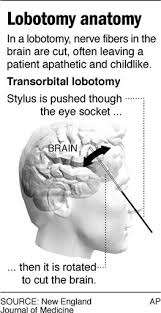
Lobotomy‘In 1935 – the founding year of Alcoholics Anonymous, Portuguese neurologist Egas Moniz introduced a surgical procedure into psychiatry that came to be known as the prefrontal lobotomy (recall One Flew Over the Cuckoo’s Nest).   Drs. Walter Freeman and James Watts pioneered the use of this technique in the United States in 1936. 

By 1960, 100,000 psychosurgery procedures had been performed in the U.S.  Patients targeted for this procedure included those judged to have “compulsive hedonias” – alcoholism, drug addiction, excessive eating and sexual deviations.  

The prefrontal lobotomy procedure severed the connecting nerves between the thalamus and the prefrontal and frontal lobes of the brain.  Its intent was to induce significant changes in thinking and personality that could alter the course of intractable psychiatric illness.

The total number of people with substance use disorders who underwent this procedure is unknown.  One could assume that the prefrontal lobotomy is one more chapter of “harm in the name of help” long ago cast into the dustbin of addiction treatment history in the U.S., but when exactly did use of this procedure stop?  The following story suggests it may have gone on much longer than once thought.

Read More ➔

‘I Am Not Anonymous’ website: Kate’s Story

Kate(pp_w1000_h431)Please check out this wonderful website, I Am Not Anonymous. And check out the wonderful photographer who has put this together. 

‘I’m Kate Meyer… a NY based Portrait and Wedding Photographer and lover of all things humanity-related.

It is hard to even know where to begin.  I will start by saying that I am by no means, an expert on addiction.  Have I been greatly affected by it?  YES.  I am my own expert in that field.

Long story short, I am in a relationship with a man in recovery from drug addiction.  What that means is that he hasn’t picked up a drink or drug in a significant amount of time and as a result,  his life gets better every single day.

Read More ➔

‘The Resilience of Alcoholics Anonymous’ by Bill White and Ernie Kurtz

AA_Newspaper_Image3Here is a seminal article describing what it takes to impact successfully on addiction and facilitate recovery. It helps us understand what underlies the success of AA.

‘Attacking Alcoholics Anonymous (A.A.) and 12-step oriented addiction treatment has become a specialized industry with its own genre of literature, celebrity authors and speakers, single-focus websites, and promoted alternatives.  Collectively, these critics suggest that A.A. is an anachronism whose effectiveness has been exaggerated and whose time in the sun has passed. 

A.A.’s institutional response to these  criticisms has been a consistent pattern of private self-reflection (e.g., Bill Wilson’s “Our Critics can be Our Benefactors”) and public silence (e.g., no opinion on outside controversial issues, personal anonymity at level of press, and public relations based on attraction rather than promotion – as dictated by A.A.’s Traditions).

Read More ➔

‘I am 14 years sober today!’ by Veronica Valli

ID-100227306-300x300Congratulations, Veronica! And thank you for your great blog.

‘Today is my 14th sober birthday. When you get to my age, birthdays aren’t something you necessarily want to shout about.

But recovered addicts and alcoholics have a different attitude to their sober birthdays. Every year we have under our belts has been hard fought for. This did not come easy. It’s the hardest thing I’ve ever done, so hell yeah; I’m going to let everyone know how proud I am to have got this far. [Too right! DC]

So here are the 14 things I’ve learnt about sobriety along the way…

Read More ➔

‘4 Tips for Super Sobriety’ by Beth Burgess

beths-storyHere are some real words of wisdom from Beth Burgess

‘In the early days of recovery, hanging onto your sobriety is pretty much the main priority in your life. But  in order to be sober and happy, you have to make an effort to grow as a person. Here are 4 elements that you can work on to ensure you have super-sobriety. Doing the following things will help you grow stronger and happier in your recovery.

Learn To Let Go
Addiction is an disease of stuckness. We get stuck in the cycle of using drink or drugs, and we also get stuck with our moods, grievances and resentments.

Read More ➔

’12-Step Programmes Help Thousands, but Are Outdated and Sexist’ by Jessica Smith

Geological wonders: picture three‘Addiction is everywhere. The drug of choice may be alcohol, or it may be food, sex, romance, gambling or shopping, but the basic problem is the same; the inner void created by a culture that sells us the empty promise that reaching for external things will make us happy.

When all that striving for money and possessions, and for status through jobs and relationships, still leaves a gaping hole inside us, many of us reach for the bottle, the chocolates or the credit card – and the cycle is complete.

In an article in the Guardian on May 30, Damian Thompson argued against the disease model for addiction, as developed by Alcoholics Anonymous. The roots of addiction, he wrote, lie in environmental factors, in the fact that “contemporary capitalism is ruthlessly targeting our mental reward circuits.”

Read More ➔

‘Lost lessons from an earlier era’ by Bill White

Lessons from an Earlier EraMy 2009 monograph outlined in considerable detail the history, theory and status of peer recovery support services (PRSS) in the United States.  In the years since the monograph’s publication, voluntary and paid recovery support services have dramatically increased in the US and internationally. 

Such growth has recently prompted me to reflect on the pre-professional days of addiction counseling in the United States (1965-1975) when people in recovery constituted the core workforce within newly arising addiction treatment programs. 

The current expansion of PRSS raised the following question:  What experiential lessons from this earlier era could inform the present implementation of PRSS?  Here are my top 20 answers.

Read More ➔

‘Four Examples of Expensive Rehabs That Spread Stigma, Not Recovery’ by Tom Horvath

shaming‘Eliminating stigma against people in recovery appears to be a universally supported goal within the recovery community, and for good reason. Recovery is hard enough without this additional burden.

The unspoken assumption is that stigma is the fault of the “outside” world – not of other people in recovery. But the recovery community has failed to provide effective leadership on this issue. And one component of the community—treatment providers—frequently reinforces stigma. How can we expect the world at large to change when we don’t change?

I operate a treatment system with two residential facilities, a sober living home and outpatient services. Because relapse is common, we often see clients who have been to other facilities. Most are frustrated, and often furious, at how they have been treated elsewhere. They generally report that they were viewed by staff as entirely lacking good judgment or a capacity for self-management. Therefore their requests and perspectives were easy to dismiss, even ridicule. They often have not been treated with much hospitality, either.

Read More ➔