‘Shame & Empathy’ by Dr. Brené Brown

Here’s an early video (2007) from Brené Brown before her TEDx talks went viral. Shame plays a major role in keeping people locked into addiction. Developing shame resilience can play a major role in recovery. 

‘In an excerpt from her new psychoeducational shame-resilience curriculum, University of Houston researcher and educator Brené Brown discusses the destructive nature of shame and the healing power of empathy.’
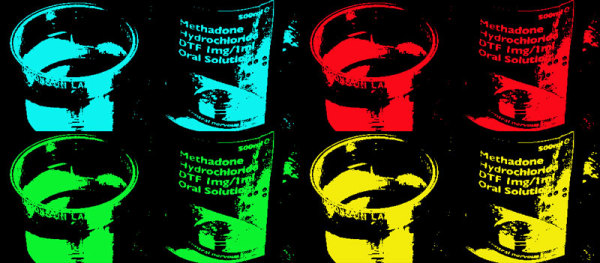
‘Recovery is too hard and dangerous. Solution: methadone for life’ by DJ Mac

w600_817157f479b2b1cb43e6a6646b8f7efcWell worth checking out excellent new blog, Recovery Review, by DJ Mac. Here’s a sample:

‘Berlin, like many big cities has a heroin problem. People presenting for help are being prescribed opioid replacement therapy (ORT) in greater numbers. That’s a good thing isn’t it? Well it depends on what you think is the end goal of treatment.

At the start of this interesting recent German paper “Why do patients stay in opiod maintenance treatment?”, Dr Stefan Gutwinski and colleagues say that the scientific literature indicates the point of ORT is: “to increase survival and bring stabilization to patients, in order to enable them to reach abstinence of opioids.” The Scottish Government’s drugs policy and the UK policy agree.

Read More ➔

Don Coyhis, Founder of White Bison

coyhisI found this great biography of a special Native American, Don Coyhis.

Founder, White Bison, Purpose Prize Winner 2009. Coyhis developed Wellbriety, a substance abuse recovery program that taps the power of Native American culture, tradition, and community to help heal his people.

Don Coyhis felt emptiness in sobriety. He found himself going through the motions at support group meetings, disconnected from the reasons why he shouldn’t drink.

Searching for understanding, he turned to his Native American roots. During a five-day fast in the Colorado mountains, Coyhis saw a white bison rise from the ground – to him, a sign that his recovery would be incomplete without his culture. Coyhis founded a nonprofit offering native-focused recovery resources to communities across the country, and in turn, launched a movement called Wellbriety.

Read More ➔

‘No More Graduation’ by Bill White

Something toGraduation reflect upon in Bill White’s latest blog.

‘The acute care (AC) model of intervention that, with few exceptions, has dominated the modern treatment of addiction involves a brief – and seemingly ever-briefer – period of professional intervention followed by cessation of the service relationship. 

As addiction professionals working within this model, we are trained to screen, assess, admit, treat and discharge each person we serve.   And as we approach the end of this sequence, we are trained to address “termination” issues in the counseling relationship, prepare “discharge” plans and, in many of our settings, participate in a “graduation” ritual that signals the end of primary treatment and the service relationship.

Read More ➔

‘Shedding Skins in Recovery’ by William L White

Shedding Skins in Addiction RecoveryMore wonderful reflections from Bill White in his latest blog posting.

‘For years, the following quote has rested over my writing desk:  “The Phoenix does not mourn what lies in its ashes; the serpent does not mourn its old skin.” Arthur Frank

Addiction recovery involves a progressive unpeeling of the self and focused efforts of self-construction.  It is helpful in thinking of this to distinguish between remission and recovery.

Remission of an illness can involve little more than the removal of symptoms and a return to the earlier trajectory of one’s existence.   In this sense, remission is regressive – a return to an earlier level of functioning. 

Read More ➔

ManyFaces1Voice: John Silverman

Unknown-3“I didn’t know anything about recovery. I didn’t know there was a place to come. I didn’t know there was some hope, so if we don’t put it out there, so if we don’t talk about how we recovered, how is anybody really going to know.”

John Silverman is a person in long-term recovery since 1984 and an Executive Producer for The Anonymous People film. He is a former member of the New York City Police Department, and has been performing private investigative and related security consulting for over 20 years.

After leaving the New York City Police Department and entering recovery, John founded his private investigative company, Silverman Associates, in 1988.

Read More ➔

‘Building Bridges Between Mental Health and Addictions Communities’ by Oryx Cohen

ocohenThere is a real need to connect addiction and mental health communities, so this blog from Mad in America is very interesting.

‘When Linda Sarage and Jake Powers first approached me about writing a section for the fantastic manual developed by the addictions community – From the Ground Up: How to Build Your own Peer-to-Peer Recovery Center – that would help connect this manual to the mental health community, I envisioned writing a section that would serve as some sort of translation tool that could connect two very different communities toward a common purpose. 

After reading the manual, however, I quickly remembered how much the mental health community has in common with the substance abuse community and how little “translation” is actually needed.

Read More ➔

‘Recovery Landscapes’ by Bill White

Recovery Landscapes‘Interventions into severe alcohol and other (AOD) problems have focused primarily upon altering the character, thoughts, feelings, and behaviors of individuals. Far less attention has been given to influencing the environment in which such factors are birthed, sustained or changed. But interest in the geography of recovery is increasing. Researchers are beginning to suggest that reaching the tipping point of addiction recovery may have as much to do with community factors as intrapersonal factors.  Recovery advocates and clinicians are calling for creation of a “healing forest” – “naturally occurring, healing environments that provide some of the corrective experiences that are vital for recovery.”

Read More ➔

‘Are we all addicted?’ by Becs Daddow

RD photo glasses - updateI like this article by Becs Daddowof Nurture Development, who draws on the great work of Bruce Alexander.  She emphasises that when we deal with an issue like addiction, it “requires a whole community response that doesn’t simply focus on a single issue whether that’s recovery, well-being, mental or physical health, and so on.” Too true!

‘You’ve probably heard people state that addiction is blind to status, fortune, and situation. It’s often said when talking about drug or alcohol addiction and you’ll be directed to the sad deaths of the rich and famous to make the point all the more resonant, offering a stark alternative to the stereotypical image of the gaunt, penniless, criminal heroin addict so often depicted.

The statement may in fact be truer than we realise at first. Read, for example, Bruce Alexander’s The Globalization of Addiction and you will find a compelling narrative that sets out how, in today’s post-modern world, most of us have ‘severe addictions’. They may not be addictions to drugs or alcohol but that doesn’t necessarily make them any less dangerous.

Read More ➔

‘High on Hope’: Peter’s Story

Please watch this excellent filmed Recovery Story. Thank you so much for this share, Peter.

‘A frank and honest account of a life dominated by addiction and crime that ends on a ‘HIGH’ – Peter’s story is testament to the paradigm shifts that can happen when people have, ‘just had enough’, ask for help and receive a sufficient amount of it.

Peter has turned his previous experiences into a positive as he now creates a positive ripple-effect in his community by helping others.

Read More ➔

‘An interview with Greg Williams – The Anonymous People’ by Veronica Valli

20956_610039903223_6779801_n-1-300x280Greg Williams and The Anonymous People are in the news a lot recently which is great. Exactly what we want. Here’s a new interview from Veronica Valli.

‘If you are in the recovery community then you would have heard of the movie The Anonymous People. A ground breaking movie that highlights the need for more advocacy and more access to treatment for addicts and alcoholics.

Many of the participants of the movie have been interviewed for my Recovery Rocks series: Emmy award winning actress and NYT best selling author Kristen Johnston, former NBA basketball player Chris Herron, Recovery advocate and media commentator Joe Schrank.

Read More ➔

‘Mistakes are the juice of life’ by Veronica Valli

UnknownI think this new blog from Veronica Valli is a great reminder.

‘When I first got sober I was under the delusion that in order to stay sober, I had to become perfect in all areas.

It got worse when I trained to be a therapist. Because I was a therapist I thought I needed to always be serene, wise and know the right thing to say. I needed to exude a calm, reassuring confident manner with everyone, not just my clients. But no matter how hard I tried, I would f**k up.

Read More ➔

‘Open source sobriety: Getting past chauvinism in early recovery’ by Matt Robert

woman-in-cellHere’s the latest posting on Marc Lewis’s blog, a guest blog from Matt Robert.

‘Here’s another guest post, and it’s a winner. Sincere thanks to Matt Robert, a  SMART Recovery facilitator I met last June in Boston….

I’ve been spending a lot of time these days going in and out of locked detox units. And it’s interesting because, in most important ways, they haven’t changed very much at all. But I’ve changed, and the reason for my going into them has changed as well. Now I go into them because I want to, and I leave because I can.  I go into them now to talk about recovery.

Read More ➔

5th Year Anniversary for Ron Grover’s blog

dm1One of the most popular blog postings on this website is From Discovery To Recovery: My Emotional Journey As The Parent Of An Addict by Ron Grover. Well worth a visit.

Ron celebrated the 5th anniversary of his blog An Addict In Our Son’s Bedroom last month. Here is what he had to say:

‘On January 20, 1999 I began writing this blog. Never when I began did I think it would become what it has and last this long. At this point it has become an old friend and it keeps me connected to friends all over.

Read More ➔

Want to be part of the biggest film festival screening ever?’

HAZELDEN’S SOCIAL COMMUNITY WILL HOST A FREE ONLINE SCREENING OF THE ANONYMOUS PEOPLE AND LIVE Q&A.

On March 1st starting at 12 A.M. Eastern time (U.S.), the Hazelden Betty Ford Foundation, a founding partner of the Manyfaces1voice call-to-action campaign, will host a free online stream of The Anonymous People via the Hazelden Social Community.

On that day, The Anonymous People will be available for people all over the world to watch for 24-hours only. The film’s director, Greg Williams, and other key subjects from the film, including Hazelden Betty Ford Foundation’s William Cope Moyers, will be available for a live chat at 5 p.m. EST.

Read More ➔

‘Amplified Recovery’ by Bill White

Amplified Recovery“There is nothing about a caterpillar which would suggest that it will become a butterfly.” Buckminster Fuller

Recovery from a life-threatening condition can bring far more than the removal of pain and sickness from an otherwise unchanged life.  Confronting one’s mortality through the experiences of illness and recovery can bring unexpected gifts. 

Surviving heart disease, cancer, addiction or other life-threatening experiences can be an unlikely source of renewal and personal transformation – catalysts for living more fully and more meaningfully.  There may be something to that notion of being stronger at the broken places.

Read More ➔

Sharing Culture blog: Recovery from trauma

511+Nl1uNdL._BO2,204,203,200_PIsitb-sticker-arrow-click,TopRight,35,-76_AA300_SH20_OU01_I am now blogging on my new website Sharing Culture and here is a recent posting.

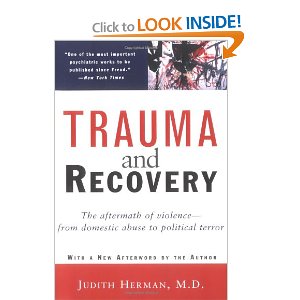
‘Judith Herman’s book Trauma and Recovery is a classic. Judith starts the recovery part of her book, in a chapter entitled ‘A Healing Relationship’, with some important insights into recovery and healing.

‘The core experiences of psychological trauma are disempowerment and disconnection from others. Recovery, therefore, is based upon the empowerment of the survivor and the creation of new connections.

Recovery can take place only within then context of relationships; it cannot occur in isolation. In her renewed connection with other people, the survivor re-creates the psychological facilities that were damaged or deformed by the traumatic experience. These faculties include the basic operations of trust, autonomy, initiative, competence, identity, and intimacy.

Read More ➔

My Favourite Blogs: ‘Recovery and the Conspiracy of Hope’ by Pat Deegan

2007_0116walpole0154Here is a classic presentation made by Pat Deegan at “There’s a Person In Here”, The Sixth Annual Mental Health Services Conference of Australia and New Zealand. Brisbane, Australia.

Beautiful writing, a must-read. I’ll whet your appetite:

‘I love the word conspiracy. It comes from the Latin “conspirare” which means to breath the spirit together. What is the spirit we are breathing together here today?

It is a spirit of hope. Both individually and collectively we have refused to succumb to the images of despair that so often are associated with mental illness.

Read More ➔

My Favourite Blogs: Beth Burgess – ‘What is Recovery from Addiction?’

I love this piece of film from Beth Burgess, a recovery coach with Smyls.
 
There’s a big difference between sobriety and recovery. Beth points out that many people give up trying to stop drinking after a few days because it feels too difficult. They don’t realise that these bad feelings don’t last if you make the journey to recovery.

Beth describes her first experience of sobriety – “It was horrible” – before she relapsed. Now she is in recovery, she doesn’t think about alcohol. She loves her life. How do you get to that stage?

Excerpt from Anna’s Recovery Story: ‘Should I or shouldn’t I?’

stories-02Through his heroin addiction and recovery, Anna’s brother has taught her so much about life, including the most valuable lesson she could ever learn – you can get through anything.

“… there’s no way I can tell this story without saying that my brother is truly the most inspirational person I know. I am in awe of who he is and what he’s achieved. He has taught me so much about life, including the most valuable lesson I could ever possibly learn – that you can get through anything.”

‘6. Emotional release
My parents could see that I wasn’t really coping with what was happening and they convinced me to go and see a counsellor. I went to see a very expensive psychologist for three sessions. The first two sessions were spent crying and telling the same story I’d told everyone else a thousand times.

Read More ➔