Guest Blog – ‘Solvent abuse: the hidden issue’ by Victoria Leigh

logoI wanted to highlight the great work of Re-Solv who have been working 30 years to tackle solvent abuse and its impact. Here’s a Guest Blog from the team at Re-Solv. Well done all for all your hard work.

‘This month, Re-Solv celebrates 30 years of working to end solvent abuse and support all those whose lives are affected by it.

To most people, solvent abuse means “glue-sniffing”; people think of the 1980s, they remember the 100 or more people that were dying of solvent abuse every year in that decade, and they make the thankful assumption that it’s all a thing of the past.

But it’s not.

Read More ➔

‘How Depression Can Bring Blessings in Disguise’ by Douglas Bloch

In this video. author and depression counselor Douglas Bloch talks about how depression and anxiety can bring unexpected blessings in their wake.

’Self-Determination in Mental Health Recovery: Taking Back Our Lives (Part 1)’ by Mary Ellen Copeland

Unknown-7This morning I was thinking about factors that facilitate healing amongst Indigenous people in preparation for some content I’m writing for Sharing Culture. I first thought ‘self-determination’. We know that self-determination is key for recovery, yet the white-dominated society here (and in other colonised nations) forces its way of doing things on indigenous people, even when it does not work.

Anyway, I googled self-determination, and came up with this excellent article by Mary Ellen Copeland. I thought I would upload Mary Ellen’s article in several parts.

‘The most important aspect of mental health recovery for me personally is self-determination. My connection with people in the system and in recovery has convinced me that the same is true for others.

In this paper I will discuss both my personal perspectives and the perspectives of others on this important topic based on many years of experience as a person, a user of mental health services, a researcher and a teacher.

Read More ➔

‘My Story: How I Was Healed From Depression’ by Douglas Bloch

It was great to recently hear from Douglas Bloch who asked if I might include his Story as posted on his website. Great idea, Douglas!

‘In his book, Prayer is Good Medicine, physician and researcher Larry Dossey maintains that praying for oneself or others can make a scientifically measurable difference in recovering from illness or trauma. It is one thing to understand such a healing intellectually; it is another to know it from experience.

Such an experience came to me in the fall of 1996 when a painful divorce, a bad case of writer’s block, and an adverse reaction to an antidepressant medication plummeted me into a major depressive episode.

Read More ➔

‘Stigma Reduction Through Recovery Contact’ by Bill White, Tom Hill and Greg Williams

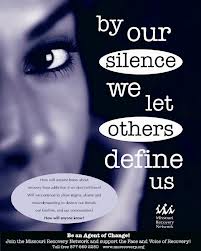
Silence PosterMore insightful writing from Bill White and colleagues.

‘Debates continue on whether the stigma attached to persons experiencing alcohol and other drug (AOD)-related problems has a positive or negative social effect on the nature and magnitude of these problems.  Stigma promoters argue that public castigation of excessive AOD users prevents such use at a cultural level and exerts pressure for AOD deceleration/cessation among those with AOD problems.

Stigma detractors argue that such castigation inhibits help-seeking, forces excessive AOD users into subterranean drug cultures, promotes their sequestration through mass incarceration, poses barriers for the reentry of people seeking recovery into mainstream society, and places undue blame on individuals and groups while ignoring the ecology of addiction – the environmental conditions in which alcohol and other drug problems flourish.   

Read More ➔

‘A Life Rebuilt’ from Dawn Farm

Spotted this on DJMac’s Recovery Review. As DJ says: ‘Here’s a beautifully shot, authentic short film which captures how hope powers recovery.’

‘Amy came to Dawn Farm’s Spera Recovery Center feeling “broken and hopeless and like [she] didn’t have a soul”. In detox, she found others who felt the same way, but also found hope and faith.

Slowly, she learned to face her fears with faith that, if she does the next right thing, things will work out. Two years sober, this faith allows her to confront her fears as her biggest supporter faced cancer.

Read More ➔

‘Recovery Stories – Episode 1: What Does Recovery Mean for You?’ by Cafe TA Center

‘At the 2013 Alternatives conference in Austin, TX, The CAFE TA Center invited people with lived experience to share their thoughts on recovery. Dozens of people chose to participate, and offered their reflections on the recovery process, how the concept of recovery has changed their perspective on mental health, and what public policy makers and the general public need to understand about the concept of recovery.

Read More ➔

‘Listening Across the Stages of Recovery’ by Bill White

Listening‘Addiction shrinks one’s world to a state of stark self-imprisonment.  As the person-drug relationship devours everything else of value, nothing remains that cannot and will not be sacrificed. And as the drug then devours the self, what remains are only manipulative masks interchanged so quickly that any sense of “true self” remains as only a faint memory.  This shell, now masquerading as a person, burns its way through the world leaving human wreckage in its wake – all wounded by addiction’s self-centeredness, dishonesty, disloyalty, depravity, and brutality.

Extreme narcissism, self-will run riot in the language of Alcoholics Anonymous, is the essence of addiction regardless of whether one sees this trait as a cause or consequence of addiction.  It is a paradoxical entrapment manifested in self-absorption (self-inflation and exploitation or self-deflation and serial victimization) and deteriorating capacities for self-care. These styles of self-deception exist within a person fighting to retain and assert his or her fading humanity.  These are the Janus faces of addiction – the Dr. Jekyll and Mr. Hyde of addiction fame.

Read More ➔

‘We Are All Connected: Reflection on Robin Williams’ Suicide’ by Pat Deegan

CW, CBS And Showtime 2013 Summer TCA Party - ArrivalsLike so many, I was deeply affected by Robin Williams’ suicide.  I was a big fan of his comedy.  In one of his greatest moments of standup, he invented a new psychiatric medicine he called “Fukitol” and forever won my heart. I also loved most of his dramatic performances such as Good Morning Vietnam, The Birdcage, and Good Will Hunting.

I knew all along that Robin Williams was one of us.  He reveled in outrageous genius that always teetered on madness.  He made the world laugh, while he wrestled with depression and battled his addictive demons.

Of course, he slipped at times.  He took wrong turns and made some bad choices.  But he was resilient.  He kept self-righting. He sought out help including detox, medications, therapy and mutual support groups.

Read More ➔

‘Dr Mark and The Village’ by Mark Ragins

Unknown-3Here is an article by one of my favourite people in the mental health field, Mark Ragins on Mad in America. Mark is the Medical Director at the MHA Village Integrated Service Agency, a model of recovery based mental health care.  His practice has been grounded in 20 years+ with some of the most underserved and difficult to engage people in our community.

‘My name is Mark Ragins.  Most people at The Village call me Dr. Mark, except those who have known me long enough to forego that pedestal and just call me Mark.  I’m a psychiatrist, a story teller, and the kid who used to drive his parents and teachers crazy asking “Why?” unendingly and then, never satisfied with their answers, looked for my own answers and returned to tell them that their answers were wrong.

When I meet someone new I usually try not to tell them I’m a psychiatrist too soon.  There are so many strange and scary ideas about psychiatrists and mental illnesses out there that I’m afraid I’ll be rejected before I even have a chance.

Read More ➔

Eleanor Longden: The voices in my head

Brilliant and very moving TED talk from Eleanor Longden.

‘To all appearances, Eleanor Longden was just like every other student, heading to college full of promise and without a care in the world. That was until the voices in her head started talking. Initially innocuous, these internal narrators became increasingly antagonistic and dictatorial, turning her life into a living nightmare.

Diagnosed with schizophrenia, hospitalized, drugged, Longden was discarded by a system that didn’t know how to help her.

Longden tells the moving tale of her years-long journey back to mental health, and makes the case that it was through learning to listen to her voices that she was able to survive.’

Russell Brand: my life without drugs

26th Annual ARIA Awards 2012 - Award Winner PortraitsA great article in the Guardian by Russell Brand. He’s doing some great work.

Russell Brand has not used drugs for 10 years. He has a job, a house, a cat, good friends. But temptation is never far away. He wants to help other addicts, but first he wants us to feel compassion for those affected.

The last time I thought about taking heroin was yesterday. I had received “an inconvenient truth” from a beautiful woman. It wasn’t about climate change – I’m not that ecologically switched on – she told me she was pregnant and it wasn’t mine.

I had to take immediate action. I put Morrissey on in my car as an external conduit for the surging melancholy, and as I wound my way through the neurotic Hollywood hills, the narrow lanes and tight bends were a material echo of the synaptic tangle where my thoughts stalled and jammed.

Read More ➔

‘An interview with Matt and Amy Baumgardner’ by Veronica Valli

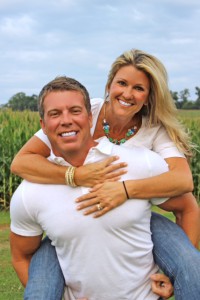
image1-200x300Here is a moving Story from Veronica Valli’s website.

A little while ago I was asked to review an extraordinary book called: From this day forward, A love story of faith, love and forgiveness by Amy and Matt Baumgardner. I had interviewed Amy Baumgardner previously for my Recovery Rocks interview series. Amy just has one of those jaw-dropping stories of recovery. Her story is so extraordinary that she was featured on Oprah’ Life class with Iyanla Vanzant.

Amy lost all sight of what was important to her and her drinking took over, one day she packed her kids into the car and drove them whilst she was drunk. She hit a tree and the accident left her 5-year-old in a critical condition. This was the beginning of the end for Amy, finally realizing she had a problem she began the long painful and guilt-ridden task of getting sober.

But how does a family recover from this? How does a husband forgive his wife for almost killing their child? How does a mother forgive herself? How can you repair a marriage with this kind of devastation and pain?

Read More ➔

‘Peer Support in Mental Health: Exploitive, Transformative, or Both?’ by Larry Davidson

ldavidsonI am a great admirer of Larry Davidson’s work and writings. Three of his books are amongst my favourite reads in the mental health field—please see below. These books provide clear insights into the whys and hows of adopting recovery based care. Here is an example of Larry’s writing, which appeared on the Mad in America website. I first posted this article on Recovery Stories in 2014.

‘The first time I tried to write about peer support – that emerging form of “service delivery” in which one person in recovery from what is described in the field as a “serious mental illness” offers support to another person who is in distress or struggling with a mental health condition – was in 1994. The manuscript was summarily rejected from an academic journal as representing what one of the reviewers described as “unsubstantiated rot.”

That same article was eventually published 5 years later [1], and used by the President’s New Freedom Commission on Mental Health to support its recommendation that peer supports be implemented across the country [2]. Now, more than a decade later and as peer support arrives at something of a crossroads, both of these reactions remain instructive.

Read More ➔

Pat Deegan – Common Ground

A brilliant must-see talk by Pat Deegan, a major pioneer and inspiration in the mental health field. After describing her own experiences in treatment, Pat talks about Common Ground, the web-based application she has developed that helps people meet with psychiatrists and doctors and arrive at the best decisions for their treatment and recovery.

This is Pat’s presentation at the 2012 Summer Institute for Informed Patient Choice at Dartmouth.

‘The Power of Storytelling’ by Lisbeth Riis Cooper

lrcooperLisbeth Riis Cooper is another person whose blogs on Mad in America I really appreciate and value. Here’s one on storytelling.

‘Over the years, I have heard many powerful recovery stories. I’ve also had many opportunities to share our family’s struggle with mental health challenges and our recovery journey.

Each time I share my story, it gets a little easier. I feel a little lighter, a little more hopeful. And I realize how far our family has come, how much we have learned and healed.

Stories are powerful. And so is the process of telling them. Here is what I have observed over my last 10 years of storytelling:

Read More ➔

Essential reading: ‘Speed’ by Stephanie Brown, Ph.D

I’m reading the excellent book, Speed: Facing Our Addiction to Fast and Faster – And Overcoming Our Fear of Slowing Down, by one of my favourite recovery thinkers/writers, Stephanie Brown. It’s well worth reading. Here is what is written on YouTube.

‘MORE, BETTER… SLOWER.

Feeling rushed, out of control, and overwhelmed?
Feeling like you can’t keep up…and can’t stop?
It’s not just you.

From the need to be constantly connected and the changing definition of “work hours,” to unrealistic expectations of instant gratification, our bodies and brains are being harmed by habits that, as with any kind of addiction, promise short-term satisfaction while doing long-term damage.

Read More ➔

“The Other Side’ by Matt Samet

msametI’ve really enjoyed reading Matt Samet’s blogs on the excellent Mad in America website. Here is his first one, which provides some important insights int withdrawing from psychoactive prescription drugs and recovering from addiction.

‘With little fanfare and even a glance at the calendar to confirm it, I realized as I sat down to write this that December 5 marked the seven-year anniversary of the last time I took a benzodiazepine tranquilizer.

I had been prescribed the pills for a “panic disorder” starting at age 21, and took them daily from 1998 to 2005 as a “prophylaxis” against anxiety, in ever-escalating doses as prescribed. My final dose was, I think, a quarter-milligram of lorazepam, administered on the fourth-floor Affective Disorders Unit of the Meyer Psychiatry Building, at the Johns Hopkins Institute in Baltimore. I have not taken any since.

Read More ➔

“You’re all going to hate the word ‘recovery’” by DJMac

Disagree-2One of the problems with an aspirational and non-prescriptive definition of recovery is that it is hard to measure. The definitions most commonly featured in the literature share some elements including wellbeing or health, abstinence and citizenship.

Clearly if you can’t define it precisely, then it’s hard to commission services to deliver on it. In this case proxy outcomes are used. There’s a lot of debate amongst professionals on recovery definitions and measurements, but what about service users? What do they make of ‘recovery’?

In a teasingly titled paper (‘‘You’re all going to hate the word ‘recovery’ by the end of this’’: Service users’ views of measuring addiction recovery) Joanne Neale and colleagues scope the views of clients and patients in a variety of settings and run past them professional perceptions on recovery measures. How different are the perspectives?

Read More ➔

‘From the Rooms to the Streets’ by Bill White

Unknown-1‘Until recently, recovery from addiction was shrouded in public secrecy in the United States and in most other countries. Addiction has long been viewed as a personally and culturally intractable problem, and pessimism has reigned about the prospects of long-term addiction recovery.

These perceptions have been fed by the unrelenting public visibility of addiction-related problems, but the comparable invisibility of stable, long-term addiction recovery.

Historically, most people in recovery either completely eschewed recovery status (refused the addiction and recovery labels and culturally “passed”) or regularly cloistered themselves in “the rooms” of recovery mutual aid meetings before repeatedly and invisibly re-entering their civilian roles without acknowledgement of their recovery status.

Read More ➔