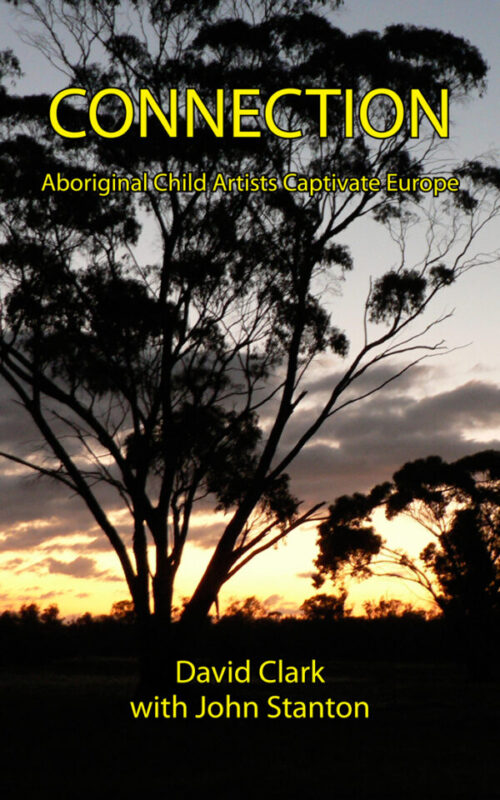

 In the early 2000s, I saw how different addiction treatment services operated in Wales. Here, I outline the approach adopted by the government-led addiction treatment system, which was heavily influenced by the 1998 UK Drug Strategy, and describe some of its shortcomings. I discuss what I saw at West Glamorgan Council on Alcohol and Drug Abuse (WGCADA) in Swansea in relation to ideas related to self-healing and the therapeutic process. (2,962 words)
In the last six parts of My Journey I have described various community activities in which I was engaged, both at a local and national level, in the few years after I left the neuroscience field in the year 2000. In this chapter, I reflect on various aspects of these activities and on the environment in which I now worked.
1. Early Reflections on Addiction Treatment
‘Step by step that change is happening and Britain is becoming a better place to live in. But it could be so much better if we could break once and for all the vicious cycle of drugs and crime which wrecks lives and threatens communities.’ Prime Minister Tony Blair, 1998
What was happening in the addiction treatment field was heavily influenced by the UK government’s 1998 drugs strategy, Tackling Drugs to Build a Better Britain, which classed the drug problem as a criminal justice issue, rather than a health/social issue. The UK Government’s priority for drug treatment was to provide methadone, a long-lasting heroin substitute, to people who were addicted to heroin, believing that this would reduce the crime that they perceived was caused by heroin addicts.
 What a day for a very special man here in Canning Vale, Perth, Western Australia. My good friend Michael Scott is celebrating his 45th Recovery Birthday. A wonderful achievement! Congratulations, Michael. I remember vividly Michael’s description of his last drink, written ten years ago in his Recovery Story
  What’s it like when you reach that point when you say, “Enough is enough, I have to change.” And you do change! The moment of clarity that triggers the journey to recovery. Here’s what my close friend Adam had to say in his Recovery Story.
 Huseyin Djemil of
  When I first met Natalie back in 2000, I didn’t realise that she would play a role in my decision to change career from neuroscientist to addiction recovery advocate, researcher and educator. Her words also contributed to my decision to write a collection of Recovery Stories. Thank you, Natalie. (1,730 words)
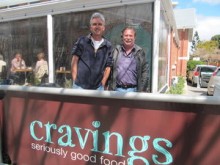 On the 10th of April, my close friend Michael Scott will celebrate his 45th Recovery Birthday.
 Here’s another excellent
 This article is the follow-up to the
  Wulf Livingston, from North Wales, and I have developed a new initiative called Recovery Voices. We will be interviewing people in recovery from addiction, as well as their recovery friends, and creating a series of short films focused on a number of themes. These short films will eventually become part of a new Recovery Voices section of the website.
 Describes a piece of research I conducted relating to a 2003 article by Nick Davies for The Guardian newspaper in which he claimed that the UK Drug Strategy was failing as a result of government bureaucracy. I followed up this report by contacting Drug Action Team (DAT) co-ordinators to see how prevalent the problems Nick identified were across the country. (2,896 words)
 This is the first of two blog posts on the culture of addiction that I first uploaded to the website back in 2013. They are strongly based on the seminal writings of William (Bill) White, in particular from his stimulating book
  I still feel strange that my good friend and
  Here is a blog that I first posted on the website in September 2013. Rosie had earlier posted the blog on our online community Wired In To Recovery.
 Here’s another great blog from one of my favourite psychiatrists,
  Describes our 2000-2002 national evaluation of projects supported by the Drug and Alcohol Treatment Fund (DATF) in Wales, detailing two particular projects, the North Wales Community Drug and Alcohol Liaison Midwife position and the Option 2 project in Cardiff. (4,837 words)
 After nearly twenty years working as a neuroscientist, I closed down my university research laboratory at the beginning of the millennium. I no longer believe in the biomedical approach to helping people overcome addiction and mental health problems. I believe that long-term use of psychiatric drugs causes more harm than good. It’s not ‘what is wrong with you’, but ‘what has happened, or is happening, to you.’
 Here’s one of my favourite posts from that prolific blogger William (Bill) White, addiction recovery advocate, writer, researcher and historian. Bill’s complete writings are now being hosted on a