
Robert Granfield and William Cloud’s research provides important insights into how many people overcome substance use problems without accessing treatment. They stress the importance of recovery capital in the process of recovery from addiction. (1,920 words)
Should Recreational Drug Use Be Criminalised?
March 14, 2023 by
Douglas Husack provides a cogent analysis of the drug laws debate, focusing on the various reasons that prohibitionists posit for criminalising drug use, as well as the various disadvantages of prohibition. (1,992 words)
Stopping Heroin Use Without Treatment
March 14, 2023 by
Research by Patrick Biernacki reveals important insights into how people recover from heroin addiction. It also illustrates the major challenges that people with a heroin addiction face on their journey to recovery (2,283 words).
Understanding Intentional Behavioural Change
March 14, 2023 by
Recovery from addiction is about behavioural change. James Prochaska and Carlo DiClemente’s model about the stages and processes of behavioural change has made a very significant contribution to the field. (2,409 words)
My Journey: 4. Learning About Addiction Treatment – WGCADA Stories
March 13, 2023 by
 Three stories from the treatment agency West Glamorgan Council on Alcohol and Drug Abuse (WGCADA) in Swansea describe a medical student’s experiences during a day with community support worker Dave Watkins; a client’s experiences whilst interacting with Arrest Referral worker Becky Hancock, and a client’s experiences in the Primary treatment programme at WGCADA. (4,644 words)
In the previous part of My Journey, I described some of what I learnt through a small group of practitioners (some of whom were in recovery) at the treatment agency WGCADA in Swansea. During my time at WGCADA, my colleagues and I wrote a number of stories, three of which I include here.
1. ’A Day in the Life of Dave’ by Annalie Clark
The first story is written by my daughter Annalie, after she finished her first year of medical training at the University of Edinburgh and worked as a volunteer for Wired In over a period of the summer. One of her projects involved following around WGCADA Community Support Worker Dave Watkins.
Everything you think you know about addiction is wrong: Johann Hari
March 11, 2023 by
‘The core of that message, “You’re not alone, we love you,” has to be at every level of how we respond to addicts socially, politically and individually. For one hundred years now, we’ve been singing war songs about addicts. I think all along we should have been singing love songs to them… because the opposite of addiction is not sobriety. The opposite of addiction is connection.’
I loved this TED talk by Johann Hari years ago when I first viewed it. And after watching it early this morning, I still love it! Watching the film again reminded me of the words of Tim, a professional working in the field who is also in recovery from addiction, one of the storytellers in our Recovery Stories project.
Check Out Our Trauma and Healing Resources
March 10, 2023 by
 Over the past decade, I’ve become increasingly interested in trauma and its consequences (e.g. addiction, mental health problems, suicide), and the healing of trauma. I described this increasing interest in a blog post last month entitled Addiction and Psychological Pain: Some Reflections.
I’ve recently added two new trauma-related sections into our Resources, one that is focused on the work of leading childhood trauma expert Bruce Perry, and the other links to trauma-related work of other experts. You can also find 32 blog posts in our Indigenous Healing section, which are related in one way or other to the healing of intergenerational trauma (often called transgenerational or historical trauma).
I have learnt a great deal from Dr. Bruce Perry about trauma and the healing of trauma over the past years. I have posted a number of articles about Bruce’s work on my Healing blog on The Carrolup Story website that I run with John Stanton. I thought it was time that I linked to these articles on this website due to the impact of childhood trauma and neglect on the development of addiction.
A Recovery Community History: CCAR, The First Twenty Years
March 9, 2023 by
I’ve been following the work of Phil Valentine and his colleagues at the Connecticut Community of Addiction Recovery for some years. They have been doing some great things and, in my humble opinion, have been leading the way with a number of their initiatives. Here’s a film celebrating their first twenty years.
‘Long-term members of a pioneering organisation in the development of recovery communitites tell the inspiring and moving story of CCAR, the Connecticut Community for Addiction (CCAR). ‘CCAR is a centralized resource in CT for all things recovery. Whether you are contemplating a life in recovery, are new to recovery or are in long-term recovery, CCAR is here to help you to navigate the recovery community, by connecting you with others in recovery and providing access to area support services. Since 1998 we have worked to make this reality – the CCAR 20 Strong documentary tells this story.’ CCAR 4recovery, 16 April 2020. [32’32”]
Bill White on Stigma and the Recovery Advocacy Movement
March 8, 2023 by
 Here is a powerful 2014 film clip on the Faces & Voices of Recovery Vimeo channel from leading addiction recovery advocate Bill White about stigma and how we can tackle the problem.
‘Almost everyone in America know someone in recovery. The problem historically is that they did not know they were in recovery which means that they can continue to maintain incredible stereotypes about who are the people who develop alcohol and other drug problems in this country and who are the people who recover and don’t recover.
There are a lot of issues about stigma that I cannot educate you out of. I can give you all the facts. I can read all the books to you. I can show you documentaries but nothing is going to change that embedded prejudice until you encounter personally someone in recovery who means something to you and hear their story.’
William (Bill) White is Emeritus Senior Research Consultant, Chestnut Health Systems. He has served as a volunteer consultant to Faces & Voices of Recovery since its founding. He has a Master’s degree in Addiction Studies and has worked in the addictions field since 1969. He has authored or coauthored more than 350 articles and monographs and fifteen books including Slaying the Dragon: The History of Addiction Treatment and Recovery in America and Let’s Go Make Some History: Chronicles of the New Addiction Recovery Advocacy Movement. Check out an online library of his writings at williamwhitepapers.com. Faces & Voices of Recovery, 2014. [5’44”]
Ellie’s Recovery Story, ‘Come With Me’: I Am Not Anonymous
March 7, 2023 by
 Ellie’s Recovery Story is from the excellent I Am Not Anonymous website, Kate King and Tom Goris. This website contains over 170 Recovery Stories… no you haven’t read wrong! A simply amazing piece of work. Congrats to Kate and Tom and all the contributors. [NB. It looks like the website may have been last updated in 2015 – and the introductory film did not work for me – but the Stories are as relevant today as they were then.
‘When I was drinking, my life was ruled by shame. It’s exhausting, living a double life. On the outside I was a put-together, active, intelligent woman. I made sure my outside always looked okay, so nobody would look too closely at what was really going on, at my dirty secret.
Inside, I was a crumbling mess. I felt less-than, unworthy and insecure. I strove for perfection in all things, which of course is unattainable, and this left me feeling empty and ashamed.
I drank to fill the cracks, the emptiness. I drank to numb out, escape. I drank to feel okay with myself. I found myself in my late thirties, a shell of a person, hollow and feeling desperately alone, even though I had a beautiful family, a job, and people who loved me.
My Journey: 3. Learning About Addiction Treatment – My WGCADA Experience, Part 2
March 6, 2023 by
I learn about the referral process, assessment, Pretreatment, Primary Treatment, Aftercare, DOMINO (Development in Motivation In New Outlooks) and community support from a number of the practitioners at West Glamorgan Council on Alcohol and Drug Abuse (WGCADA) in Swansea. In entering this new world, I learn about a number of key factors that facilitate recovery at this treatment service. (4,367 words)

The late Lawrence Mylan, who ran the Pre-Treatment programme at WGCADA.
In the previous chapter, I described how I started visiting a local treatment agency in Swansea, West Glamorgan Council on Alcohol and Drug Addiction (WGCADA), in order to learn more about addiction, treatment and recovery. After working as a neuroscientist for 20 years, I had closed down my research laboratory because I no longer believed that neuroscience was helping people overcome addiction to drugs and alcohol. I continue to describe what I learnt at WGCADA.
‘Dr Mark and The Village’ by Mark Ragins
March 5, 2023 by
 I was going through some of my old blog posts and came across a 2014 post from one of my favourite people in the mental health field, award-winning psychiatrist Mark Ragins. I thought it was time to post it again. First a few words from Mark about himself which I consider particularly pertinent:
‘I am a recovery-based psychiatrist. After 27 years working as the Medical Director at the MHALA Village in Long Beach, California, an award-winning model of recovery based mental health care, I moved on in 2017 to be the only psychiatrist at CSU Long Beach providing innovative psychiatric services for the students there. I also continue to work as an independent trainer, consultant, speaker, writer, and transformation leader in the Mental Health Recovery Movement. I believe that:
> My work should be person-centered, working to help people grow and develop into the person they are meant to be, not just to treat mental illnesses or conditions.
> My relationship with the people I work with should be collaborative and client-driven working on your goals, rather than pressuring for compliance with my treatment.
> People recover because of the strengths and resilience that they use and develop, not because I took care of them and fixed what was wrong with them.
What facilitates recovery from mental health problems?: Scottish Recovery Network
March 4, 2023 by
 It is important to note the close similarity in the nature of elements that underlie recovery from serious substance use problems and recovery from mental health problems.
An excellent 2007 paper published by the Scottish Recovery Network by Wendy Brown and Niki Kandirikirira, entitled Recovering Mental Health in Scotland: Report on Narrative Investigation of Mental Health Recovery, provides important insights into the latter. This research involved the recovery narratives of 64 individuals in Scotland who identified themselves as being in recovery or recovered from a long-term mental health problems. Here is what the authors write in the Executive Summary of the Report (NB. That I have broken up one long paragraph for ease of reading online]:
‘Across the stories consistent internal and external elements could be found. For a recovery journey to begin and continue to prosper, narrators accounts of their experiences suggest that six basic internal (individual and self controlled) elements were required (though not necessarily in this order and not necessarily seen in every case):
‘Coyote’s Swing: A Memoir and Critique of Mental Hygiene in Native America’ by David Edward Walker
March 3, 2023 by
 I am pleased to announce the release of David Walker’s new book Coyote’s Swing, in which he condemns the U.S. mental health system’s partnership with the pharmaceutical industry and presents research on this system’s history of complicity with Native oppression.
Here is the press release, author biography, and a review (NB. I have broken up some of the long paragraphs to make online reading easier):
Psychologist’s Experiences and Research Expose How Western Mental Health Ideology Threatens Native Lives and Culture
‘PULLMAN, Wash.— David Edward Walker combines firsthand experiences as a consulting psychologist with rare history and sociocultural critique to expose how the U.S. mental health system reframes Native American reactions to oppression and marginalization into “mental disorders” and “mental illness.”
‘Storyteller: Recovery Coach Role #11’ by Phil Valentine
March 2, 2023 by
 I’ve recently posted two blogs about Meghann Perry, the last one being Recovery Storytelling – A Powerful Tool for Advocacy. Meghann has been working with CCAR (Connecticut Community for Addiction Recovery) and has introduced her storytelling approach to community members. Here’s a 2019 blog post from Phil Valentine, Executive Director of CCAR, about storytelling, Meghann Perry, and recovery coaching:
‘In the CCAR Recovery Coach Academy© (and in most of our training offerings) we examine and consider 10 roles of the recovery coach as first outlined by Bill White in his landmark paper – Sponsor, Recovery Coach, Addiction Counselor: The Importance of Role Clarity and Role Integrity (2006). The roles have proven rock solid and serve the recovery coach profession beautifully.
The Role of Community: Huseyin Djemil
March 1, 2023 by
 Huseyin Djemil of Towards Recovery, a recovery community based in Henley, England, recently started a Lent Blog. Here is the Day 3 blog post which describes the role of community in facilitating recovery.
‘At Towards Recovery, we offer a simple “in” for people seeking to initiate recovery. We run a regular recovery café and provide “touch points” for people to engage with us e.g., like the recovery café, which is in-person and online, various programmes and courses, clubs (like Strava, books, films, talks), a podcast about recovery journeys and a book of reflections and daily invitations.
All of these “touch points” make recovery visible to those that might be seeking help and are unsure how to go about it, and are unclear about what help might look like. Making recovery visible allows people to see it and decide whether they want to connect to it, and with us.
David Higham: Life After Prison
February 28, 2023 by
If you haven’t seen this moving film that focuses on David Higham in our Films section of the website, then please check it out. David had been in and out of prison since the age of 16 and was a drug user for more than 25 years. He went on to create and develop The Well Communities, an inspiring recovery community located in Cumbria and North Lancashire.
‘The Well is a vibrant community of people. Together, we support each other and we believe wholeheartedly that recovery is possible for anyone. By valuing and investing in the people who use our services, we’re able to show a different side to addiction. A side which sees members start their lives afresh with new friends, stronger family links and better prospects.’ UNILAB. 21 August 2017. [6’08”]
My Journey: 2. Learning About Addiction Treatment – My WGCADA Experience, Part 1
February 27, 2023 by
I used to visit West Glamorgan Council on Alcohol and Drug Abuse (WGCADA) in Swansea in order to learn about addiction, recovery and treatment from treatment practitioners, and from people who have accessed the treatment service for help with their substance use problem. (1,306 words)

Dave Watkins (left), Community Support Worker at WGCADA.
Last week, I posted the first part of a serialisation of My Journey, my wide-ranging career in the field of addiction, mental health and trauma. This first part focused on my career in neuroscience, which lasted almost 20 years. In 2000, I closed my laboratory, as I did not think that neuroscience research was helping people overcome addiction.
Given that I did not feel that a biomedical approach and the use of drugs were the answer to helping people overcome drug addiction, what were the answers? And what methods were used in treatment services that were successful in helping people overcome substance use problems?
My Friend Bradley Miah-Phillips: In Memorium
February 26, 2023 by
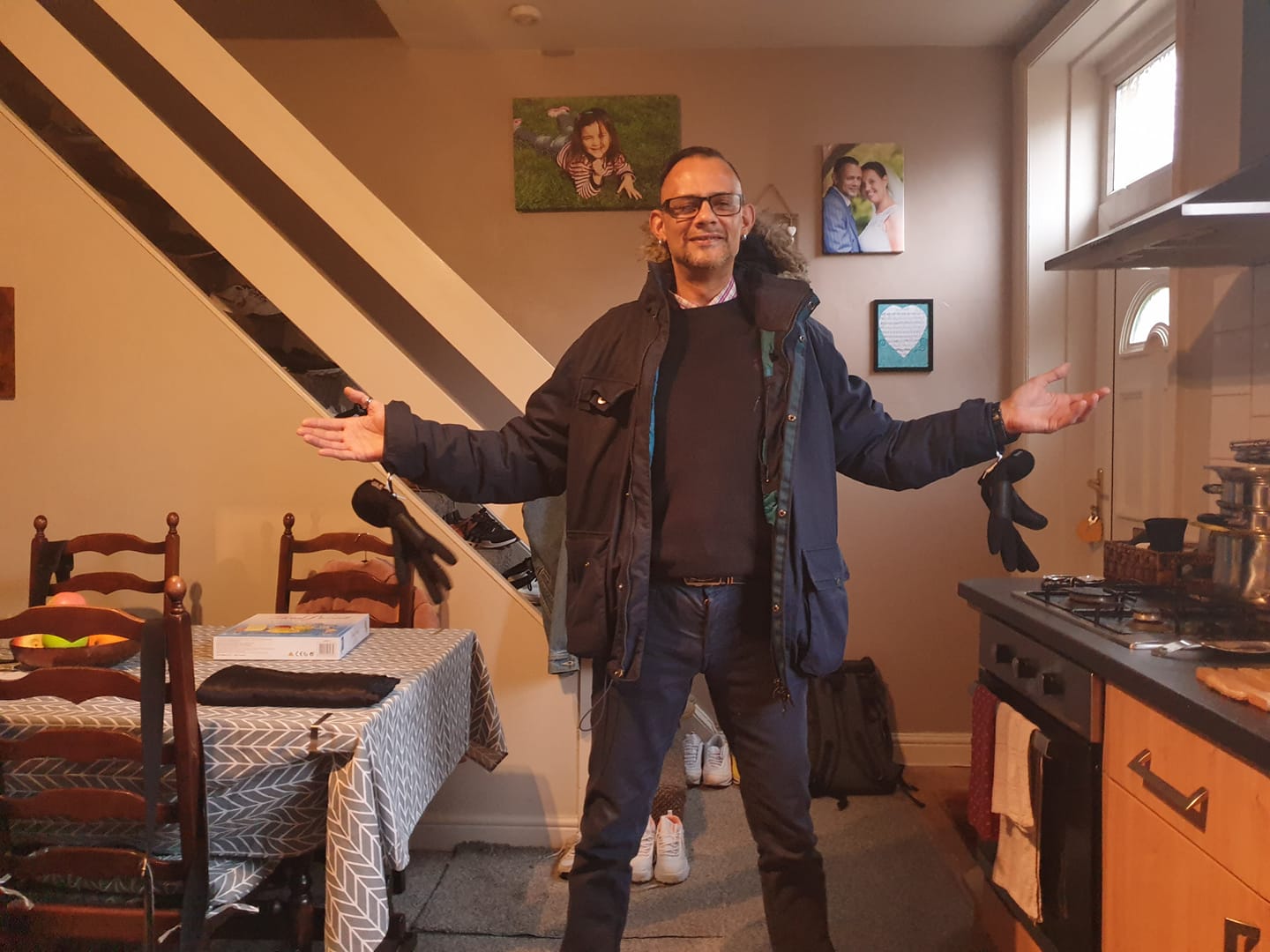 It is with great sadness that I have to announce that one of the Storytellers for my Our Recovery Stories project passed away on 10 February 2023 at the Calderdale Royal Hospital. I am still having trouble coming to terms with the idea that Brad is no longer with us, but I know I have some special memories of him, albeit most of them on Skype, and in the words he and I wrote for his Recovery Story.
I first met Brad when Mark Gilman and I travelled up to Halifax in April 2009 to meet Stuart Honor at the Breakfast Club, a recovery-based initiative that Stu had set up and which later became The Basement Recovery Project (TBRP). Brad cooked our delicious breakfast. I was by then living in Perth, Western Australia, having moved there from South Wales at the end of 2008.
I met Brad in person a few times after that when I visited Halifax. During one of those visits, Brad introduced me to his magic tricks, two of which you can see in the short video below. I got to know Brad better when he became a regular blogger on our Wired In To Recovery online community. We were in regular contact with each other.
