
‘Spirituality and Recovery’ by Bill White

Experiencing SpiritualityA new book, Experiencing Spirituality, co-authored by Ernest Kurtz and Katherine Ketcham, has just been released.  It will find a broad and appreciative audience and will be of particular interest to addiction professionals, recovery support specialists, and people in recovery.

It is not a treatise on how to recover, but it offers profound insights about how to live one’s life in recovery.  Brilliantly conceived and beautifully written, Experiencing Spirituality is one of those rare books readers will return to again and again as a balm for old and fresh wounds and as a meditation on how to live a life of greater balance, fulfillment, and self-acceptance.

Kurtz is best known to readers of this site for his classic text, Not-God:  A History of Alcoholics Anonymous, Ketcham for her co-authorship of Under the Influence and Beyond the Influence.

In 1992, Kurtz and Ketcham co-authored The Spirituality of Imperfection, which used classic stories to explore the spiritual legacies of Alcoholics Anonymous.  The Spirituality of Imperfection is one of my all-time favorite books. 

Read More ➔

‘What’s Wrong With You? Nothing. What Has Happened to You? Something.’ by Dr Michael Cornwall

mcornwall‘Licensed Mental Heath professionals are trained and are required to find out what is wrong with people.

Unfortunately, 90 percent of the people who could benefit from professional mental health services, in my opinion, are suffering from feeling something is wrong with them. They already feel bad about themselves, like they are failing in life. They often feel a lot of guilt, shame and self-loathing. They are often already judging themselves.

They may have been overwhelmed  by losses, by life events, or have not had their crucial needs met, or have been unloved, neglected, bullied, abused or mistreated by family and others. Because of what has happened to them, they may struggle to not identify themselves as someone who’s lot in life is to be rejected or harmed by others.

Enter the room with them, the totally well-intentioned mental health professional. Too often that encounter adds to the person in need feeling like they are somehow strange, abnormal, defective or damaged goods. Because right away out comes the DSM and the search begins for a valid category of psychopathology symptom cluster. The questions begin – questions aimed at finding abnormal psychology symptoms so a diagnosis can be made and treatment begun as soon as possible.

Read More ➔

ManyFaces1Voice: Patrick Fogarty

Unknown-4Check out the latest filmed Recovery Story from ManyFaces1Voice.

‘Patrick Fogarty received a gift on the day he was supposed to receive a sentence of years in prison.

During a caseworker’s pre-sentence investigation, Fogarty found himself being honest and telling her he had a “major drug problem.” He said, “I’m good with going back to prison. Send me back. I have nothing.”

That honesty – and the caseworker’s compassion – earned him a spot at The Healing Place in Louisville, Kentucky, the organization where Fogarty now works as a result of entering recovery in 2008.

Read More ➔

‘Portraits of Strength – Phillip Valentine’ by University of Connecticut

The purpose in my life, I’ve been blessed to find, is to carry the message of recovery. … Integrity is, for me, to live true to that calling. Philip Valentine ’87 (CLAS)

On Oct. 18, 1987, Phillip Valentine was in the birthing room at Rockville General Hospital in Vernon, Conn., high on cocaine and waiting for the arrival of his first child, a baby girl. He describes what happened next as a religious experience.

“I was in a kind of cocaine-induced haze, and when my daughter looked into my eyes, there was so much love and spiritual power,” he says. “That’s when God burned his way into my soul and said, ‘You’re not alone.’”

Read More ➔

‘Addictions & Corrections’ with Gabor Maté (Part 1of 2)

JUST REALISED – this is my 500th blog on the website!

“What is it that the correctional service actually corrects? In my view very little…and…the justice system is completely criminal and it should be studied…” So begins a provocative presentation by trauma and addiction treatment expert, Gabor Maté, M.D.

You can find Part 2 here.

The Crescent and the Needle: The Remarkable Rise of NA in Iran

8561803This blog contains an excerpt of a remarkable story published in the magazine The Fix. It is the Story of how an approach developed in a Western culture – Narcotic Anonymous – to help people recover from narcotic addiction – has had remarkable success in another culture.

‘As of 2012 there were 61,800 Narcotics Anonymous meetings worldwide. 27,650 in the USA and 15,955 in the rest of the world, except for Iran. There are 18,195 weekly NA meetings in Iran where Narcotics Anonymous was voted the top NGO by the government.’

Here is another excerpt from this fascinating article:

‘Rebecca had experience being in tough situations at 3 AM in the morning. In the thick of her heroin addiction, she had been in jeopardy countless times. As the Assistant Executive Director of the Narcotics Anonymous World Services Office, she had traveled all over the world. She had led workshops for emerging NA fellowships in many Third World countries.

Read More ➔

‘These Three Companies Make a Point of Hiring Recovering Addicts’ by Heidi Vanderlee

Military_truck_with_crew_2004My apologies for being offline twice twice in the past couple of weeks but we were hacked and I didn’t realise our website was closed down by our server company as I was asleep! Hassles of a life online!

‘So you’ve hit rock bottom and now you’re crawling your way back out. But unfortunately the hard work that goes into getting sober won’t pay the bills. Getting hired as a recovering addict isn’t always easy: Many of us have spotty employment histories, and the stigma attached to past criminal or mental health records may deter potential employers.

Addicts in early recovery often find themselves tending bar, waiting tables or working the cappuccino machine at a local coffee shop. But if mixing boozy beverages or making little hearts in foamed milk isn’t up your alley, there are still plenty of other employment options out there.

Growing numbers of non-profit organizations – such as the Doe Fund and the Salvation Army – are going out of their way to find employment for addicts in recovery. And there are places where your history with substances could actually give your CV the boost it needs to get you in the door.

Read More ➔

‘No One Can Take Mindfulness Away from You’ by Jon Kabat-Zinn

‘Bestselling author and teacher Jon Kabat-Zinn talks about what mindfulness means to him personally, and argues that the United States is an “underdeveloped” country when it comes to compassion and attention.’

This clip is from the Greater Good website. You can watch the full talk by becoming a member.

I Am Not Anonymous: Hugh’s Story

Hugh2Text(pp_w1000_h666)A blog from a great new website.

‘When I first heard about IAmNotAnonymous.org, I thought it was one of the coolest things to hit the recovery world. I subscribe to the idea that there is nothing shameful about being in recovery. It is my life. It has made me the man I am today. A man worthy of love and respect.

Some people believe that they need to keep their recovery a secret, I am not one of those people. Partly because the depths of my addiction was thrown into the spotlight with some unsolicited press in the form of newspaper articles in 2013. It’s quite possible that I was the last person to know that I had a problem with drugs and alcohol.

My whole life I have felt like there was a void in my soul. A missing piece of me. A void that I have constantly tried to fill with different vices.

Read More ➔

‘Doctors with addictions: double standards?’ by djmac

Doctor-Addiction‘Doctors get addicted to alcohol and other drugs; there’s plenty of evidence of that. My question is: Do doctors with addictions get the same kind of treatment and outcomes as their patients?  The British Medical Association estimates that there are 10,000 to 13,000 addicted doctors in the UK. Most of them will be in practice.

What is the expectation for doctors coming to treatment in the UK? Well, the goal of abstinence is pretty much accepted as a given (even for IV opiate addicts) and their access to quality treatment of adequate duration is greater.

Outcome studies from the USA consistently show recovery rates of 80% and there is evidence from the Practitioner Health Programme (PHP) in London this is also true in the UK. Most doctors in recovery return successfully to work.

Read More ➔

‘How does alcoholism develop?’ by Veronica Valli

Unknown-1Here’s an interesting and important blog from Veronica Valli which she has take from her book Why You Drink and How to Stop: A Journey to Freedom. I like Veronica’s sentence: “Alcoholism develops because it has an internal environment to grow in.”

‘In order to overcome alcoholism, stopping the drinking of alcohol simply isn’t enough.

Alcoholism develops because it has an internal environment to grow in. Although external conditions enable drinking, it is the internal conditions that allow alcoholism to control someone’s life. There is a need for a greater understanding of this.

  • Alcoholism is an internal (spiritual) illness. Drinking is only a symptom.
  • Alcoholism’s key motivator is about changing how you feel.
  • Alcoholism grows out of a faulty system of thinking and emotional responses.

Read More ➔

‘Complexity’ by Jonathan Keyes

PdxJonThis powerful blog is one of the best I have read in some time. Jonathan recognises the challenges we face in trying to improve the mental health system. Essential reading!

‘The movement to radically reform the modern mental health system is rooted in a desire to offer people going through emotional distress a wider variety of options for care.  As a society we have largely shifted to a model of care that is limited to a select few options that primarily advocates the use of strong psychotropic drugs and simplistic diagnostic labels for complex and widely varying narratives. 

Recently I read that from 1998 to 2011 there has been a 400 percent rise in the prescription of antidepressants.  Likewise in Canada, at least 60 percent of female prison inmates are prescribed psychiatric drugs.   

Most people receive psychiatric medication from their general practitioner.  The stigma of going on an antidepressant has been lessened to such a degree that one out of nine people in the US now takes this class of drug.

Read More ➔

Brené Brown: Why Your Critics Aren’t The Ones Who Count

If you are trying to do something creative then you’re going to get your arse kicked. So sayeth Brené Brown. If you’re trying to do something creative in this field and help improve the way that we help people overcome addiction and mental health, you will get your arse kicked. So sayeth I. 

This talk is essential viewing for learning how to deal with getting your arse kicked. Or at least deal with the people trying to kick your arse.

‘There is nothing more frightening than the moment we expose our ideas to the world. Author and vulnerability researcher Brené Brown shows us how to deal with the critics and our own self-doubt by refusing to “armor up” and shut ourselves off. “Not caring what people think,” she says, “is its own kind of hustle.”

Instead we must “reserve a seat” for the critics and our own self-doubt. “Tell them, I see you, I hear you, but I’m going to do this anyway.”’

‘Brain Surgery as Addiction Treatment?’ by Bill White

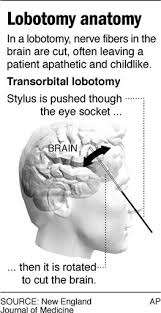
Lobotomy‘In 1935 – the founding year of Alcoholics Anonymous, Portuguese neurologist Egas Moniz introduced a surgical procedure into psychiatry that came to be known as the prefrontal lobotomy (recall One Flew Over the Cuckoo’s Nest).   Drs. Walter Freeman and James Watts pioneered the use of this technique in the United States in 1936. 

By 1960, 100,000 psychosurgery procedures had been performed in the U.S.  Patients targeted for this procedure included those judged to have “compulsive hedonias” – alcoholism, drug addiction, excessive eating and sexual deviations.  

The prefrontal lobotomy procedure severed the connecting nerves between the thalamus and the prefrontal and frontal lobes of the brain.  Its intent was to induce significant changes in thinking and personality that could alter the course of intractable psychiatric illness.

The total number of people with substance use disorders who underwent this procedure is unknown.  One could assume that the prefrontal lobotomy is one more chapter of “harm in the name of help” long ago cast into the dustbin of addiction treatment history in the U.S., but when exactly did use of this procedure stop?  The following story suggests it may have gone on much longer than once thought.

Read More ➔

‘PROTEST PSYCHIATRY – My Newest Film, Free!’ by Daniel Mackler

‘I just made a new film, called PROTEST PSYCHIATRY, on the psychiatric survivor-lead protest of the American Psychiatric Association’s annual meeting in New York City.  And I’m thrilled by how it turned out.  For starters, I filmed it on no budget whatsoever, created the entire film in three days, and have uploaded it straight to Youtube, so it’s freeeeeee!

This film, for me, was an experiment.  I have been feeling lost as a filmmaker for the past year or more.  I think the big reason has been the process:  it’s huge and expensive and time-consuming.  Each film has absorbed months, literally months, of my life.  Well, all that changed five days ago.

Five days ago (May 2) I was hit with the inspiration bug:  to make a film a new way.

Read More ➔

‘Psychiatry: We Need a Truth and Reconciliation Commission in Mental Health’ by Leah Harris

lharris‘Speech written for the protest of the American Psychiatric Association – May 4, 2014 

My name is Leah Harris and I’m a survivor. I am a survivor of psychiatric abuse and trauma. 

My parents died largely as a result of terrible psychiatric practice. Psychiatric practice that took them when they were young adults and struggling with experiences they didn’t understand. Experiences that were labeled as schizophrenia. Bipolar disorder.

My parents were turned from people into permanent patients. They suffered the indignities of forced treatment. Seclusion and restraint. Forced electroshock. Involuntary outpatient commitment. And a shocking amount of disabling heavy-duty psychiatric drugs. And they died young, from a combination of the toxic effects of overmedication, and broken spirits.

Read More ➔

Transforming Youth Recovery: Cameron’s Story

unnamedTransforming Youth Recovery, one of the founding partners of the ManyFaces1Voice campaign, helps students in recovery thrive with community, educational and peer recovery network supports. By the end of 2015, Transforming Youth Recovery will have issued over 100 grants to institutions of higher education across the country to start or expand recovery support programs on their campuses.

Cameron Taylor, whose story is below, attended a recovery high school in Houston and is currently enrolled in a university in Texas that has a recovery program for students.

‘I started using when I was in the seventh grade, you know smoking cigarettes and pot and drinking with my older brother. We didn’t really have anything in common and this was a way for me to get to hang out with him.

We started using together more frequently and we got into other drugs too. My parents knew that my brother was using, but they didn’t realize I was. They were really worried about my brother, as he was getting worse, so we went to live with my father in Houston.

Read More ➔

‘I Am Not Anonymous’ website: Kate’s Story

Kate(pp_w1000_h431)Please check out this wonderful website, I Am Not Anonymous. And check out the wonderful photographer who has put this together. 

‘I’m Kate Meyer… a NY based Portrait and Wedding Photographer and lover of all things humanity-related.

It is hard to even know where to begin.  I will start by saying that I am by no means, an expert on addiction.  Have I been greatly affected by it?  YES.  I am my own expert in that field.

Long story short, I am in a relationship with a man in recovery from drug addiction.  What that means is that he hasn’t picked up a drink or drug in a significant amount of time and as a result,  his life gets better every single day.

Read More ➔

‘The Resilience of Alcoholics Anonymous’ by Bill White and Ernie Kurtz

AA_Newspaper_Image3Here is a seminal article describing what it takes to impact successfully on addiction and facilitate recovery. It helps us understand what underlies the success of AA.

‘Attacking Alcoholics Anonymous (A.A.) and 12-step oriented addiction treatment has become a specialized industry with its own genre of literature, celebrity authors and speakers, single-focus websites, and promoted alternatives.  Collectively, these critics suggest that A.A. is an anachronism whose effectiveness has been exaggerated and whose time in the sun has passed. 

A.A.’s institutional response to these  criticisms has been a consistent pattern of private self-reflection (e.g., Bill Wilson’s “Our Critics can be Our Benefactors”) and public silence (e.g., no opinion on outside controversial issues, personal anonymity at level of press, and public relations based on attraction rather than promotion – as dictated by A.A.’s Traditions).

Read More ➔

Meet the White House Drug Czar, a recovering drug addict

Unknown-4“Boticelli is also infectiously optimistic that our country has reached a tipping point making it okay for people to speak openly about their recovery as he does…. A top priority for Boticelli’s office is to promote community-based recovery support centres so addicts in recovery have a place to go and activities to do with other clean and sober people.”

‘In an exclusive interview with USA TODAY, the acting drug czar for the White House talks about what it means to be the first recovering addict and openly gay person to hold the position.’

This is seriously good news and has made a great start to my day! Well done the Obama administration.