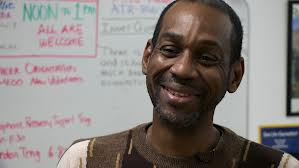
Don Coyhis, Founder of White Bison

coyhisI found this great biography of a special Native American, Don Coyhis.

Founder, White Bison, Purpose Prize Winner 2009. Coyhis developed Wellbriety, a substance abuse recovery program that taps the power of Native American culture, tradition, and community to help heal his people.

Don Coyhis felt emptiness in sobriety. He found himself going through the motions at support group meetings, disconnected from the reasons why he shouldn’t drink.

Searching for understanding, he turned to his Native American roots. During a five-day fast in the Colorado mountains, Coyhis saw a white bison rise from the ground – to him, a sign that his recovery would be incomplete without his culture. Coyhis founded a nonprofit offering native-focused recovery resources to communities across the country, and in turn, launched a movement called Wellbriety.

Read More ➔

‘People with psych labels suffer discrimination: mental health professionals are often guilty of such prejudice’ by Monica Cassani

Epiphany - 2014-03-23_240560_sense-of-place.jpgExcellent posting from one of my favourite blogs.

‘People with psychiatric labels suffer discrimination that is not only demeaning but can also be dangerous.

A 2007 UK study by the Royal College of Psychiatrists revealed that prejudicial treatment of mentally ill patients extends to physical medical care; they receive poorer quality of care and doctors spend less time with them possibly leading to higher rates of death and preventable disease.

Though tragic, the more scandalous aspect of the phenomena is the fact that mental health professionals apply the same prejudices to those whom they attempt to treat. The worst thing someone in mental distress can experience is dehumanizing treatment from other human beings who are supposed to be caring for them.

Read More ➔

‘Jaakko Seikkula Speaks on Finnish Open Dialogue, Social Networks, and Recovery from Psychosis’ by Daniel Mackler

Daniel Mackler interviews Jaakko Seikkula, PhD, a professor of psychotherapy at the University of Jyväskylä in Finland who is best known for his work with Finnish Open Dialogue.

He speaks about the value of engaging social networks in crisis situations, the development of the Finnish Open Dialogue approach, the idea that there is meaning behind psychosis, and some unexpected benefits in Western Lapland of including family members in therapy with people experiencing psychosis.

You  an read more abut this approach here.

‘Learning Leadership: How to become a leader in the NHS’ by Professor Aidan Halligan

Aidan Halligan, Professor of Foetal and Maternal Medicine and Director of Education at UCL reflects on his experiences of being a leader in the NHS. He shares the stories of people he respects as leaders, and analyses the key features that make them so effective.

Leadership is “… going into the unknown with courage. People respect courage and they respect compassion.”

“We know when we see a leader. They inspire us and when we’re inspired we become determined. And when we are determined we go further. That’s what leadership is about… And it’s your example that counts, not your rank. And if you care about patients to the point of being selfless, people will always respect that.”

Read More ➔

‘No More Graduation’ by Bill White

Something toGraduation reflect upon in Bill White’s latest blog.

‘The acute care (AC) model of intervention that, with few exceptions, has dominated the modern treatment of addiction involves a brief – and seemingly ever-briefer – period of professional intervention followed by cessation of the service relationship. 

As addiction professionals working within this model, we are trained to screen, assess, admit, treat and discharge each person we serve.   And as we approach the end of this sequence, we are trained to address “termination” issues in the counseling relationship, prepare “discharge” plans and, in many of our settings, participate in a “graduation” ritual that signals the end of primary treatment and the service relationship.

Read More ➔

‘On Pharma, Corruption, and Psychiatric Drugs’ by Peter Gøtzsche

“My studies in this area lead me to a very uncomfortable conclusion: Our citizens would be far better off if we removed all the psychotropic drugs from the market, as doctors are unable to handle them. It is inescapable that their availability creates more harm than good.” Peter Gøtzsche, MD;  Co-founder of the Cochrane Collaboration

As shown on Mad in America.

‘How the 12 steps can help everyone’ by Gabriel Segal

Unknown-1Found this little interesting piece on Beth Burgess’s Smyls website.

The end of my afflictions and the power of The Twelve Steps
I was born in 1959. From as far back as I can remember until 2011, I suffered from severe forms of anxiety, depression, and addiction. I had many years of therapy of different kinds. I was prescribed pills. None of that helped. And some made matters worse.

Eventually, I thought I would give the 12-step approach a chance. I was initially put off by what appeared to be a strongly religious streak in the program, something that as an analytic philosopher and cognitive scientist, I could not accept.

Read More ➔

‘Shedding Skins in Recovery’ by William L White

Shedding Skins in Addiction RecoveryMore wonderful reflections from Bill White in his latest blog posting.

‘For years, the following quote has rested over my writing desk:  “The Phoenix does not mourn what lies in its ashes; the serpent does not mourn its old skin.” Arthur Frank

Addiction recovery involves a progressive unpeeling of the self and focused efforts of self-construction.  It is helpful in thinking of this to distinguish between remission and recovery.

Remission of an illness can involve little more than the removal of symptoms and a return to the earlier trajectory of one’s existence.   In this sense, remission is regressive – a return to an earlier level of functioning. 

Read More ➔

‘Six First Steps for Building Communities of Emotional Wellness’ by Matthew Cohen

mcohenI’ve been writing a strategic document for developing a healing community for Aboriginal people here in Perth, so this blog from Mad in America is particularly pertinent. Matthew is a very interesting person – please check out his website

‘I am being asked by a number of grassroots communities to facilitate a dialogue about how they can better welcome and support individuals who experience emotional distress. This is a challenge for many aspiring peers and allies in a culture where responsibility for our individual well-being has been increasingly transferred to psychiatrists, doctors, and other health professionals.

Even among our movements for alternatives, we often find ourselves replicating disempowering patterns of relying on experts, institutions, and formalized programs to help us through our trying times.

Read More ➔

‘Philip Seymour Hoffman, Drugs and the Therapeutic State’ by Jack Carney

Brilliant article from Mad in America. Nails on the head.jcarney

‘Greetings. It seems that somebody’s passing is the only thing that will stir me sufficiently to write about what’s going on in this benighted country.

I had anticipated writing this a week or two ago but I got sidetracked. It’s certainly not too late, since Hoffman’s death by heroin overdose is still being discussed in the media and by folks I run into. Yes, I know, he only died 5 weeks ago – February 2, to be precise – but our attention spans tend to be not too long.

Hoffman’s death was dramatic – found dead with a needle stuck in his arm with bags of heroin strewn nearby, a famous actor at the top of his craft with artistic heights still to climb. His death has been portrayed as a benchmark event and has drawn attention to the opioid abuse and addiction that has seemed to sweep the country.

Read More ➔

ManyFaces1Voice: John Silverman

Unknown-3“I didn’t know anything about recovery. I didn’t know there was a place to come. I didn’t know there was some hope, so if we don’t put it out there, so if we don’t talk about how we recovered, how is anybody really going to know.”

John Silverman is a person in long-term recovery since 1984 and an Executive Producer for The Anonymous People film. He is a former member of the New York City Police Department, and has been performing private investigative and related security consulting for over 20 years.

After leaving the New York City Police Department and entering recovery, John founded his private investigative company, Silverman Associates, in 1988.

Read More ➔

‘Overcoming the stigma of depression’ by Douglas Bloch

dblochAn excellent article on stigma and on how people with depression can feel shame. Stigma and shame are roadblocks to depression.

“The last great stigma of the twentieth century is the stigma of mental illness.” Tipper Gore

One of the roadblocks to recovery for those who suffer from depression is our culture’s tendency to stigmatize depression and other mental health disorders.

After my first hospitalization, I remember the dilemma I faced in trying to explain my three-day absence to my employer. If I told the truth – that I was being treated for anxiety and depression – I stood a good chance of losing my job. Instead, I reported that I had been treated for insomnia at a sleep clinic.

Read More ➔

‘Building Bridges Between Mental Health and Addictions Communities’ by Oryx Cohen

ocohenThere is a real need to connect addiction and mental health communities, so this blog from Mad in America is very interesting.

‘When Linda Sarage and Jake Powers first approached me about writing a section for the fantastic manual developed by the addictions community – From the Ground Up: How to Build Your own Peer-to-Peer Recovery Center – that would help connect this manual to the mental health community, I envisioned writing a section that would serve as some sort of translation tool that could connect two very different communities toward a common purpose. 

After reading the manual, however, I quickly remembered how much the mental health community has in common with the substance abuse community and how little “translation” is actually needed.

Read More ➔

‘Recovery Landscapes’ by Bill White

Recovery Landscapes‘Interventions into severe alcohol and other (AOD) problems have focused primarily upon altering the character, thoughts, feelings, and behaviors of individuals. Far less attention has been given to influencing the environment in which such factors are birthed, sustained or changed. But interest in the geography of recovery is increasing. Researchers are beginning to suggest that reaching the tipping point of addiction recovery may have as much to do with community factors as intrapersonal factors.  Recovery advocates and clinicians are calling for creation of a “healing forest” – “naturally occurring, healing environments that provide some of the corrective experiences that are vital for recovery.”

Read More ➔

‘ABCD: Connectors, Conductors & Circuit Breakers’ by Cormac Russell

Unknown-5This is the first of 3 blogs in which Cormac will be exploring issues of citizenship, power and democracy and what these mean to asset based community development.

Recently an ABCD Community Builder in Gloucestershire commented that in the neighbourhoods where he works there are three kinds of people:

  1. Connectors: those that bring people and energy together.
  2. Conductors: those that constructively hold negative energy and creative tensions and either help others channel these in a positive direction (like lightening rods) or ‘earth’ them… In other words bring them to ground before someone ‘blows a fuse’.
  3. The third he described as Circuit Breakers. These are people, institutions and sometimes places that break connections and the flow of energy, sometimes with very negative consequences, but often, even in the apparent negativity, they create new learning that can’t be experienced by going with the flow.

    Read More ➔

‘Are we all addicted?’ by Becs Daddow

RD photo glasses - updateI like this article by Becs Daddowof Nurture Development, who draws on the great work of Bruce Alexander.  She emphasises that when we deal with an issue like addiction, it “requires a whole community response that doesn’t simply focus on a single issue whether that’s recovery, well-being, mental or physical health, and so on.” Too true!

‘You’ve probably heard people state that addiction is blind to status, fortune, and situation. It’s often said when talking about drug or alcohol addiction and you’ll be directed to the sad deaths of the rich and famous to make the point all the more resonant, offering a stark alternative to the stereotypical image of the gaunt, penniless, criminal heroin addict so often depicted.

The statement may in fact be truer than we realise at first. Read, for example, Bruce Alexander’s The Globalization of Addiction and you will find a compelling narrative that sets out how, in today’s post-modern world, most of us have ‘severe addictions’. They may not be addictions to drugs or alcohol but that doesn’t necessarily make them any less dangerous.

Read More ➔

‘Neutralising Suffering: How the Medicalisation of Distress Obliterates Meaning and Creates Profit’ by Joanna Moncrieff

jmoncrieffThere is so much great content on Mad in America. Here’s a piece from British psychiatrist Joanna Moncrieff, one I wholeheartedly endorse. In fact, this blog is essential reading. I first posted this blog on Recovery Stories in 2014. The original article on Mad in America has all the references.

‘People have used psychoactive substances to dull and deaden pain, misery and suffering since time immemorial, but only recently, in the last few decades, have people been persuaded that what they are doing in this situation is rightly thought of as taking a remedy for an underlying disease. The spread of the use of prescription drugs has gone hand in hand with the increasing medicalization of everyday life, and a corresponding loss of the previous relationship that people had with psychoactive substances.

Elizabeth Gaskell’s novel Mary Barton was originally to be named after Mary’s father John Barton, a working class factory hand addicted to opium. The novel depicts the unimaginable poverty and exploitation of industrial Manchester that made opium-induced oblivion an appealing escape.

Read More ➔

The Road from Crime – Extended Preview

Excellent preview, I’m heading to watch the full film.

‘What can we learn from those former prisoners who have successfully “desisted” from criminal behaviour or “gone straight?”

The exit at the prison gate often appears to be a revolving door with nearly 60 per cent of released prisoners re-offending within two years of their release. Prisons and probation departments have, almost literally, tried everything in efforts to rehabilitate offenders over the past century, but the results have been uniformly bleak leading many to conclude that “nothing works.”

Read More ➔

ManyFaces1Voice: Michael Askew

UnknownI might be on the other side of the world, but every time I see Michael Askew on film I know I am seeing a true recovery carrier in action. Here is Michael on ManyFaces1Voice.

“Right now, we have to believe that this is a valuable commodity because every time you see somebody in recovery getting well, you know the community is healing. Families are healing, it’s like throwing a rock into the water and that ripple effect…”

Michael Askew is the Manager for the Bridgeport Recovery Community Center under the leadership of Connecticut Community for Addiction Recovery (CCAR).

Read More ➔

‘High on Hope’: Peter’s Story

Please watch this excellent filmed Recovery Story. Thank you so much for this share, Peter.

‘A frank and honest account of a life dominated by addiction and crime that ends on a ‘HIGH’ – Peter’s story is testament to the paradigm shifts that can happen when people have, ‘just had enough’, ask for help and receive a sufficient amount of it.

Peter has turned his previous experiences into a positive as he now creates a positive ripple-effect in his community by helping others.

Read More ➔