‘The Power Of The Narrative’ by Peter Bullimore

This is a brilliant talk about an amazing life! A must-watch with lessons to be learnt. Thank you, Peter.

Here is a bio taken from a website I’ll be profiling soon:

‘Peter heard his first voice aged seven, after suffering sexual abuse at the hands of a child minder.  But as the abuse went on the voices increased in number, eventually turning sinister and aggressive.

By his mid-twenties Peter had lost his business, his family, his home, everything.  Peter spent more than a decade after that on heavy medication, but the voices never went away. He had to get out of the psychiatric system to recover.

Read More ➔

‘A personal and social model of recovery’ by David Best

Unknown-1Here’s another excellent article from David Best which is essential reading for people trying to facilitate recovery.

‘There has been a subtle change to the role of recovery in UK addictions research, policy and practice in recent years, with a transition from the periphery to centre stage. But it can be argued that, for all the bluster, we still have a limited evidence base and we have not come far in developing an integrated or testable theoretical model.

Humphreys and Lembke (2013) have done a good job in summarising the ‘what works’ of recovery – focusing on three areas: peer-inclusive interventions, recovery housing and mutual-aid groups – so this article will not revisit that evidence.

What I will do is overview three key component parts of a theoretical model of recovery, then draw them together to derive conclusions about what we should do next to make policy and practice stronger in this area.

  1. Recovery capital – personal and social resources – the journey of growth
  2. Social identity and social contagion in recovery – the role of friends and connections
  3. Therapeutic landscapes of recovery – the role of location.

Read More ➔

Marta’s Story: Recovering from benzodiazepine addiction

bzacuteHere is a benzo story from the excellent Recovery Road website.

‘My benzo story started over 26 years ago with a panic attack. I was a very active person, I had 2 beautiful children, a good hubby.  Life was good, my children had just started school, I was sad about it, I didn’t want to let them go, but I had to of course. I worked when I wanted to so that was good and I had a very busy social life.

I suddenly started getting panic attacks. They were frightening and I thought I was about to die. I went to my GP and was given 60 diazepam 2 mg pills. She said take one, twice a day.

I took one 2 mg pill a day, my panic attacks stopped and I got on with life. I was grateful that the med was stopping further panic attacks.  At no point did my doctor warn me of any dangers, I thought it was okay to keep taking them,  and in the early days it stopped my fear of another panic attack.

Read More ➔

Family Stories, Secrets and Survival: Dr. Judith Landau at TEDxVailWomen

I can strongly recommend this extraordinary talk from Dr Judith Landau. It’s one of my favourites, found only this morning. Thank you BDawg!

This talk will provide you with insights into intergenerational trauma and how addiction arises as a coping response. It will show you a way forward to recovery and healing, through Story. Understanding the past can help us deal with the present and help create a better future.

Judith, thank you for this wonderful talk! Here is the Youtube intro:

‘Dr. Judith Landau tells the story of trauma and recovery through generations and gives clues along the way for healthier families.

Read More ➔

‘The Language of Recovery Advocacy’ by Bill White

Language“Words are important.  If you want to care for something, you call it a “flower”; if you want to kill something, you call it a “weed”.  Don Coyhis”

Some will question why we as recovery advocates should invest valuable time debating the words used to convey alcohol and other drug (AOD) problems and their solutions when there are suffering individuals and families that need to be engaged, recovery support resources that need to be created, communities that need to be educated, and regressive, discriminatory policies that need to be changed.

We must invest this time because achieving our broader goals depends on our ability to forge a recovery-oriented vocabulary.

Words have immense power to wound or heal.  The wrong words shame people with AOD problems and drive them into the shadows of subterranean cultures.  The wrong words, by conveying that people are not worthy of recovery and not capable of recovery, fuel self-destruction and prevent or postpone help-seeking.

Read More ➔

Balunu Foundation Cultural Healing Program

I love the look of this healing programme in northern Australia.

‘The Balunu Foundation Cultural Healing program delivers cultural healing programs to many at risk youth. The healing retreat and program are located in Darwin, NT and youth have attended the program from all over Australia.

Although the program was established to help address the many challenges faced by Indigenous youth, it has had as great an impact with non-Indigenous youth who have attended the program.

Balunu adopts a holistic and culturally appropriate approach to strengthening the youth with a major focus on suicide prevention, substance abuse, emotional, mental and physical trauma, intergenerational trauma, family disruption, homelessness, crime and education.

Read More ➔

‘A Point of View: Happiness and disability’ by Tom Shakespeare

_75063338_promo-largeFound this interesting article on the BBC website.

Surveys reveal that people with disabilities consistently report a good quality of life, says Tom Shakespeare. So why is it often assumed they are unhappy?

Have you ever thought to yourself: “I’d rather be dead than disabled?” It’s not an unusual reflection. Disability, in everyday thought, is associated with failure, with dependency and with not being able to do things. We feel sorry for disabled people, because we imagine it must be miserable to be disabled.

Read More ➔

’emotional-CPR Overview’ by National Empowerment Center

Here’s a great new video from the National Empowerment Centre (NEC) in the US. I can strongly recommend both the video and the approach. Here is what the NEC has to say.

What is eCPR?
Emotional CPR (eCPR) is an educational program designed to teach people to assist others through an emotional crisis by three simple steps:

  • C = Connecting
  • P = emPowering, and
  • R = Revitalizing.

The Connecting process of eCPR involves deepening listening skills, practicing presence, and creating a sense of safety for the person experiencing a crisis.

Read More ➔

‘Benzodiazepines treat anxiety, cause long-term problems’ by Markian Hawryluk

dt.common.streams.StreamServer.clsThis article appeared in The Bulletin in Central Oregon.

Meant for short-term relief, these medications are prescribed repeatedly.

Over three decades, Marjorie Carmen had helped her husband, Milton, through many of his health issues. From heart surgery to cancer to a hip replacement, they had survived each of them.

But in 2007, as her husband slowly descended into dementia, it scared her. It was not so much the fear of him dying or leaving her alone. It was the angst over what the Yale-educated, highly successful real estate developer with his New England upbringing and sensibilities would have to endure, unable to fend for himself – the sheer indignity of dementia.

Read More ➔

‘A Rendezvous With Hope’ by Bill White

‘Through my early tenure in the addictions field, the question of readiness for treatment and recovery was thought to be a pain quotient.  We then believed that people didn’t enter recovery until they had “hit bottom.”  If a person did not show evidence of such pain-induced readiness, they were often refused admission to treatment. Then we recognized that the reason it took people so long to “hit bottom” was that they were protected from the painful consequences of their alcohol and other drug use by people we called “enablers.”  We then set about teaching enablers to stop rescuing and protecting their beloved but addicted family members. 

Read More ➔

‘Psychiatric Epidemic (Part 2): The Scope of the Epidemic’ by Robert Whitaker

Robert Whitaker, author of “Anatomy of an Epidemic” speaks at PsykoVision’s conference on the Psychiatric Epidemic in Copenhagen.

In Part 2, Whitaker digs down deep into the research pertaining to psychiatric medication and demonstrates quite clearly that the studies paint a very different picture that the prevalent common wisdom of the day.

What is the reason for this discrepancy? Misinformation? Disinformation?

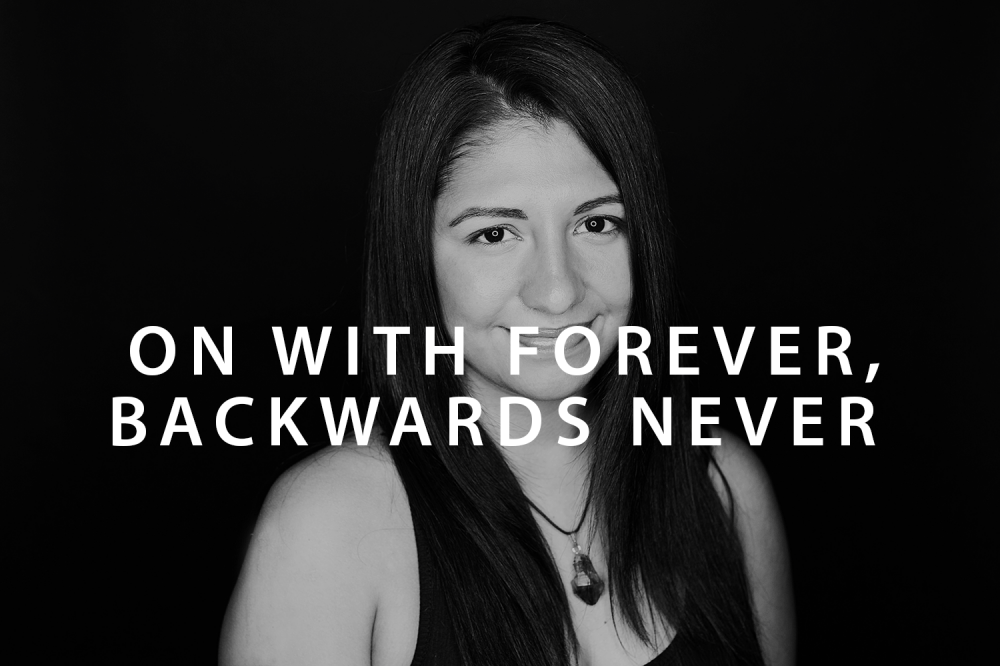
Tatiana’s Story: ‘On with Forever , Backwards Never’

TatianaText(pp_w1000_h666)Here is another of those beautiful Stories from the I Am Not Anonymous website.

‘My name is Tatiana and I am person in long-term recovery. My sobriety date is April 19th 2011.

What does it mean to be an addict? Some people may shrug with a look of disgust on their face when you ask this question. Those who do actually understand are riveted with compassion and love for the addict. Its funny how a complete misconception can create such a divide amongst people.

Many people still believe that addiction is a behavioral issue and that addicts are just “bad” people with a weak will. Although it may appear this way to the naked eye, this is so far from the truth.

Read More ➔

‘Recovering from Psychiatry – Tips and Some Hope For Those in Psychiatric Drug Withdrawal’ by Laura Delano

This video offers tips, suggestions, and hope for those in psychiatric drug withdrawal from ex-“Bipolar” patient and psychiatric liberation writer and activist, Laura Delano. An excellent video.

‘Human Rights Are Fundamental to Good Mental Health Services’ by Paul Farmer

Unknown-2It’s good to see a reminder about Human Rights, in particular in relation to mental health services. This article which appeared in the Huffington Post is from the Chief Executive of the mental health charity Mind.

‘Thankfully most people never have to worry about their human rights. For many, they can seem fairly distant: something for lawyers and politicians to worry about, with little impact on our own everyday lives.

When we do hear about human rights in the media it’s usually via a story that links them with supposedly ‘undeserving’ groups or used as a proxy for anti-European views. But this picture hides the uncomfortable truth that people in the UK do still have their rights abused.

People with mental health problems often fall through the human rights safety net. The mental health system has extensive powers to detain people, to deprive them of their liberty, to restrain them and to force people to take life-changing drugs.

Read More ➔

‘Debunking ADHD: 10 Reasons… The Logic – Part I’ by Michael W. Corrigan

“This is the first of my video series on Debunking ADHD. This video starts to share the logic behind why I feel millions of kids are being wrongly drugged for a disorder that should have no connection to kids behaving like kids.” Michael Corrigan

Addiction and trust: Marc Lewis at TEDxRadboudU 2013

A former drug addict himself, Lewis now researches addiction. In order to get over ones addiction, he explains, self-trust is necessary.

Unfortunately, self-trust is extremely difficult for an addict to achieve. There are two factors that make it so difficult to get over an addiction: lack of self-control and an inability to put off reward. An addict wants his fix and he wants it now, despite the risk of losing out on a happier, healthier future.

The way to build self-trust, Lewis explained, and get over an addiction is for the addict to begin an internal dialogue with his future self to convince his present self that it can, in fact, live without its addiction.

Read More ➔

‘Emotional Unmanageability’ by Veronica Valli

A nice short blog from Veronica Valli to reflect upon at the start of the week.

ID-10084481-300x198‘Unmangagbility and alcoholism are talked about a lot in recovery circles. When unmanageability was explained to me, it was described an outside occurrence; unpaid bills, DUI’s, divorce, car crashes, damaged furniture, broken bones etc.

That wasn’t something I related to, my life was a little chaotic but by no means unmanageable. My inner life was another story, that was then I realized in relation to alcoholism it is emotional unmanageability that causes the real problems.

To some degree, the alcoholic may be able to create some sense of order in their outside world. They may be able to work and pay their mortgage, for instance. This is how some alcoholics can convince themselves they don’t have a problem; because they have a job and a car they believe things can’t be that bad.

Read More ➔

Psychiatric Epidemic (Part 1): The Roots – Robert Whitaker

The Psychiatric Epidemic – does long-term use of medication decrease the chance of recovery?

PsykoVision in Denmark has recently translated and published Robert Whitaker’s book, “Anatomy of an Epidemic”. In honor of this, PsykoVison has invited Whitaker to speak at a small conference in Copenhagen.

This is Part 1: The Roots of the Epidemic, where Robert Whitaker guides us through the history of psychiatric medication and presents the scientific evidence that proves that the common wisdom about theses drugs is mostly based on falsehoods.

Today, I am Alive

The drugs made me feel ‘normal’. They drowned out the feelings and the negative, self-destructive thoughts.  They were my medication to the real problem. The problem was ME.

Samantha_Paulus_Text-1024x681(pp_w1000_h665)Please check out this beautiful story on I Am Not Anonymous.

‘Where to begin…My life today is a beautiful thing.  It has reached measures and consistency that I could have never imagined.

I am currently 261 days into my journey and I am finally feeling awake and alive.  Today, I am conscious of myself, of the happiness of others and I have a love for life that I never thought possible.

Read More ➔

Vikram Patel: Mental health for all by involving all

Nearly 450 million people are affected by mental illness worldwide. In wealthy nations, just half receive appropriate care, but in developing countries, close to 90 percent go untreated because psychiatrists are in such short supply.

Vikram Patel outlines a highly promising approach – training members of communities to give mental health interventions, empowering ordinary people to care for others.