‘How to Beat Panic Attacks: 3 Simple Mindfulness Techniques’ by Krista Lester

PauseFound this interesting blog on the Tiny Buddha website.

‘“By living deeply in the present moment we can understand the past better and we can prepare for a better future.” Thich Nhat Hanh

When I was in high school, a hit-and-run car accident changed my world. My boyfriend at the time lost his nineteen-year-old brother to the accident. I had never met his brother, but it didn’t matter; a dark veil had been cast over my life.

In the days, weeks, months, and years following the accident, I sank into a deeper and deeper depression. I started to have panic attacks and I cut myself daily, trying to feel anything other than terror and despair. I sought treatment, met with therapists, tried dozens of medications, and routinely turned back to alcohol when nothing worked.

Read More ➔

John Dolan: from homeless addict to street artist and author

John DolanHere’s a wonderful article about street artist John Dolan and his dog George which appeared recently in the UK Guardian.

Aged 10, John Dolan was told a family secret, which set him on the road to crime, addiction and homelessness. Now his life is transformed, thanks to his dog, George, and a gift for drawing

Anyone who has strolled down Shoreditch High Street in east London in the past few years will probably have seen John Dolan drawing, with a cup for coins on the pavement beside his dog.

A tourist from New Zealand browsing an art gallery nearby is typical of many of us: she stops in surprise when she sees a sketch by Dolan on display. “I saw this guy in the street the other day, just opposite,” she says. “I wish I’d stopped now and talked to him.”

Read More ➔

‘Experiencing Recovery – Part 10′ by William L. White: Recovery Paradigm and Addiction Treatment

The last part of Bill White’s 2012 Norman E. Zinberg Memorial Lecture from Harvard. Bill says he is not a teacher of these issues about recovery, but still a student. He encourages us all to be students of this rapidly changing ecology of recovery in the US. Bill also looks at what we need to do in the future in relation to recovery and recovery-based care.

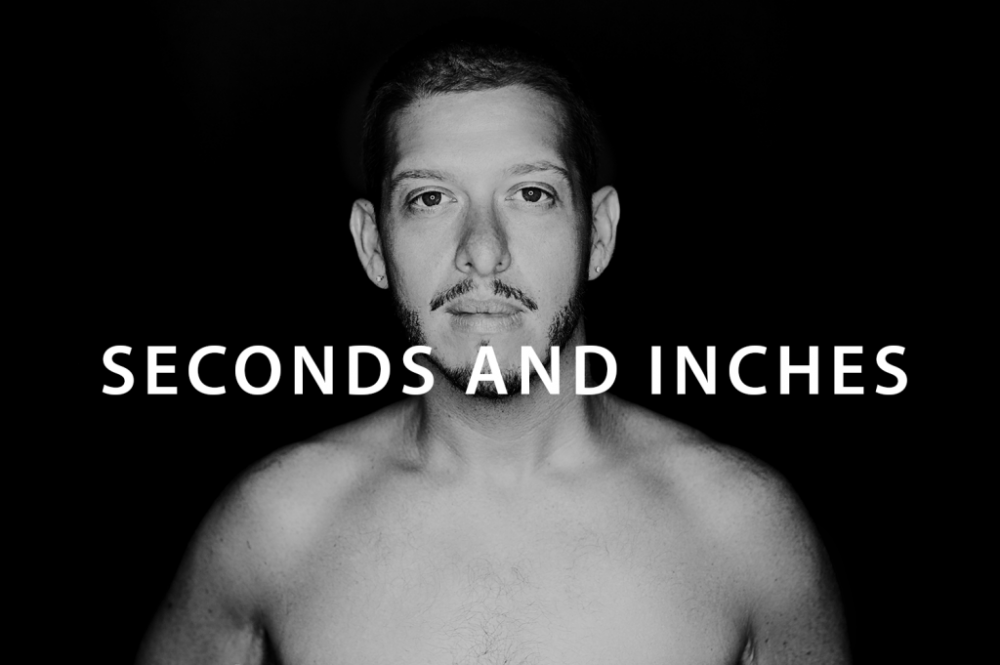
I Am Not Anonymous: Lucas’s Story, ‘Seconds and Inches’

Lucas-Text-1024x681(pp_w1000_h665)My name is Luke Mosley, and I am in long-term recovery from alcohol and drugs. By that, I mean that I haven’t found it necessary to pick up a drink, a drug, or any other mind or emotion altering substance since November 10, 2010. And for that I am truly blessed and eternally grateful.

I say “I haven’t found it necessary,” because for the first 27 years of my life, I lived in emotional and spiritual bondage. More than simply having a drug or alcohol problem, I had a problem dealing with life in general.

What seemed to be day-to-day challenges to most other people were crippling burdens to me. Call it social anxiety. Call it restlessness or irritability. Call it being overwhelmed.  Whatever labels my concerned family, friends, teachers, doctors, or therapists applied, they never quite identified that “thing” in me that just felt off.

Read More ➔

‘Experiencing Recovery – Part 9′ by William L. White: Recovery Advocacy and New Recovery Support

Bill talks about recovery as a new paradigm and its influence on treatment systems. He goes on to describe the new recovery advocacy movement and new recovery institutions and organisations. Most of this is occurring at a grassroots level.

I Am Not Anonymous: Adam’s Story, ‘An Open Book’

Adam-Text-1024x681(pp_w1000_h665)‘For the entirety of my addiction – many sad, painful years of car accidents, overdoses, barroom brawls and street fights, failed relationships, small-time legal skirmishes and stints at rehabs – everyone wanted me to admit I had a problem, to talk about it.

Then, after I got clean and sober and became a husband, father, hockey dad and a union president that negotiated my co-workers salaries and medical benefits, many people wanted me to put it behind me, to shut up about it.

The planet witnessed the train wreck, yet I was supposed to cover it up after I got that bad boy back on the rails, which was no small feat.

Read More ➔

‘Experiencing Recovery – Part 8′ by William L. White: History of Recovery Support

Bill introduces about the various types of recovery support that have existed historically: natural support, limited generalist support within the community, peer recovery (mutual aid) and treatment. He then goes on to describe how things have been changing in recent years.

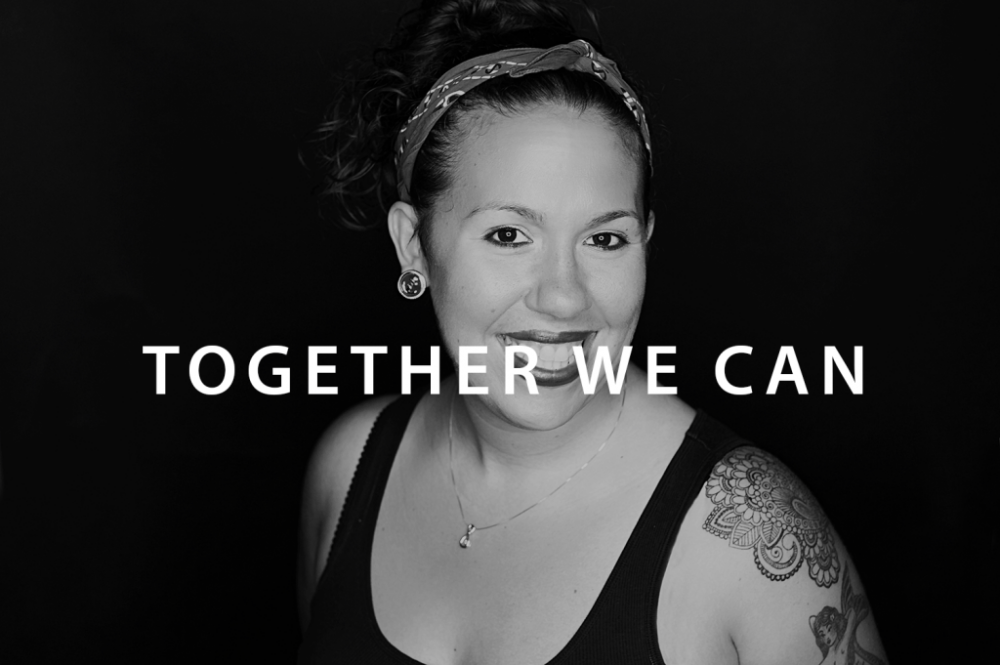
I Am Not Anonymous: Mariel’s Story, ‘Together We Can’

Mariel-Text-1024x681(pp_w1000_h665)I’ll be finishing off Bill White’s talk this week, as well as highlighting some stories from the excellent website I Am Not Anonymous. Here’s the first of these stories.

‘My name is Mariel Harrison. I am 28 years old. I live in Point Pleasant, NJ. I am a daughter, sister, aunt, girlfriend and friend. I am also a consumer, a voter, a tax-payer, a home-renter, and a licensed/registered/insured driver.

I am a responsible, productive and valued employee. I am a diligent full-time student with a 3.9 GPA. I believe wholeheartedly in the healing properties of yoga and meditation, am a certified yoga teacher, lived in an ashram for 9-months, and hold nothing more sacred then my personal practice both on and off the mat.

Read More ➔

‘Experiencing Recovery – Part 7′ by William L. White: Family Recovery

Bill briefly describes how many families fall apart during the early stages of recovery and points out that as a society we do very little about this. Stephanie Brown describes this effect on family as the trauma of recovery.

‘ADHD: A Return to Psychology’ by Craig B. Wiener, PhD

cwienerI am deeply saddened by, and very annoyed at, the way that society is medicating children for this so-called disorder ADHD. It is a great seller of drugs! Here’s a recent blog from Mad in America on this issue.

Welcome! This blog presents a psychological understanding of the diagnostic category “Attention Deficit Hyperactivity Disorder” (ADHD). Over the past decades, professionals have been informing the public about the neurobiological causes of the behaviors, and the necessity to medicate and stringently manage those who have been afflicted. This blog critiques those claims.

While biological determinist claims may continue to prosper there is increasing concern that we are positing the existence of a medical problem when there are no biological markers or dysfunctions that reliably correspond with the behavioral criteria.

Over the coming weeks, I will also present an alternative intervention that develops self-management in individuals who have been diagnosed as ADHD. This intervention is designed to replace traditional treatments which have been yielding very poor longer-term benefits.  

Read More ➔

‘Experiencing Recovery – Part 6′ by William L. White: Recovery Durability Set Point

When does recovery become durable? When does sobriety today predict sobriety for a lifetime? When does my risk of resuming alcohol and drug use and having a recurrence of a substance use disorder plummet?

‘Experiencing Recovery – Part 5′ by William L. White: Recovery Identity & Cultural Affiliation

This part of Bill’s excellent talk focuses on identity, social stigma and recovery styles. He describes how some people hide behind anonymity because they are ashamed of themselves.

‘Are you recovered or recovering?’ by Veronica Valli

Unknown-1Here’s a great piece from one of my favourite bloggers.

‘It’s time to address a somewhat contentious issue in recovery circles. The matter of being either a ‘Recovered alcoholic/addict’ or a ‘Recovering alcoholic/addict.’

I am a recovered alcoholic and have considered myself one for many years. Let me explain why.

If you have read my book or read any of the posts on my blog, you will know that I predominantly believe that alcoholism is a manifestation of a spiritual condition. Alcoholism is not caused by external factors although they most definitely contribute.

Read More ➔

‘Experiencing Recovery – Part 4′ by William L. White: Frameworks of Recovery

In this part of his talk, Bill White discusses the degrees/depths of recovery. He describes how some better people feel ‘better than well’ after recovery.

He goes on to describe different types of recovery initiation/maintenance framework and different styles of recovery.

‘It Gets Better!’ by Bertel Rüdinger

brudinger‘A little more than 10 years ago, when I was 29 and 2 weeks away from turning 30, I was a patient in the psychiatric system here in Copenhagen. I am a pharmacist and I specialized in neurochemistry and psychotropics throughout my studies.

While I was working in the labs at The Royal Danish School of Pharmacy I was intent on getting a job as a medicinal chemist at Lundbeck – the Danish pharmaceutical company behind Celexa and Lexapro and in their own words the only company specializing solely in developing drugs for the treatment of neurological and psychiatric disorders.

At the university we were taught that psychiatric disorders were diseases just like diabetes and hypotension. We were told all the ‘truths’ that the psychiatrists now admit were myths about the so-called chemical imbalances in the brain and the clear genetic component of schizophrenia and other psychiatric disorders.

Read More ➔

‘Experiencing Recovery – Part 3′ by William L. White: Toward a Recovery Paradigm

More of Bill White’s talk that he gave at the Harvard Addiction Conference in 2012, the Norman E. Zinberg Memorial Lecture.

Bill talks about the disconnection between recovery and treatment, and asks what do we know about the science of recovery. And how do we define recovery? He tells us how little neuroscience has told us about recovery.

‘Experiencing Recovery – Part 2′ by William L. White: The Rise of Modern Addiction Treatment

I continue Bill White’s talk that he gave at the Harvard Addiction Conference in 2012, the Norman E. Zinberg Memorial Lecture. An amazing history of recovery and treatment for alcohol and drug addiction.

‘Experiencing Recovery – Part 1’ by William L. White: Early History of Recovery in the US

Last week, I highlighted the fact that a new edition of Bill White’s classic book Slaying the Dragon: The History of Addiction Treatment and Recovery in America has just rolled off the presses. I can tell you that this is one of the best (and most fascinating) books that you will ever read.

To celebrate the ‘rolling of the presses’ and Bill’s remarkable career in the recovery field, I am going to show a talk Bill gave at the Harvard Addiction Conference in 2012, the Norman E. Zinberg Memorial Lecture. I will show one part a day for the next 10 days, taken from Bill’s excellent website.

In the first part, Bill describes shows just how far back recovery goes historically in the US – to Native American Indians in the 1730s!

‘6 Secrets to Moving On From Serious Struggles’ by Beth Burgess

Purple-Sky“Never be ashamed of a scar. It simply means you were stronger than whatever tried to hurt you.” ~ Unknown

‘People who knew me ten years ago would probably expect me to be dead now. They wouldn’t expect me to have escaped my problems. They wouldn’t expect me to have stopped drinking, drugging, taking overdoses, and cutting my arms.

People who knew me ten years ago saw a scared shell of a girl, terrified of her own shadow and on a mission to self-destruct. They wouldn’t expect me to have turned my life around completely. They certainly wouldn’t expect me to be sharing my story and helping others to let go of their struggles, too.

Read More ➔

‘Talking About Psychosis, Part 1: Why Do It?’ by Marc Ragins MD

mraginsHere’s a thought-provoking blog one of my favourite bloggers on Mad in America which I first posted on Recovery Stories in July 2014.

‘I was taught in medical school and psychiatric residency not to talk to people about their voices and their delusions:  “It will only feed into them and make them worse.”  Nor was I supposed to argue with people with paranoia because they’ll just get agitated and won’t change their mind anyway.

We were taught that the psychoanalysts had wasted a lot of time trying to connect people with psychosis by trying to find meaning in their psychosis.  I was taught that there is no meaning.  All we needed to know about their psychosis was enough to prescribe medications and assess if the meds worked. The venerable Chestnut Lodge where Frieda Fromm-Reichmann had treated the woman in “I Never Promised You a Rose Garden” with psychoanalysis was successfully sued for not providing research-proven meds instead of talking with patients with psychosis.

Read More ➔