UK Recovery Walk Manchester 2014

Congratulations to the organisers and all participants of the 6th UK Recovery Walk which took place in Manchester over the weekend. It’s wonderful to hear that over 8,000 people attended the Walk!

It’s fantastic to see all the happy faces in the film above.

Recovery is becoming contagious. Please check out the UK Recovery Walk website.

‘Addiction Treatment (By Itself) is Not Enough’ by Bill White

‘I have spent more than four decades providing, studying, promoting, and defending addiction treatment, but remain acutely aware of its limitations. As currently conceived and delivered, most addiction treatment programs facilitate detoxification, recovery initiation, and early recovery stabilization more effectively and more safely than ever achieved in history, but most fall woefully short in supporting the transition to recovery maintenance and the later stages of recovery, particularly for those who need it the most – those with the most severe and complex problems and the least recovery support within their natural environment.

Addiction treatment as a stand-alone intervention is an inadequate strategy for achieving long-term recovery for individuals and families characterized by high problem severity, complexity, and chronicity and low recovery capital.  In isolation, addiction treatment is equally inadequate as a national strategy to lower the social costs of alcohol and other drug-related problems.  Here’s why.

Read More ➔

I Am Not Anonymous: Jodi’s Story, ‘Granny is in Recovery’

JodiText-1024x681(pp_w1000_h665)‘My name is Jodi Savits and I am a grateful person in long-term recovery. For me what that means is I have not used a drug or had a drink since October 14th, 2000. The 23 years prior to that were a miserable combination of both alcohol and drugs in one form or another.

I grew up in an upper middle class neighborhood on Long Island in New York. For all outward appearances it was a loving, supportive family. Early on I was a very intelligent girl who received good grades in school and was going to be a doctor or a lawyer.  I went home from school every day and did my homework. I had very few friends. I guess I was a nerd.

At the age of 13 I found marijuana in my father’s bedroom drawer when he asked me to grab a sweatshirt for him. I took some to school and all of a sudden other kids wanted to hang out with me. The best part was the feeling- the numb. I was smiling and laughing without having to try. And so it began. As the years passed by I found and needed more and more to maintain the numb.

Read More ➔

Sydney Recovery Walk… and Not Anonymous Anymore

10626563_617927224991384_6034877507074662303_nIt’s great to know that the first Sydney Recovery Walk will take place this Sunday at 11.30 from Circular Quay. I’m thrilled, particularly given all the hard work of a special lady, walk organiser Jessica Khachan Moujalli, and the Rev Bill Crews.

I’ve been communicating with Jessica for nearly a year now and it is really an honour to know her. She’s so humble about her achievements in finding recovery from great adversity, setting up the Sydney Recovery group and Facebook page, and looking after her family.

Sadly, I cannot be there in Sydney, but I’m planning to link up with Jessica by Facetime whilst she is on the Recovery Walk and I walk here in Perth. I will be there in Spirit!

Meanwhile, here’s a one hour radio programme from the ABC about recovery which involves Jess, Bill Crews and Ross Fitzgerald.

PLEASE attend the Walk, celebrate Recovery, and make some special new friends. My very best to you all.


‘Life is hope’ by Afiomai

81691_orig_970_0-1I found this very moving blog from Afiomai on the new ABC Open website here in Australia. Afiomai is a transgender person living in Sydney and is currently considered long-term unemployed. Afiomai took part in ABC Open’s Speak Your Mind project

‘Sometimes I think about suicide.

I think about the “painless” ways I could do it. How I would obtain the required drugs or chemicals to bring me “sleep”. But, as an Average Jo, drugs and the drug world are beyond me.

I then think about maybe “guns” or “gas” as viable options?

But, as I live in Sydney’s Surry Hills and not Skid Row USA, I wouldn’t know the first thing about obtaining a gun, or even how to use it. And besides, it would be too messy.

Read More ➔

‘Patient Centred-Care Doesn’t Go Far Enough: We Need Patient-Perspective Care’ by Tim Carey

timAn excellent article by Tim Carey on Mad in America.

‘A growing appreciation of the importance of involving people in their own health care has seen the development of initiatives such as “patient-centred care.” Patient-centred care has been defined as “providing care that is respectful of and responsive to individual patient preferences, needs, and values, and ensuring that patient values guide all clinical decisions.” (Institute of Medicine, 2014)

While this definition seems reasonable enough, it appears to be very difficult to translate into practice; particularly in the area of mental health.

It is not always clear in mental health, for instance, that it is patients’ values that guide all clinical decisions. I experienced some of this when I began to develop a system of mental health service delivery which I came to call “patient-led” treatment.

Read More ➔

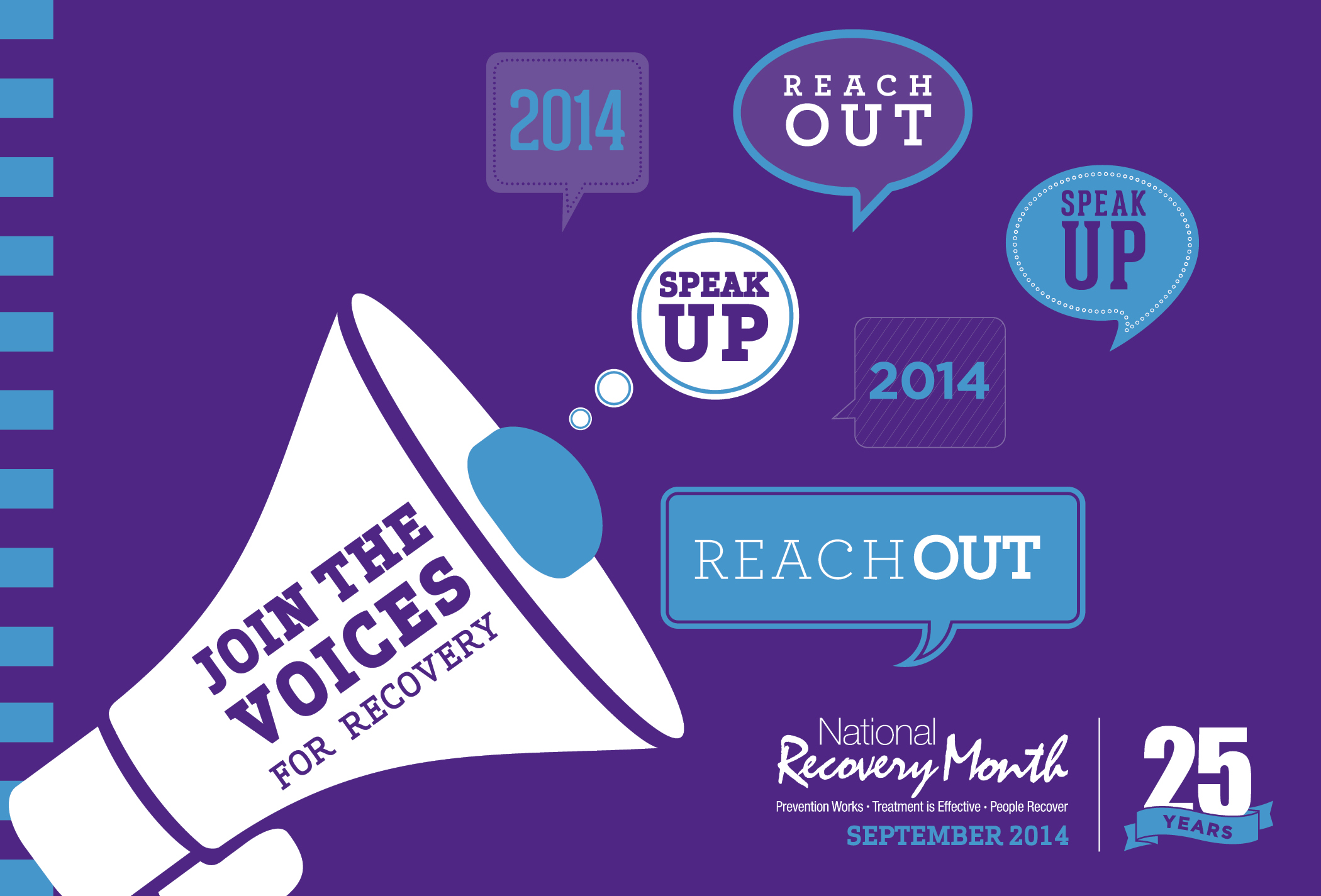
‘Personal Reflections on Recovery Month 2014’ by Bill White

recovery monthThis month marks the 25th year of what has evolved into National Recovery Month.  With an early focus on the slogan “Treatment Works,” the event took on its recovery focus in 1998 just as new and renewed grassroots recovery community organizations (RCOs) were rising across the U.S.

RCO representatives came together at the 2001 Recovery Summit in St Paul, MN to launch the formal organization of a new recovery advocacy movement under the leadership of Faces and Voices of Recovery.

In the intervening years, Recovery Month celebration events have grown beyond what anyone could have predicted.  Local recovery celebration events that once welcomed a few dozen brave participants grew into the hundreds and then into the thousands.

This month, in community after community, recovering people and their families and allies will fill parks and streets as far as the eyes can see – an ocean of lives touched and transformed by recovery.   More than 450 recovery celebration events are scheduled this month in the U.S. and such events will also transpire around the world – from Vancouver to Cape Town, from Tokyo to London. 

Read More ➔

‘An interview with Matt and Amy Baumgardner’ by Veronica Valli

image1-200x300Here is a moving Story from Veronica Valli’s website.

A little while ago I was asked to review an extraordinary book called: From this day forward, A love story of faith, love and forgiveness by Amy and Matt Baumgardner. I had interviewed Amy Baumgardner previously for my Recovery Rocks interview series. Amy just has one of those jaw-dropping stories of recovery. Her story is so extraordinary that she was featured on Oprah’ Life class with Iyanla Vanzant.

Amy lost all sight of what was important to her and her drinking took over, one day she packed her kids into the car and drove them whilst she was drunk. She hit a tree and the accident left her 5-year-old in a critical condition. This was the beginning of the end for Amy, finally realizing she had a problem she began the long painful and guilt-ridden task of getting sober.

But how does a family recover from this? How does a husband forgive his wife for almost killing their child? How does a mother forgive herself? How can you repair a marriage with this kind of devastation and pain?

Read More ➔

‘How People-Pleasing Destroys Your Authentic Self’ by Shahida Arabi

stringsI like this piece of writing from the Self-Care Haven, a website developed by a graduate student at Columbia University in the States.

This article is one for your self-care collection. It’s easy to start people pleasing in recovery, particularly when you are worried about stigma in society.

‘ARE YOU A PEOPLE-PLEASER?
Symptoms include but are not limited to: saying yes when you really mean no, allowing people to trample all over your boundaries on a weekly basis without asserting yourself, and “performing” character traits or behaviors that do not speak to your authentic self.

Can cause high blood pressure and stewing resentment that festers for years until the “last straw,” at which point, sounds of an explosion erupt. You’re so tired of being Jekyll all the time you become the worst version of Hyde possible to let out all the steam that was simmering within all along.

Read More ➔

‘Peer Support in Mental Health: Exploitive, Transformative, or Both?’ by Larry Davidson

ldavidsonI am a great admirer of Larry Davidson’s work and writings. Three of his books are amongst my favourite reads in the mental health field—please see below. These books provide clear insights into the whys and hows of adopting recovery based care. Here is an example of Larry’s writing, which appeared on the Mad in America website. I first posted this article on Recovery Stories in 2014.

‘The first time I tried to write about peer support – that emerging form of “service delivery” in which one person in recovery from what is described in the field as a “serious mental illness” offers support to another person who is in distress or struggling with a mental health condition – was in 1994. The manuscript was summarily rejected from an academic journal as representing what one of the reviewers described as “unsubstantiated rot.”

That same article was eventually published 5 years later [1], and used by the President’s New Freedom Commission on Mental Health to support its recommendation that peer supports be implemented across the country [2]. Now, more than a decade later and as peer support arrives at something of a crossroads, both of these reactions remain instructive.

Read More ➔

Human Healing in the Age of Science – The Art of the Healing Shift: Dr David Reilly

I believe passionately that our systems of care for mental health and addiction are broken and need transformation. Sadly, the same systems of care are generally resistant to change.

The situation continues to get worse for two primary reasons. Firstly, the negative consequences of modernity include an increase in emotional distress, disconnectedness, social isolation and addictions of various kinds. Ever increasing numbers of people are looking for help.

Secondly, the poor outcomes of our mental health and addiction care systems are leading to disempowerment and lack of hope, which in turn further increase the problems described above. Moreover, people seeking help are often blamed for not getting better, rather than the system accept its own shortcomings.

We have the knowledge to do so very much better. Sadly, those of us who are trying to transform these systems so that more people get better often bang our head against a brick wall. Vested interests play an important role in underlying this resistance to change.

Read More ➔

‘Want to reduce mental illness? Address trauma. Want to save the world? Address trauma.’ by Laura K Kerr PhD

Scapegoat‘Different explanations have been given for the increased number of people suffering from mental illness. Some have claimed the increase is the result of ever-expanding diagnostic criteria and syndromes that risk medicalizing normal emotional reactions.

Others argue the increase is the result of the pharmaceutical industry financially courting the medical establishment as well as using advertisements to attract potential users of their medications.

While both these arguments seem correct, they nevertheless fail to address that an increasing number of people regularly experience despair and anguish and are struggling to make a meaningful life, if not keep themselves psychologically, socially, and financially afloat.

I would like to suggest an additional explanation for the increase in mental illness: The upsurge is the result of the collective failure to alleviate conditions that contribute to trauma-related stress.

Read More ➔

Pat Deegan – Common Ground

A brilliant must-see talk by Pat Deegan, a major pioneer and inspiration in the mental health field. After describing her own experiences in treatment, Pat talks about Common Ground, the web-based application she has developed that helps people meet with psychiatrists and doctors and arrive at the best decisions for their treatment and recovery.

This is Pat’s presentation at the 2012 Summer Institute for Informed Patient Choice at Dartmouth.

Open Paradigm Project – Matt Samet

Rock climber, author, and Mad in America Blogger Matt Samet discusses his experience becoming addicted to, and subsequently coming off of, benzodiazepines. Check out Matt’s book Death Grip: A Climber’s Escape from Benzo Madness.

‘Looking forward to the Good Ol’ Days’ by Tim Carey Ph.D.

timA thoughtful article by Tim Carey on Mad in America to start the week.

‘One of the most remarkable aspects of Robert Whitaker’s (2010) outstanding book Anatomy of an Epidemic was his comparative data that contrasted outcomes for mental disorders prior to the introduction of pharmacological treatments with outcomes for mental disorders after pharmacological treatments became the main, and often only, course of action.

I have asked people in workshops to estimate who might be better off – someone diagnosed with what we now call bipolar disorder prior to the introduction of lithium or someone diagnosed after lithium became a standard treatment. Almost without exception workshoppers estimate that the people diagnosed before lithium was available do much worse. Whitaker’s data indicate exactly the opposite. It’s a staggering finding.

Read More ➔

‘The Power of Storytelling’ by Lisbeth Riis Cooper

lrcooperLisbeth Riis Cooper is another person whose blogs on Mad in America I really appreciate and value. Here’s one on storytelling.

‘Over the years, I have heard many powerful recovery stories. I’ve also had many opportunities to share our family’s struggle with mental health challenges and our recovery journey.

Each time I share my story, it gets a little easier. I feel a little lighter, a little more hopeful. And I realize how far our family has come, how much we have learned and healed.

Stories are powerful. And so is the process of telling them. Here is what I have observed over my last 10 years of storytelling:

Read More ➔

‘Recovery in an Age of Cynicism’ by Bill White

Recovery in an Age of Cynicism ImageThere’s something happening here
But what it is ain’t exactly clear
There’s battle lines being drawn
Nobody’s right if everybody’s wrong”
For What It’s Worth, Buffalo Springfield (1966)
Lyrics by Stephen Stills

Recovery in an age of cynicism requires seeking the less traveled path.

We live in a strange era.  Pessimism seems to be seeping into every aspect of global culture – fed by leaders who divide rather than unite, who pander rather than educate and elevate, and who ply the politics of destruction to mask their own impotence to create.

Poisoned by such cynicism, we as a people act too often without thinking, speak too often without listening, and engage too often to confront and condemn rather than to communicate, until in our own loss of hope, we lapse into disillusioned detachment and silence – shrinking our world to a small circle we vow to protect. 

Read More ➔

Essential reading: ‘Speed’ by Stephanie Brown, Ph.D

I’m reading the excellent book, Speed: Facing Our Addiction to Fast and Faster – And Overcoming Our Fear of Slowing Down, by one of my favourite recovery thinkers/writers, Stephanie Brown. It’s well worth reading. Here is what is written on YouTube.

‘MORE, BETTER… SLOWER.

Feeling rushed, out of control, and overwhelmed?
Feeling like you can’t keep up…and can’t stop?
It’s not just you.

From the need to be constantly connected and the changing definition of “work hours,” to unrealistic expectations of instant gratification, our bodies and brains are being harmed by habits that, as with any kind of addiction, promise short-term satisfaction while doing long-term damage.

Read More ➔

‘Shh… Just Whisper it, But There Might Just Be a Revolution Underway’ by Peter Kinderman

pkindermanHere is an excellent article by Prof Peter Kinderman from Mad in America. Yes, recovery-based care is needed!

‘The idea that our more distressing emotions can best be understood as symptoms of physical illnesses is a pervasive, seductive but harmful myth. It means that our present approach to helping vulnerable people in acute emotional distress is severely hampered by old-fashioned, inhumane and fundamentally unscientific ideas about the nature and origins of mental health problems.

We need wholesale and radical change in how we understand mental health problems and in how we design and commission mental health services.

–o–

It’s all too easy to assume mental health problems must be mystery biological illnesses, random and essentially unconnected to a person’s life. But when we start asking questions about this traditional ‘disease-model’ way of thinking, those assumptions start to crumble.

While it obviously serves the purposes of pharmaceutical companies, ready with their chemical pseudo-solutions, the evidence doesn’t support this view.

Read More ➔

‘Recovery Rocks – Betsey Berry’ by Veronica Valli

photo-300x300Here’s a recent addition to Veronica Valli’s Recovery Rocks blog.

‘This is just one of those ‘blow you away’ recovery stories. I am in complete awe how Betsey Berry managed to put her life back together after a serious meth addiction.

Getting clean is challenging for anyone, getting clean of meth whilst having 4 children, a drug addict husband, going bankrupt and loosing your house is a whole new level of challenging. Not only is Betsey clean, she has just graduated college with a BS in Alcohol and Drug counselling. Betsey writes about her experiences on her blog Mom off Meth.

She is incredible, please read and share her inspiring story.

Read More ➔