
‘The Masks of Addiction and Recovery’ by Bill White

Masks of RecoveryThere is a discrepancy for each of us between the internal self and the personas we project to others.  Personal health, wholeness and integrity hinge in great measure on the degree to which these private and public selves can be brought into harmony.  That reconciliation is potentially life-saving for persons seeking the metamorphosis from active addiction to long-term recovery.

It is a unique medical disorder whose effective management requires living as authentically and honestly as possible, and yet it is that precise aspect that leaves many people viewing addiction recovery as a priceless gift that far transcends freedom from destructive drug use.

What makes this journey towards authenticity so much more hazardous within addiction recovery compared to the parallel journey for others is the degree of duplicity at the very heart of the addiction experience.  Addiction hollows one out, leaving only the mask of the moment.  With every repetition of use, the drug becomes more powerful and the self becomes weaker, its boundaries and internal substance fading, leaving only accumulating secrets in its wake.
Read More ➔

Highly Recommended Blog: Beyond Meds

monica-christmas-84-e1367944392197Beyond Meds from Monica Cassani is one of my favourite blogs, packed full of content… and I mean packed full! You’ll be seeing a lot more from Monica on Recovery Stories in the future.

Here is what Monica has to say about her blog:

‘BEYOND MEDS – ALTERNATIVES TO PSYCHIATRY – A RESOURCE

This blog documents and shares many natural methods of self-care for finding and sustaining health in body, mind and spirit.

My own experience as both (now – ex) patient and a mental health professional allows for some interesting and sometimes uncomfortable insights into the mental health system in the United States.

Read More ➔

‘Success, Social Value, and Personal Mission (Part Two)’ by Forbes

Pat-Deegan-300x211The second part of a Pat Deegan interview by the business magazine Forbes.

‘We’re talking with Pat Deegan, creator of CommonGround, a web-based application that empowers patients recovering from mental illness to take a more active role in their recovery.

A former schizophrenia patient in her teens, Pat overcame a diagnosis of complete disability to become an internationally-recognized psychologist, and founder of a Personal Medicine system that empowers people diagnosed with mental conditions, working with their care providers and their communities, to take control of their own treatment and personal recovery.

Read More ➔

Chiara de Blasio Tells Her Story

Chiara is daughter of New York Mayor-elect Bill de Blasio. In this professionally prepared clip, she talks about her depression and anxiety and her illicit drug use and treatment. Chiara also emphasises that recovery can’t be done alone.

YouTube clip intro reads:

‘For many, the holiday season is a time for joy. But it’s also a time when many of those battling depression and substance abuse find their struggle most difficult. In the hopes of helping others, Chiara de Blasio wants to share her personal story.

If you think you have a problem, don’t wait. Ask for help. Talk to a friend, family member, or health professional today.’

‘Success, Social Value, and Personal Mission (Part One)’ from Forbes

Pat-Deegan-300x211When have you seen a recovery article on the Forbes website. Well here goes, the first of two on Pat Deegan. It’s been a great year for Pat and for all those people she has helped by her work.

‘Pat Deegan is the creator of CommonGround, a web-based application that empowers patients recovering from mental illness to take a more active role in their recovery. Pat’s own journey began in her adolescence. At 17 she was diagnosed schizophrenia. Psychiatrists told her that schizophrenia is a disease from which nobody recovers. They advised her to retire from normal life, avoid stress, and take high dose antipsychotic medication regularly.

It turned out that the treatment was as disabling as the disorder. Most disabling of all was the prognosis of doom and hopelessness surrounding the diagnosis and treatment.

Read More ➔

‘Psychiatry Has its Head in the Sand: Royal College of Psychiatrists Rejects Discussion of Crucial Research on Antipsychotics’ by Joanna Moncrieff

jmoncrieffDuring the time I was a neuroscientist (for 25 years), I became increasingly worried about the blinkered focus of many people that drugs were the sole solution to mental health problems. I was also concerned about the side effects produced by prescribed drugs. In the 13 years since I left this field – well, I stopped doing research – my concerns have increased, particularly with many new research findings. Here is an example from Joanna Moncrieff, from the excellent website Mad in America, of why am I worried.      

‘Two pieces of research have been published over the last two years that should prompt a major reorientation of the treatment of schizophrenia and psychosis, and a fundamental reappraisal of the use of antipsychotic drugs in general.  Put together, these studies suggest that the standard approach to treating serious mental health problems may cause more harm than good.

Long-term treatment with antipsychotic drugs has adverse effects on the brain, and may impair rather than improve chances of recovery for some. Many people ask me how the psychiatric profession has responded to this data. Surely, they think, it must have stimulated a major debate within the profession, and some critical reflection about why it took so long to recognise these worrying effects? Sadly, this does not appear to be happening.

Read More ➔

‘Full Recovery from Schizophrenia’ by Paris Williams

Full-moon-dark-sky-300x200‘This is the first of a series of blog postings related to my own series of research studies (my doctoral research at Saybrook University) of people who have made full and lasting medication-free recoveries after being diagnosed with schizophrenia and other psychotic disorders.

This is very exciting research because it is one of the few areas within psychological research that remains almost completely wide open. One reason it is so wide open is that most Westerners don’t believe that genuine recovery from schizophrenia and other related psychotic disorders is possible, in spite of significant evidence to the contrary.

Since there are some very hopeful findings that have emerged within this research, I want to begin this series of postings by summing up one particularly hopeful aspect of my own research, which is a group of five factors that emerged which are considered to have been the most important factors in my participants’ recovery process. But before looking closer at these factors, we should back up for a minute…

Read More ➔

‘Personal Failure or System Failure’ by William White

System Failure‘In my writings to people seeking recovery from addiction, I have advocated a stance of total personal responsibility:  Recovery by any means necessary under any circumstances. That position does not alleviate the accountabilities of addiction treatment as a system of care. Each year, more than 13,000 specialized addiction treatment programs in the United States serve between 1.8 and 2.3 million individuals, many of whom are seeking help under external duress.  Those who are the source of such pressure are, as they see it, giving the individual a chance – with potentially grave consequences hanging in the balance.

Accepting the mantra that “Treatment Works,” families, varied treatment referral sources and the treatment industry itself believe that responsibility for any resumption of alcohol and other drug use following service completion rests on the shoulders of the individual and not with the treatment program. 

Read More ➔

Mark Gilman: Positive social networks and recovering from addiction

‘No one can do it for you and you can’t do it alone’, get on the boat, any boat, and talk about the technique / route later and don’t do it on your own!’

Early In June, I blogged about what Bill White refers to as a recovery carrier. ‘Recovery carriers are people, usually in recovery, who make recovery infectious to those around them by their openness about their recovery experiences, their quality of life and character, and the compassion for and service to people still suffering from alcohol and other drug problems.’

Well, many people in the UK will know Mark Gilman as a recovery carrier par excellence. Mark has been advocating for recovery for  number of years now and has almost certainly visited more recovery communities and initiatives than anyone in the UK. He is one of the funniest people you will ever hear talk about recovery. Mark also shows that you don’t need to be in recovery to be a great advocate.

Read More ➔

A Journey Toward Recovery: From the Inside Out

IMG_2364-220x165Today, I thought I’d repost a blog from our early days. It is from an extraordinary article by Dale Walsh written back in 1996 which really summed up what recovery and recovery principles mean to a person who has been suffering from mental health problems.

At the the time, the original article had been ‘lost’, due to the original website  being redeveloped. However, I  have found it now! Enjoy!

The Problem
“For many years I believed in a traditional medical model. I had a disease. I was sick. I was told I was mentally ill, that I should learn to cope with my anxiety, my depression, my pain, and my panic. I never told anyone about the voices, but they were there, too. I was told I should change my expectations of myself and realize I would always have to live a very restricted life.

Read More ➔

‘Community Recovery’ by Bill White

Wellbriety Movement 2Another excellent paper by Arthur Evans, Roland Lamb and Bill White, highlighted in the latter’s recent blog.

“In the Red Road to Wellbriety, the individual, family and community are not separate; they are one.  To injure one is to injure all; to heal one is to heal all.” The Red Road to Wellbriety, 2002
 
As a field, we have long known that the effects of personal addiction ripple through families, social networks and organizations.  But might whole communities and whole cultures be so wounded by prolonged alcohol and other drug problems that they are themselves in need of a sustained recovery process?  This suggestion is the premise of a new paper co-authored by Dr. Arthur Evans, Jr., Roland Lamb and myself just published in Alcoholism Treatment Quarterly.

Read More ➔

‘The Role of Harm Reduction in Recovery-oriented Systems of Care: The Philadelphia Experience’

images‘While harm reduction can be viewed as an end in itself with a focus on mitigating harm to individuals, families and the community as a whole, harm reduction strategies can also be viewed collectively as a platform or point of access for promoting long-term health, and, for those with severe alcohol and other drug problems, long-term personal and family recovery.

If our goal is to promote health and reclaim lives, then we must understand the direct and sometimes circuitous paths through which individuals and families achieve and sustain such health. We must meet each individual and family with fresh eyes in every encounter with a belief that each encounter is an opportunity for movement, no matter how small, towards health and wholeness.’ Arthur C. Evans, Jr., 2013

‘Bridging the harm reduction and traditional addiction treatment and recovery worlds “requires openness to the possibility that our worldview and the cherished concepts we use to describe it may need to become subtler, more fine-grained, amended or even discarded; and, that approaches which don’t work for one person can, equally, be life-saving for others, when all the time our own beliefs, experiences, perhaps even our entire biography, shouts out that this can’t be so.” Neil Hunt, 2012

Read More ➔

‘Coaching, cajoling, caring: All good for recovery’ by Peapod

rsz_o8pvekePeapod was the top blogger on Wired In To Recovery before retiring. Here is a snappy piece on peer-based support, originally published in March 2011.

‘What do people in recovery remember as the key things that helped us initiate and then maintain the recovery journey? Do we remember the doctor getting our medication dose just right? Do we remember a brilliant care plan? Do we remember diaries and charts and exercises? Probably not.

What I remember are the people on my path. The person who answered the phone in my hour of need and who listened; the kindness and wisdom of the staff in the treatment centre; the warmth and practical help shown me when I had very little to draw on and didn’t know where to turn. Sometimes people supporting me cared enough to be honest and told me things I didn’t particularly want to hear.

Read More ➔

Trauma and Recovery

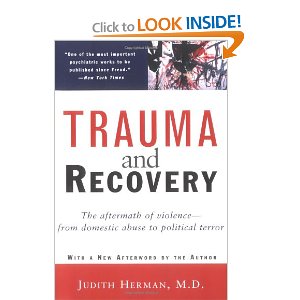
511+Nl1uNdL._BO2,204,203,200_PIsitb-sticker-arrow-click,TopRight,35,-76_AA300_SH20_OU01_My good friend Christina found a photocopy of a chapter of Judith Herman’s book Trauma and Recovery: The aftermath of violence – from domestic abuse to political terror which had the following in:

‘The core experiences of psychological trauma are disempowerment and disconnection from others. Recovery, therefore, is based upon the empowerment of the survivor and the creation of new connections.

Recovery can take place only within then context of relationships; it cannot occur in isolation. In her renewed connection with other people, the survivor re-creates the psychological facilities that were damaged or deformed by the traumatic experience.These faculties include the basic operations of trust, autonomy, initiative, competence, identity, and intimacy.

Read More ➔

ManyFaces1Voice: Jim Ramstad

Unknown-1It is wonderful to see politicians advocating for recovery. Here is film of former Congressman Jim Ramstad, who has done so much recovery advocacy work, talking about recovery. This film is from ManyFaces1Voice and The Anonymous People.

“I woke up in a jail cell in Sioux Falls, South Dakota on July 31st, 1981. It was the fifth month of my first term in the State Senate. I was mortified, I was humiliated, I was embarrassed beyond words, I wanted to be dead. I wanted to be dead.

But, instead of being the end of my life, the end of my career, it was just merely the beginning. For the first time in my life, I decided to tell the truth about my drinking. Even though it was very, very humiliating and embarrassing to wake up in jail, to be under arrest, it was also very freeing to be able to talk about who I really was.”

Read More ➔

‘Hope and Recovery: Part 2’ by Pat Deegan

rsz_beautiful-bhutan-pictures-91‘Recently I was asked to give some brief comments for a German publication.  I was asked: “Given that hope is an is an important aspect of recovery, how can professionals give hope. Have you experienced someone giving you hope? Do you remember a special situation?”  I replied:

“Professionals can’t give hope. But they can be hopeful. They can root their work in hope. Hope is different than optimism.

Optimism is shallow and trite. Optimism is false hope. Workers who are optimistic are like cheerleaders at a football match. They say shallow, unhelpful things like, “I just know you can recover. Everything will be all right. Tomorrow will be a better day.”

Read More ➔

‘The Passing of a Pioneer’ by Bill White

“That’s the issue [recovery]: it is not about any of us. It is to keep our eye on the prize, which is what drove most of us into this field in the first place. And that prize is the person who’s in recovery and seeing them grow.” 

David Powell 3Here is a touching obituary of a special person in the recovery field, David Powell PhD. Bill White talks about David’s contribution and highlights his passion, drive and dedication. He also touches upon the pressing issue of finding new  passionate leaders in the recovery field.

‘David Powell, PhD, who recently assumed the position of Assistant Clinical Professor within the Department of Psychiatry at Yale University School of Medicine, is not a person who needs introduction to an audience of addiction professionals and recovery advocates, but some readers may not yet know that David died in a fall at his home on November 1, 2013.

David was ever-present within the addictions field for more than four decades.  His work addressed many frontier issues within the field, but he is probably best known for his pioneering work to enhance the quality of clinical supervision in addiction treatment.  He pushed this agenda through his numerous publications, frenetic presentation schedule and through consultations with leading addiction treatment organizations. 

Read More ➔

ManyFaces1Voice: William Cope Moyers

images‘I was invited to give a presentation at the Rotary club in downtown St Paul, where I got up there and started my talk and was telling them all about the statistics of alcoholism. I saw people like just dropping off, you know, checking their watches and people sneaking out the back door and I was losing them.

So I just decided if I was going to hold this audience and take advantage of this unique opportunity to speak at a Rotary club, I better grab them. So I literally threw the speech to the side of the podium there and said, “I am an alcoholic and an addict and I’m talking today about people like me.”

And I told them my Story, not my 12-step Story but my Story of addiction, my Story of recovery and the multiple treatments I’d had. And I had them! That was the day that I realised that the real power is in the Personal Story.’

Read More ➔

What Works in Treatment?: Sapphire’s Story, Part 3

rsz_dscf2263We’ve been following Sapphire’s Story with a focus on the treatment she received, recognising that treatment can either facilitate or have a negative impact on the recovery process. We’ve seen Sapphire courageously overcome heroin addiction, crack addiction and most recently an addiction to benzos. There’s more to overcome.

‘Once I was off the benzos and feeling a little more like myself, I went back to work. I hadn’t worked since having the crack-induced event, so was really scared that I wouldn’t be able to cope with a job.

As I had come off the benzos, and now had the proper support of a partner and my family, I started thinking about reducing my methadone with a view to abstinence. I knew I had the willpower, as I’d managed eight nightmarish months of the benzo detox and I’d also kicked a crack addiction about two years earlier.

Read More ➔

What Works in Treatment?: Sapphire’s Story, Part 2

rsz_img_2115Last week, we looked at Sapphire’s Story, with the aim of showing the importance of person-centered treatment. Along Sapphire’s journey into and out of addiction, things went well when Sapphire was intimately involved in decisions about her treatment, but poorly when professionals took sole control.

We left Sapphire’s Story after the Community Drugs Treatment had reduced her prescribed methadone dose against her will and she started to use street drugs again. She eventually became addicted to crack. This drug took over Sapphire’s life, until the day she ended up in hospital: “I’m not sure what actually happened one particular day. I know that I had been up for about five days smoking crack and I think I had a fit and was taken to hospital.”

Sapphire was transferred to the drug and alcohol unit of the hospital and put on a high dose of methadone. When she left this unit, she did not go back to the controlling and abusive man she had been living with since she was 16 years old.  Her parents had found out about her drug-taking and became very supportive.

Read More ➔