
‘What is Recovery?’: Julie Repper & Rachel Perkins

2007_0116walpole0097Another favourite past blog:

‘In my blogs, I will be exploring the nature of recovery and will sometimes focus on the ideas of someone else (or a group of people). I’ve previously looked at how David Best has talked about “What is Recovery?” David described key principles underlying addiction recovery.

In this blog, I am going to look at what Julie Repper and Rachel Perkins have to say about “What is Recovery?”, as described in their excellent book Social Inclusion and Recovery: A Model for Mental Health Practice. They include a number of quotes about recovery, some of which I will use here.

Read More ➔

‘Setting the Intention to Heal: The Starting Point of Mental Health Recovery’ by Douglas Bloch

dblochSome very helpful reflections from Douglas Bloch, who blogs on Mad in America.

‘“The readiness is all.” William Shakespeare

In my work facilitating depression support groups, I have discovered three essential factors to healing from depression, which I call ”the three pillars of mental health recovery.”  In my earlier blogs for Mad in America I wrote about two of these pillars – connecting with community and using a holistic approach to treat symptoms. Now I would like to present the first and MOST IMPORTANT pillar – Setting the Intention to Heal.

I define setting the intention to heal as “making the decision that you want to get well, even if you don’t know how.”  Setting the intention to heal does not require that a person know the exact path that will heal him from a major depression or other mental health disorder. It just requires that he or she wants be well.

Read More ➔

Many Faces1Voice: Phil Valentine

images“I don’t think we’re all that good at handling relapse. We talk about it like, ‘The person wasn’t ready, you know, or it was their fault. And maybe there is some truth to that. But how often does the recovery community, or providers or the system rally behind someone that’s relapsed.

And the native Americans taught me something on their thing, that they, if you truly believe that addiction is a force of darkness or a force of evil or whatever you want to call it, and you’re fighting a battle and once you’re in the light you’re finally fighting a battle against this darkness. Then, in a sense, we’re warriors, aren’t we? Are we? We’re on this side of light, we can be warriors.

You know what this two-word programme is that the native Americans have? Warrior… Down. Do you leave a warrior on the battlefield?” Check out Phil Valentine on Vimeo

Read More ➔

‘My Truth – On Relapse, Recovery and Getting Out of My Own Way’ by Ellie Schoenberger

Unknown-1Those of you who read my last blog, focusing on her interview by Courtney Webster, will know what I feel about Ellie Schoenberger. Here is Ellie’s latest addition to her One Crafty Mother blog:

For many, if not most, of the people in my day-to-day life I am the only alcoholic – at least self-admitted alcoholic – they know.

Or, perhaps more accurately, I am the only alcoholic in recovery they know. Over half the population in the United States has been directly or indirectly impacted by addiction, and many people are familiar only with the ugly, destructive face of alcoholism; the one that rips apart families, destroys childhoods and brings so much sorrow and fear.

Read More ➔

‘Your Recovered Life’ Series with Ellie Schoenberger

Couldn’t think of a better way to starting my blogging week. I was quite simply blown away by this interview. Ellie Schoenberger is quite simply one special lady. Here is what your host Courtney Webster has to say about Ellie.

‘Ellie wears many hats (see bio below) but I think of her most as a woman who takes a stand for bringing alcoholism and recovery out of the shadows –  Letting us know that recovery is not only possible but phenomenal and that no matter where you are in the process, you are not alone.

I have admired her work from afar for years and personally known many women whose lives she has touched with her advocacy for telling the truth and taking the shame and stigma out of our addictions. I was thrilled to talk to her for this project and am now honored to call her a friend.’

Read More ➔

‘A Caregiver’s Story – And How I Became an Addict’ by Madeline Goldstein

Unknown-1Addiction to prescription drugs is a huge, but often ignored, problem. I’ll be focusing on recovering from prescription drug addiction over the coming weeks. Here’s a moving Recovery Story for starters, from the Mad in America community website. 

‘“There are only four kinds of people in this world – those who have been caregivers, those who currently are caregivers, those who will be caregivers and those who need caregivers.”  Former First Lady Rosalynn Carter

In 1994, my nineteen-year old daughter, Cristina, was diagnosed with chronic myelogenous leukemia (CML). It was a diagnosis that came totally out of the blue and as a complete shock.

Read More ➔

‘TLC, The Ley Community’ by Wendy Dawson

“We’re not armchair analysts, we’re not psychiatrists, we’re not psychologists, we’re human beings in recovery helping people in recovery. We enable you to have the ability to talk through whatever issue it is, we never judge. We are not interested in who you were, we’re interested in who you’re going to be. We don’t care if you’re the prime minister or the road sweeper. At the end of the day you’re a person in  recovery and we’ll support you.”

I’ve heard a lot of good things about the Ley Community, so it was good to hear about it from the CEO Wendy Dawson. Wendy was talking at the Towards Recovery conference held in Henley late last year. 

ManyFaces1Voice: Stacia Murphy

Unknown“It’s this notion of hope. And when people are in the darkest parts of themselves… when they feel that there is hope, that they can pull something out of them that allows them to live again when they have been so much in the dark. Recovery provides a light that shines in an extraordinary way.”

‘Stacia Murphy is woman in long-term recovery since 1976. She served as the president of the National Council on Alcoholism and Drug Dependence (NCADD) from 1999 to 2006 and has worked as an educator, administrator, community organizer and program developer.

She served on the the National Institute on Alcohol Abuse & Alcoholism (NIAAA) Advisory Committee and has lectured at Cornell and Columbia Universities. She is a proud citizen of New York City and a poet.’

Read More ➔

‘Unraveling the Mystery of Personal and Family Recovery: An Interview with Stephanie Brown, PhD’ by Bill White (Part 3)

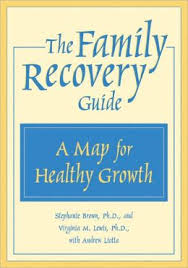
Unknown-4Bill White: In 1999, you published a book with Virginia Lewis that virtually transformed my own understanding about family recovery from alcoholism. Could you share with our readers how the book came to be written and some of its major conclusions?

Stephanie Brown: The book came at the end of a ten-year research project that Virginia and I undertook in 1990 to study the process of recovery for the family. I had always wanted to know what happens to the whole family when the drinking of one or both parents stops.

We asked the same main question I had asked previously: is the process of recovery for the family similar to the process for the individual, and do the stages of active addiction and recovery I identified for the individual hold true for the family? We discovered pretty quickly that these stages do hold true and that they are a good guideline for understanding what happens with recovery growth following abstinence.

Read More ➔

‘About Mad in America’ by Robert Whitaker

“We started Mad in America as a webzine in February of 2012 and we launched it with the thought that it would become a forum for rethinking psychiatry and also for building a community of people, an international community of people interested in that topic.”

I love the Mad in America website and have been inspired by Robert Whitaker’s books. We’ll be referring to content on this website a great deal. In this short film clip, Robert describes the purpose, history, achievements, community, and future plans of Mad In America.

‘We Are Meant to Heal in a Community’ by Douglas Bloch

dbloch“Anything that promotes a sense of isolation often leads to illness and suffering, while that which promotes a sense of  love and intimacy, connection and community, is healing.” Dean Ornish

‘In my last blog, I talked about how I was attempting to cope with a “mini-relapse” without using psychiatric drugs. One Sunday morning in the midst of this episode I awoke in a particularly dismal state. I didn’t have a structure planned for the day. And without something to look forward to, both my anxiety and depression increased.

As I lay in bed, trying to convince myself to get up, the phone rang. It was a cycling friend, Sandy, calling to see if I wanted to go on a bicycle ride.

Read More ➔

New Resource: Stephanie Brown on Recovery

Unknown-1I’ve added the following to the Resources section.

‘These blogs are based on Stephanie Brown’s wonderful book, A Place Called Self: Women, Sobriety, and Radical Transformation. In her book, Stephanie talks about what happens to women in recovery, how they think, how they feel, their problems, the good things, etc. (The book is relevant to men as well!)

What is Recovery? (Part 1)
“Recovery has held so many surprises for me. Some good. Some bad. I didn’t know I could hurt so much. But I also didn’t know I could love so much and be so loved.”

Read More ➔

Silent recovery boards – Introduction, ‘Towards Recovery’ Conference

Last month, I showed a film clip of Mark Gilman talking at the ‘Towards Recovery’ conference. We’ll have more from this conference, but for now I show the opening:

‘Silent recovery boards – conference delegates simply showing “where they were” and “where they are now”. A powerful way to start the day. Towards Recovery Conference, 23 Nov 2013, held in Henley, UK.

‘My Story of Recovery: Prayer, Community, and Healing’ by Douglas Bloch

dbloch‘In his book, Prayer is Good Medicine, physician and researcher Larry Dossey maintains that praying for one’s self or others can make a scientifically measurable difference in recovering from illness or trauma. It is one thing to understand such a healing intellectually; it is another to know it from experience.

Such an experience came to me in the fall of 1996 when a painful divorce, a bad case of writer’s block, and an adverse reaction to an antidepressant medication plummeted me into a major depressive episode. For the next ten months, I was assailed by out-of-control anxiety attacks which alternated with dark, suicidal depressions. Each day felt like an eternity as I struggled to stay alive in the face of overwhelming feelings of hopelessness and despair.

My depression was called “treatment resistant” (a condition that applies to 10 – 20% of those who suffer from a depressive disorder) and for good reason. Medication, the mainstay of conventional treatment, simply did not work. Drugs, such as Prozac, Paxil and Zoloft, made me agitated; others such as Lithium made me even more depressed; and the rest did nothing at all.

Read More ➔

‘Unraveling the Mystery of Personal and Family Recovery: An Interview with Stephanie Brown, PhD’ by Bill White (Part 2)

UnknownStephanie Brown has written an excellent book on personal recovery, from which I have used some key sections in my blogs. She emphasises a number of paradoxes in recovery which are described here. There’s some powerful stuff below, which I had never really thought about until I read Stephanie’s work.

Bill White: Speaking of impact, you wrote a book called A Place Called Self: Women, Sobriety and Radical Transformation that has deeply touched many people. Could you share some of what you infused into that book?

Stephanie Brown: At the time I wrote A Place Called Self, I was deepening my understanding of paradox. Hazelden asked me to explore some of these paradoxes from the perspective of recovering women, although much of what I eventually wrote also applies to men.

Read More ➔

‘Unraveling the Mystery of Personal and Family Recovery: An Interview with Stephanie Brown, PhD’ by Bill White (Part 1)

Unknown-1Stephanie Brown and Bill White are two of my favourite people, although I have never had the pleasure and privilege of meeting Stephanie. They have both made such a huge contribution to our understanding of recovery and how it can be achieved. The work of Stephanie and her colleagues on family recovery is unique.

Bill’s interview of Stephanie Brown is essential reading and will help you understand what an enormous contribution the latter has made. I’m going to visit several aspects of this interview over this and future blogs. Enjoy!

Bill says of Stephanie:  “One of the pioneers who has most influenced this interest in resilience and recovery is Dr. Stephanie Brown. I consider her developmental models of personal and family recovery as among the most important in the modern era of addiction treatment. The implications of some research are so profound and far-reaching that it takes decades to fully appreciate their import. I think we as a professional field will be mining the implications of Stephanie Brown’s work for decades to come.”

Read More ➔

ManyFaces1Voice: BIll White

 Unknown-1Bill White has been a huge inspiration for Greg Williams of The Anonymous People. Here he is talking on ManyFaces1Voice.

‘William (Bill) White is Emeritus Senior Research Consultant, Chestnut Health Systems. He has served as a volunteer consultant to Faces & Voices of Recovery since its founding. He has a Master’s degree in Addiction Studies and has worked in the addictions field since 1969.

He has authored or coauthored more than 350 articles and monographs and fifteen books including Slaying the Dragon: The History of Addiction Treatment and Recovery in America and Let’s Go Make Some History: Chronicles of the New Addiction Recovery Advocacy Movement. Check out an online library of his writings at www.williamwhitepapers.com.

Your Recovered Life Series with Greg Williams, Filmmaker

I really like the look of Courtney Webster’s new website, where she is interviewing inspiring people in recovery. First up for us is Greg Williams, who made the film The Anonymous People. Here’s part of what Courtney has to say about this interview:

‘Last spring I was minding my own business on Facebook when I happened upon a kickstarter video that rocked my world.

Greg Williams, was talking about a film he was making called The Anonymous People (see description below). I sat at my kitchen table with my little boy on my lap and was riveted. By the time my husband had come over to see what was making me so excited, I was crying the best kind of tears. It was so inspiring.

Read More ➔

Greeting for 2014 and New Years Eve in The Living Room, Cardiff

rsz_img_0305First of all, Ash and I would like to wish you all the best for 2014.

As some of you will know, Ash first developed the Daily Dose website for me back in 2001. We worked together for a number of years and then lost touch for awhile. However, we got in touch with each other again about a year ago and Ash developed the Recovery Stories website for me. Yesterday, we met for the first time in years when I visited him in Cilfrew (near Neath), South Wales. It was good to see him and his family after such a long time.

My two youngest children – Sam and Natasha – and I have been staying with Wynford Ellis Owen and his wife Meira just north of Cardiff. Wynford developed and runs The Living Room Recovery Centre in Cardiff. We attended their New Year Eve Party last night and had a great time. Thank you to all for helping us have such a great time.

Read More ➔

My Recovery Highlight of 2013

images“Many of us have carried a message of hope on a one-to-one basis; this new recovery movement calls upon us to carry that message of hope to whole communities and the whole culture. We will shape the future of recovery with a detached silence or with a passionate voice. It is time we stepped forward to shape this history with our stories, our time and our talents.” William White

I have one major Recovery Highlight of 2013. A Recovery ‘event’ – or a huge series of events would be a better to describe it – that has moved, excited and inspired me. Yes, it is the Greg Williams’ film, The Anonymous People.

Now, I know that no one person is ever responsible for making a film. But Greg deserves a great congratulations and thanks for making this happen. My congrats and thanks also go out to all all those other people involved  in the making and distribution of The Anonymous People and ManyFaces1Voice.

Read More ➔