
Blog

Recovery Stories Blog

‘My Recovery: A Seminar Opening Speech’ by Adam Brookes

It’s amazing to think that Adam Brookes and I have now been great friends for over ten years, although we’ve been on opposite sides of the world for much of that time. Not any more! Here is a blog concerning Adam that I wrote back in May 2013.

I first met Adam back in 2010 and he quickly became someone very important in my life, a really good friend. He was close to my partner Linda and to my three youngest children who were living with us at the time. I saw that Adam had that something special, that empathic and caring nature that helps people get better. I knew that he was going to help many people.

Adam spent a number of years living in the U.K., but now lives happily in New Zealand. Here is a five-minute speech that he gave to open the Fresh Start Recovery Seminar in Perth in July 2011. Wow, over ten years ago!

Read More ➔

What is a Recovery Carrier?: Bill White

Have you ever come across someone who just emanates recovery? I’ve certainly met quite a few and they really are special people. Here is an article from 2012 where Bill White talks about these sorts of people, Recovery Carriers. I first posted this article on Recovery Stories in June 2013.

‘Recovery carriers are people, usually in recovery, who make recovery infectious to those around them by their openness about their recovery experiences, their quality of life and character, and the compassion for and service to people still suffering from alcohol and other drug problems.

The recovery carrier is in many ways the opposing face of the addiction carrier – the person who defends his or her own drug use by spreading excessive patterns of use to all those he or she encounters. The pathology of addiction is often spread from one infected person to another; some individuals are particularly contagious.

Read More ➔

Busy Time Ahead

Now I’m 67-years old (yikes, that sounds crazy), I guess that I should be slowing down and enjoying life here in Perth. Well, I am enjoying life, other than hugely missing my children and grandchildren in the UK, but I don’t seem to be slowing down.

I’ve now got a very busy few weeks ahead. Firstly, I’m just preparing the last bits I need before  submitting my book Carrolup to a publisher. [The tag line of the book, which would appear on the cover, is A true story of Aboriginal child artists challenging a government’s racist policies.]  For those of you who are interested, you can download a short version of this story in an article I wrote this year for the Journal of the Royal Western Australian Historical Society (Number 104, 2020). One of the children’s artworks is shown on the cover of  this Journal.

Read More ➔

Quitting Use of Cocaine

For a period of four years from 15th November 2004, I wrote a series of Background Briefings for Drink and Drugs News (DDN), the leading UK magazine focused on drug and alcohol treatment. I am slowly uploading these briefings on Recovery Stories as I have time.

Three of these briefings are focused on cocaine—The Drug Experience: Cocaine. In the first part, I explore the dynamic world of heavy cocaine use as revealed in a provocative, high-quality study by Dan Waldorf and colleagues. This research, conducted in the US in the 1980s, challenged many of the prevailing myths about cocaine.

In the second part, I point out that while cocaine is generally portrayed as having a very high addiction potential, the majority of people who use the drug do not have a problem. The research by Dan Waldorf and colleagues reveals a number of social and social psychological factors that influence how a person uses a drug.

Read More ➔

‘We Are Meant to Heal in a Community’ by Douglas Bloch

One of the key messages that I have been putting out over the years that I have worked in the recovery/healing field is  about the importance of community. Here is an excellent article from Douglas Bloch—author, mental health educator and a depression survivor—about the healing power of community which he published in 2013 on the Mad in America website. I first highlighted this blog on Recovery Stories in early 2014.

‘“Anything that promotes a sense of isolation often leads to illness and suffering, while that which promotes a sense of  love and intimacy, connection and community, is healing.” Dean Ornish

In my last blog, I talked about how I was attempting to cope with a “mini-relapse” without using psychiatric drugs. One Sunday morning in the midst of this episode I awoke in a particularly dismal state. I didn’t have a structure planned for the day. And without something to look forward to, both my anxiety and depression increased.

Read More ➔

What Works in Treatment: Sapphire’s Story, Part 3

In my last two posts, we’ve been following Sapphire’s Story with a focus on the treatment she received, recognising that treatment can either facilitate or have a negative impact on the recovery process. We’ve seen Sapphire courageously overcome heroin addiction, crack addiction and most recently an addiction to benzodiazepines (benzos). There’s more to overcome.

‘Once I was off the benzos and feeling a little more like myself, I went back to work. I hadn’t worked since having the crack-induced event, so was really scared that I wouldn’t be able to cope with a job.

As I had come off the benzos, and now had the proper support of a partner and my family, I started thinking about reducing my methadone with a view to abstinence. I knew I had the willpower, as I’d managed eight nightmarish months of the benzo detox and I’d also kicked a crack addiction about two years earlier.

Read More ➔

What Works in Treatment: Sapphire’s Story, Part 2

In my last post, I looked at Sapphire’s Story, with the aim of showing the importance of person-centered treatment. Along Sapphire’s journey into and out of addiction, things went well when Sapphire was intimately involved in decisions about her treatment, but poorly when professionals took sole control.

We left Sapphire’s Story after the Community Drugs Treatment (CDT) had reduced her prescribed methadone dose against her will and she started to use street drugs again. She eventually became addicted to crack. This drug took over Sapphire’s life, until the day she ended up in hospital: ‘I’m not sure what actually happened one particular day. I know that I had been up for about five days smoking crack and I think I had a fit and was taken to hospital.’

Read More ➔

What Works in Treatment: Sapphire’s Story, Part 1

Sapphire’s Story shows the importance of person-centered treatment. Things went well when Sapphire was intimately involved in decisions about her treatment, but poorly when professionals took sole control. In this post, I start a short series focused on various stages of Sapphire’s treatment career.

Sapphire was being prescribed methadone for her heroin addiction, but as the dose was not high enough she was suffering withdrawal symptoms. To counter the discomfort of this withdrawal, she was purchasing methadone on the street and using benzodiazepines. Then a problem arose from her urine sample:

Read More ➔

Back Blogging and an Update

Firstly, an apology for my longer than planned break. I had decided to take some time out from my websites before our wonderful holiday in magical Broome.

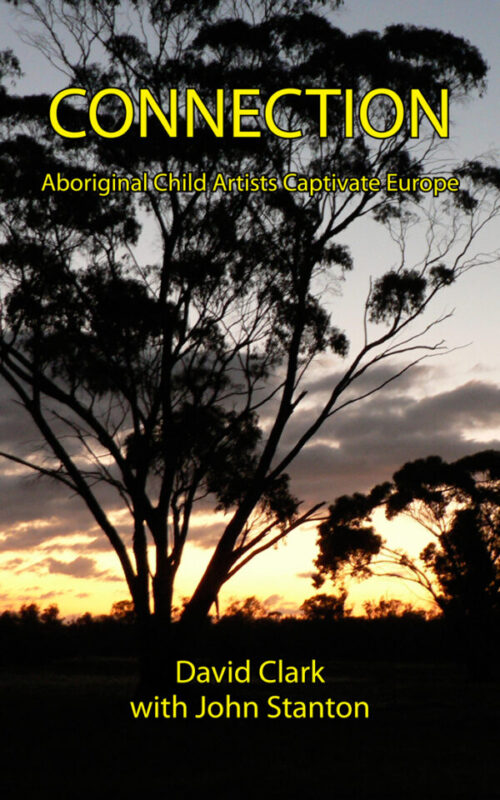
I’ve also been busy preparing a new version of my eBook Connection: Aboriginal Child Artists Captivate Europe which I will be sending to a publisher for consideration. I really want this important Story to find a wider audience. In addition, I’ve been writing content for our website The Carrolup Story and have linked up with a children’s author/illustrator, Lisa Martello-Hart, to develop a new exciting project. Busy times – no peace for the wicked!

Read More ➔

Learning From the Experts, Part 2

This post continues the research relating to client views on treatment and recovery that Gemma Salter, Sarah Davies and I conducted at BAC O’Connor treatment service back in 2004.

A further factor reported to be influential in producing positive effects was the adoption of a holistic approach, whereby the ‘whole package’ of the person was addressed in treatment, and not simply the substance use problem. The range of targets included behaviours, coping methods, physical and psychological emotional problems, practical problems, social and relationship difficulties, and self-awareness.

Read More ➔

Learning From the Experts, Part 1

Well, I’m back in the ‘office’ after my long overdue break. It was great to have a serious ‘time-out’ and also sit back and enjoy the Olympic Games. They were awesome and many performances stunning. What stood out most was the camaraderie between the athletes.

Anyway, here is today’s blog which focuses on a piece of research we conducted years ago, research of which I am particularly proud. Gemma Salter, who conducted the main analysis I describe, was one of my star undergraduate project students in the Department of Psychology, Swansea University. She had gained an outstanding First Class Honours Degree and won the prize for the best project of the year for an earlier piece of research she conducted on the impact of substance use problems on family members

Read More ➔

100 Blog Posts and an Upcoming Break

Yes, this is my 100th blog post since I restarted blogging again on Recovery Stories on the 8th of March 2021. I’ve also added various other forms of content on other parts of the website, and released my eBook Our Recovery Stories: Journeys from Drug and Alcohol Addiction on the 9th of April.

As some of you know, I first launched Recovery Stories in May 2013, with the aim of helping individuals and families recover from addiction and mental health problems. A core element of the website was a series of 14 Recovery Stories (one is in two parts) ‘told’ by people who had been affected by a serious substance use problem, either directly or indirectly.

Read More ➔

Learning From Wired In To Recovery

As part of our Wired In strategy, my colleagues and I launched the Wired In To Recovery online community in November 2008. Our initial aims with Wired In To Recovery were to:

  • Highlight role models who show that recovery from addiction is possible, and illustrate the multitude of paths to recovery.
  • Provide information and tools that help people better understand and use the options they have to overcome the problems caused by their own, or a loved one’s, substance use.
  • Create an environment in which people can inspire and learn from each other and provide mutually beneficial support.
  • Establish a ‘people’s journalism’, or Voice of Recovery, which acts as a strong source of advocacy both for recovery and the Recovery Movement.
  • Identify key individuals who would join, or collaborate with, Wired In to help us realise our ambitions.

Read More ➔

Recovery Stories Weekly, Issue 6

In the first part of the week, my blog posts focused on our Wired In work. Firstly, our qualitative research focusing on the RAPT treatment programme in two UK prisons in 2008. Secondly, our evaluation of the structured day care programme at BAC O’Connor in Burton-upon-Trent back in 2004.

Blogs in the second half of the week focused on three of my heroes in the mental health and addiction recovery fields: Mark Ragins, Larry Davidson and Bill White.

An Illustration of the Manner in Which Factors Facilitating Recovery Impact: Four inter-related themes were derived from the analysis that were labelled: ‘Belonging’, ‘Socialisation’, ‘Learning’, and ‘Support’. Each of these themes impacted on a fifth theme, ‘Personal Change’, which had two key components, motivation to change and self-esteem.

Read More ➔

Recovery as an Organising Construct – Bill White Interviews Larry Davidson

William L White and Larry Davidson are two of my recovery ‘heroes’. In this 2013 paper from his website, Bill interviews Larry about mental health recovery. As the former says, Larry was ‘one of the earliest pioneers in studying and promoting the concept of recovery related to severe mental illness.’ Here are Larry’s answers to two of Bill’s questions. [I have shortened the paragraphs for easier online reading.]

‘Bill White: How is the emergence of recovery as a new organizing paradigm changing the design and delivery of mental health services in the United States?

Larry Davidson: I think the biggest change that the recovery paradigm has introduced, and the change that poses the most difficulty for traditional clinicians to understand and accept, is that recovery is primarily the responsibility of the person rather than the practitioner.

Read More ➔

How Do I Know a Treatment Service is Recovery-Oriented?

Some treatment services today say they are doing recovery—using recovery-based care—when they are not in fact doing so. So how do you know that you are going to receive genuine recovery-based care when you sign up to a treatment service claiming to be recovery-oriented?

Here is some help from Mark Ragins about what to look for in a service offering recovering-based care. Mark may be talking about mental health recovery, but what he says is also of relevance to addiction recovery.

Read More ➔

‘The Four Stages of Recovery’ by Mark Ragins

Here’s a blog I first posted back in May 2013, not long after this website first launched. Mark Ragins is a leading recovery figure in the mental health field. He was a pioneer in setting up MHA Village, a recovery community based in Los Angeles. His writings are well worth a read. Here is what Mark has to say about stages of recovery in an article entitled The Road to Recovery. What Mark says here is just as relevant to people recovering from addiction.

‘Recovery has four stages: (1) hope, (2) empowerment, (3) self-responsibility and (4) a meaningful role in life.

Read More ➔

Learning About Addiction Treatment, Part 9

In my fourth blog post focusing on what I learnt from the treatment agency BAC O’Connor back in 2004, I focus on treatment outcomes and two short client cases. The first blog in this series can be found here.

In the year prior to our visit, 231 clients accessed the BAC day care programme. A total of 87% of these clients had been involved with the criminal justice system; many, possibly most, were prolific offenders. 90% of the clients were unemployed, whilst 28% were officially classed as homeless. However, the latter percentage was realistically 67%, since 14% were due to be evicted for arrears or ASB (Anti-Social Behaviour), while 25% were staying with friends or relatives on a temporary basis and did not have a permanent home.

Of these 231 clients, two-thirds completed the programme drug-free. This was a very successful outcome, given the ‘challenging’ nature of the clients entering the programme. 52% of the clients attended aftercare on a regular basis. BAC was not in a position to track long-term outcomes at the time of our visit, but they were trying to set up a project to do so.

Read More ➔

Learning About Addiction Treatment, Part 8

In my third blog post focusing on what I learnt from the treatment agency BAC O’Connor back in 2004, I focus on two themes. Firstly, how staff deal with people who relapse during the treatment programme. Secondly, how the agency works with ‘clients’ to help them integrate (back) into their community.

BAC O’Connor were more realistic about relapse than many other treatment agencies. Relapse was considered part-and-parcel of the recovery process, and was an issue that was addressed in a pragmatic and humanistic manner. Clients who continually relapsed and left the Centres were always given the opportunity to return and receive the help they needed. Noreen Oliver said to me:

Read More ➔

An Illustration of the Manner in Which Factors Facilitating Recovery Interact

This blog post is taken from part of a chapter in my recent eBook Our Recovery Stories: Journeys from Drug and Alcohol Addiction.

Research I conducted with Lucie James back in 2008 provided important insights into factors that facilitate behavioural change and a person’s path to recovery from addiction. This study involved a qualitative analysis of the views and experiences of clients on the RAPt treatment programme [1] in one male and one female prison. 

Transcripts of the semi-structured interviews with 15 males and 15 females were analysed with Grounded Theory in order to reveal identified concepts and themes. Four inter-related themes were derived from the analysis that were labelled: ‘Belonging’, ‘Socialisation’, ‘Learning’, and ‘Support’. Each of these themes impacted on a fifth theme, ‘Personal Change’, which had two key components, motivation to change and self-esteem.

Read More ➔