

When I worked in the addiction field in the UK in the first decade of this millennium, I was surprised how few treatment practitioners encouraged their ‘clients’ to access Alcoholics Anonymous (AA), Narcotics Anonymous (NA) and other mutual aid groups. This fact was all the more puzzling in that the treatment services that were having the most success in helping people overcome substance use problems always strongly encouraged the people who were seeking help to access mutual aid groups.
Here’s an excellent blog post on Recovery Review from one of my favourite bloggers, Dr David McCartney of Lothians and Edinburgh Abstinence Programme LEAP), about this issue:
‘A few years back in my first few months of working full time in addictions, I attended a seminar on mutual aid. Facilitated by an addiction psychiatrist, the meeting was packed with a variety of addiction treatment professionals.
The facilitator laid out the evidence base for mutual aid as it was at the time and discussed how assertively referring to mutual aid organisations could result in high take-up rates with benefits to patients. This was in the days when most groups were 12-step – SMART and other groups were still to be launched locally.
 Here is a very important blog post that I
  In my last blog post, I described my 2022 reunion with Natalie, a recovering heroin addict who first inspired me to start writing recovery stories back in the early 2000s. You can read the version of Natalie’s Recovery Story, I Didn’t Plan To Be An Addict, I initially wrote for this website back in 2013
  It was wonderful for me to catch up with ‘Natalie’ whilst I was in Wales in September 2022. She was the first treatment service user I spent in-depth time with, and from whom I learnt a good deal about the nature of heroin addiction and recovery. She told me that when she was using heroin, she did not know how to stop. She could find no information about how to stop using. She knew no one who had stopped using. The solution to these problems was to keep using, letting heroin kill her pain, shame and the hatred of herself for what she had become.
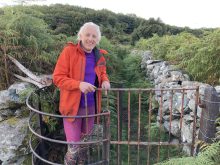 On Friday 23 September, I left Gower and headed to Tregarth in North Wales, via Aberystwyth and Dolgellau (where one of my ancestors was born), to stay with Wulf Livingston and his lovely wife Melanie. As I had such a tight schedule, I was due to stay there only one day, but my cousin Emma (my next visit) had just tested positive for Covid, so I ended up staying two days with Wulf and Mel.
 I have recently uploaded
  Here’s an excellent article by the late Deron Drumm about the importance of Stories in helping people recover and change the mental health system which
  For anyone interested in the healing of childhood trauma, I strongly recommend you read,
  ‘WE SHALL REMAIN was created to address the effects of historical trauma in our tribal communities. Many times, these untended wounds are at the core of much of the self-inflicted pain experienced in Native America. Much like fire, this pain can either be devastatingly destructive or wisely harnessed to become fuel that helps us to rise up and move forward in life with joy, purpose and dignity.’
 Bessel van der Kolk is one of the world’s leading experts on trauma and the healing of trauma. His book
  This blog post was submitted by Wazza Jones for
  Here is an excellent description of how colonialism impacted upon a young Aboriginal Australian as summarised by Richard Broome in his seminal book
  Then why not check out my eBook Our Recovery Stories: Journeys from Drug and Alcohol Addiction, which is available via
  As the end of 2022 is approaching, I thought I’d provide the titles of, and links to, the 38 posts on my Recovery Stories blog from this year. The photograph alongside is of Rowdy Yates, who we lost in February this year. Rowdy was a true addiction recovery champion. In the photograph below, taken in Stirling on 25 March 2009 by Mark Gilman, I am with Rowdy. Here are the first 20 of my blog posts this year, the earliest in the year shown first:
 Whilst on Gower, I caught up with my old best schoolmate in Melton Mowbray, Jeff Zorko, along with this wife Marian and daughter Rosie. Jeff and I spent a number of years working in jobs in different places around the world, only to find we both ended up living on Gower. They have known my three youngest children since each of them were born. Jeff became an invaluable Trustee on our charity Wired International Ltd, which funded Wired In activities. I am very grateful for the charity work he did then and the long-lasting friendship I have had with him and his family.
 I left Ash Whitney’s house in Cilfrew, and headed to Gower (a peninsula just west of Swansea) where I had rented a house in Llangennith for my two boys (Ben and Sam) and myself for four nights. Llangennith is a village on the west coast of Gower which is close to Rhossili Beach, a beautiful surfing beach. I spent my first year renting a house in the village when I took up a position in the Psychology Department at the University of Wales, Swansea in 1992. I ended up living on Gower for 14 years and had such a great time there. I consider Gower to be my spiritual home.
 After leaving
  After visiting my eldest daughter Annalie and family in Manchester, and seeing recovery advocates
  I’ve just been reading another
  Whilst in the UK, I bought a hardback copy of Gabor Maté’s thought-provoking new book The Myth of Normal: Trauma, Illness & Healing in a Toxic Culture. Yes, today’s Western society capitalist culture is toxic, according to one of the world’s leading trauma experts.