
Blog

Recovery Stories Blog

‘Sue: A Personal Story’ by Sue Murphy

2007_0118walpole0076“I was, what you were once described as in the 70s, ‘a problem child’. So to me, looking back, it was inevitable I ended up an addict.

My first love was LSD after postnatal depression. Not an excuse, just how it was. LSD was the only thing that made me feel alive. Until ecstasy. Wow, good days and they were until all the garbage arrived.

Skip many years, many tablets, many lines later and I found heroin. Or should I say it found me? It kept me enslaved for 15 years along with crack.

Read More ➔

“What is Recovery?” according to Stephanie Brown (Part 2)

IMG_2891In an earlier blog, I referred to Stephanie Brown’s book A Place Called Self, in which she describes recovery as radical change in personal identity, or the self. Stephanie goes on to emphasise a number of myths about recovery.

Firstly, the dictionary definition of recovery states ‘a return to a normal condition.’ This would suggest that in addiction recovery the person goes back to where they were before they became addicted. In fact, this is rarely the case. ​Stephanie emphasises that recovery is more like a starting over than a restoration of what was lost during addiction. This is because for many people the real self was never really developed.

Read More ➔

‘Recovery: what matters?’ by David McCartney

IMG_2315Here’s an interesting Wired In To Recovery blog from David McCartney from September 2013 about the importance of social relationships.

‘If you wanted to live a long and healthy life, what measures could you take to achieve your goals? Stop smoking? Lose weight? Exercise? Drop your blood pressure? We have evidence that all of these make a difference, but a recent analysis of 148 studies on the subject found two things that made more of a difference to mortality than anything else. What were they?

Well, having strong social relationships and being integrated socially seem to protect against death. This analysis was not specifically about addiction, but suffering from addiction is strongly associated with increased death rates and it seems very likely that if we could promote strong social links in those seeking help it will reduce the risk of relapse and ultimately of early death.

Read More ➔

‘An old cynic now believes in Recovery’ by Maggie Messenger

P1010935I really liked this blog on Wired In To Recovery, which appeared in June 2010.
‘I have just returned from a visit to the SHARP Recovery service in Liverpool. Having worked within the drug and alcohol field for almost 20 years I had heard the word “Recovery” tossed about here and there and, like a revival of the “midi”, come back into fashion again!

So I took my old cynical head and was prepared to look and see what this “new and improved Recovery” looked like.

Read More ➔

‘What is Recovery?’ according to Stephanie Brown (Part 1)

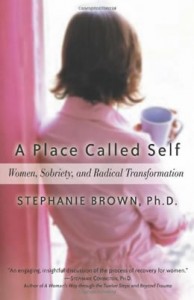
book-a-place-called-self‘Recovery has held so many surprises for me. Some good. Some bad. I didn’t know I could hurt so much. But I also didn’t know I could love so much and be so loved. I had no idea that recovery was also learning how to be in intimate relationships, learning how to have close, wonderful friends. Then there’s my marriage. My husband and I have developed a rich life together. And get this – I really like myself now. Learning about who I am and accepting me, that’s been the hardest part of recovery – and the best. I wouldn’t trade this path for anything in the world.’ Anne, Recoveree

This quote comes from the most wonderful book, A Place Called Self: Women, Sobriety, and Radical Transformation. Stephanie Brown’s book talks about what happens to women in recovery, how they think, how they feel, their problems, the good things, etc. (And before you ask, the book is relevant to men as well!)

Stephanie Brown describes recovery as a journey, a process. It is a radical change in personal identity (or the self). See the words drugs and alcohol there. Nup! You can recover from all sorts of things, like mental mental health problems, loss of a loved one, trauma, etc.

Read More ➔

SMART Recovery Member Stories 2010: “Jim”

A SMART Recovery participant and volunteer relates his story about SMART.

“Drinking will always be a choice I can make, but I happily chose not to. I’ve come to realise how much of life drinking has taken away from me, how much of life I cheated myself out of by the choices I made. My sobriety allows me to show up for life…”

‘A bright light in a dark world’ by Maddie

IMG_4069I’m almost nine months into my recovery journey, during which time I have not had a drop of alcohol. I’ve been reflecting back to my past, the time that I was drinking very heavily. Today, I can’t imagine drinking every day as I did, waking up with a hangover every morning. My mind just can’t seem to go back there.
It’s almost as if I have forgotten my past, but at the same time so much of it is very fresh. But the past ‘me’ is so different to the person I am today. My past does not hurt me anymore. I can walk past a pub or bottle shop and not even think about alcohol.

Read More ➔

‘Self empowering addiction treatment’ by Tom Horvath

Tom describes two aspects of the 4-point SMART Recovery programme: (1) dealing with cravings, and (2) managing thoughts, feeling and behaviours.

SMART Recovery is the leading self-empowering addiction recovery support group. Participants learn tools for addiction recovery based on the latest scientific research and participate in a world-wide community which includes free, self-empowering, science-based mutual help groups.

What is SMART Recovery?

Tom Horvath describes SMART Recovery, ‘a self empowering support group of meetings around the world… It is scientifically based and is offered through free online or face-to-face meetings designed for people who want to abstain from any substance or activity addiction. A chat room is available 24/7.

Read More ➔

‘Solving addiction lies in empowerment, not shame’ by Beth Burgess

P1011013Found this article by Beth Burgess in the New Statesman in October 2012. Beth is certainly getting her writing in a number of important places. Well done, Beth.

‘Brighton’s Recovery Walk is an important sign that stigma about addiction isn’t acceptable.
What springs to mind when you envisage thousands of excited alcoholics and drug addicts gathered on the streets of Brighton? The casting queue for The Jeremy Kyle Show? Early opening at the dole office? A new Wetherspoons opening up on the seafront?

Read More ➔

‘Let me introduce you to the acronym, RKRTS’ by Wynford Ellis Owen

testimonials_05I’ve had a pretty busy social week including a couple of special birthday gatherings, so I’ve not had time to upload content to the website. I’m also going to be a little busy with a planned surprise, so during this week I will focus on uploading some of my favourite content from WITR rather than write new material.

We’ll start with a past blog from a close friend of mine, Wynford Ellis Owen.

‘I’ve been asked how I recovered from drug and alcohol and other addictive behaviours. Well, one way I did it is captured in the acronym, RKRTS:

Read More ➔

‘Shouting recovery from the rooftops’ by Beth Burgess

Shouting recovery from the rooftopsI remember Beth Burgess joining the Wired In To Recovery community in November 2011. She certainly shouted from the rooftops and it was great. Here is Beth’s first blog and some comments she received. These comments refer to the prejudice that recovering people feel and fear.

‘I have had enough. Enough of saying to people with a half-smile, “Er…yeah, I don’t really drink…any more.” “A health kick?” “Yeah, something like that.” I have had enough of putting ‘career break’ on my CV. I am fed up of insinuating rather than being honest.

Read More ➔

‘Stigma’ by Peapod

blog-14-06-2013-image1We all know that people with substance use problems and their families are stigmatised by many people. Here, Peapod blogs about stigma on Wired In To Recovery in 2009.

‘My dictionary defines stigma as “a mark of disgrace or infamy; a stain or reproach.”

It’s a problem for addicts like us. I’ve been subject to it a few times in both active addiction and in recovery. Recovery is such a good news story. Why do recovering addicts still suffer from stigma?

Read More ➔

‘Never give up hope’ by Elizabeth Burton-Phillips

Never give up hope by Elizabeth Burton-PhillipsAnother of my favourite blogs from Wired In To Recovery, from December 2009.

“Like most grandparents, I can’t resist showing off pictures of my beautiful little grandson James, sitting with his adoring father Simon. But for me, the joy runs even more deeply than most, contrasting as it does with the devastation my family experienced almost six years ago.

At the age of 13, my son Simon and his twin brother Nick began experimenting with drugs by smoking cannabis. They sampled increasingly dangerous drugs over a period of 14 years, culminating in injecting heroin. One February day in 2004, after a huge drug-fuelled argument, Simon went to make peace with his brother and found that Nick had hanged himself.

Read More ➔

Active ingredients within the processes of successful addiction treatment and recovery

IMG_3699“For nearly five decades, Rudy Moos, PhD, has been one of the giants of modern addiction research. I believe he has, more than any other research scientist, focused on questions of the greatest import to addiction counselors and the individuals and families they serve. His published studies have dramatically expanded our knowledge of addiction treatment and the processes of long-term addiction recovery.” William L White

That is one hell of an introduction to Rudolf Moos, in my humble opinion one of the great addiction researchers of our time. Bill White’s comments come at the beginning of a very interesting interview he conducted with Rudolf in 2011.

Read More ➔

‘Experiences of a mother of two young heroin addicts’ by Mark

IMG_4069A very moving blog which first appeared on Wired In To Recovery (WITR) in May 2009. Mark blogged regularly on WITR until the community closed.

“We found my 20 year old brother dead of an overdose. He had just kicked the habit so tolerance was low. He started a job and the first payday was his last.

Mum wrote this after I got clean. Copy and use it anywhere it can be of use.”

‘What is it like being the mother of an addict? (Experiences of a mother of two young heroin addicts)

Read More ➔

On blaming

2007_0118walpole0076‘When you plant lettuce, if it does not grow well, you don’t blame the lettuce. You look into the reasons it is not doing well. It may need fertilise, or more water, or less sun.

Yet if we have problems with our friends or our family, we blame the other person. But if we know how to take care of them, they will grow well, like lettuce.

Blaming has no positive affect at all, nor does trying to persuade using reason and arguments…

Read More ➔

‘Building the science of recovery – what I have learned goes far beyond our studies (Part 2)’ by Alexandre Laudet

IMG_2882In my previous blog, I summarized a few highlights of the research on recovery I have conducted with my collaborators. Our ultimate goal is to give a voice to people in recovery to inform policy and service development. However, I would be remiss in not mentioning what I have personally learned from people in recovery because it’s probably the most meaningful aspect of this endeavor for me.

Not surprisingly given my line of work, I have encountered numerous people in recovery. Today, most of my friends and some of my colleagues are individuals in recovery – the latter too often undercover for fear it would bias how their science is received… (a sad commentary on our field and how society regards this disease…)

Read More ➔

Susan’s Story, Part 3: ‘Missing Michael – A Story by Blog’

P1010995Susan lost her son Michael to a drug overdose on the 22nd January, 2010. I, for one, cannot begin to understand what someone must go through after such a loss.

However, I gained some appreciation from the Susan’s extraordinary writing in a blog she published on our online recovery community Wired In To Recovery. I was captivated and deeply moved by Susan’s writing, as were many other people in our community.

This is Part 3 of a slightly edited version of Sue’s blogs. Check out Part 1 and Part 2 if you have not seen them.

Read More ➔