‘Hope is the Word That Can Free Us From Addiction’ by o2b3

One of the things I will be doing over the coming months is to ‘bring back’ some of the classic blogs from our online community Wired In To Recovery, which ran from 2008 – 2012. People who know me will tell you that I always keep banging on about hope. Yes, hope is essential for recovery! Here’s a real powerful blog about hope which o2b3 submitted to Wired In To Recovery back in 2010.

‘I always thought that the word hope didnʼt apply to me! From where I come from I was never shown or given any hope. I was always put down and told, ‘Thereʼs no hope for you. You are no good. Youʼre bad, you are a liar. You are worthless and rotten to the core.’ When you keep hearing that said to you time and time again, you start to believe in what those people say. That this is you and thatʼs what you are. So I became the person that everyone said I was. I became all of the above, just to get back at those people that hurt me and put me down.

Read More ➔

Recovery Moments: Ian and Irene’s Story

Two of my favourite people that I have met on my Wired In journey are Ian and Irene MacDonald. I first met Ian in 2007 at a Federation of Drug & Alcohol Professionals (FDAP) meeting, although we had been corresponding earlier. Ian and Irene had lost their son Robin to a heroin overdose in 1997 and were now running a family support group, CPSG (Carer and Parent Support Gloucestershire).

Ian later asked if I would give a talk to family members in Cheltenham and I happily agreed. The talk took place in September 2008. I was still living in Cowbridge in South Wales at the time. My new partner Linda was visiting from Australia, so she came to Cheltenham with me. We spent a lovely evening with Ian and Irene. I remember thinking at the time how would I ever recover from losing a child?

Read More ➔

‘A bright light in a dark world’ by Maddie

One of the highlights of my career has been the development of Wired In To Recovery. Our online recovery community attracted over 4,000 members, who were from around the world and had a diverse range of backgrounds. A significant number (over 1,000) of community members blogged, generating over 7,500 blogs and 35,000 comments!

I loved reading the blog posts and had many favourites. Here is just one of the moving posts I was lucky enough to read.

“I’m almost nine months into my recovery journey, during which time I have not had a drop of alcohol. I’ve been reflecting back to my past, the time that I was drinking very heavily. Today, I can’t imagine drinking every day as I did, waking up with a hangover every morning. My mind just can’t seem to go back there.

Read More ➔

‘Nothing to mourn; just a drug addict’ by Dr David McCartney

When I developed Wired In and worked in the addiction recovery field, I was living in South Wales. When my daughter Annalie was in medical school in Edinburgh, I used to fly up from Cardiff to visit her. I soon came to love Edinburgh. That positive feeling for the city increased greatly when I met Dr David McCartney.

David ran Lothians and Edinburgh Abstinence Programme (LEAP), a programme that offered structured treatment based in the community using a blend of evidence-based interventions. The patient group in treatment operated as a therapeutic community. David was in recovery himself. I loved visiting LEAP every time I was in Edinburgh, and meeting the patients and staff. I’d sit in on group sessions and spend time talking to the patients. David and I became good friends and I hold him in the highest regard.

I’ve recently been checking out David’s blog on Recovery Review. He writes so well and covers a number of key themes relating to addiction recovery. Here is David’s latest post, ‘Nothing to mourn; just a drug addict’, focused on the issue of stigma.

Read More ➔

Factors Facilitating Recovery: Understanding

Here is the next section from my chapter Factors Facilitating Recovery in  my eBook Our Recovery Stories: Journeys from Drug and Alcohol Addiction.
Understanding is essential for recovery. People with substance use problems and those on a recovery journey need information and education about a variety of matters, including: the nature of addiction and their own substance use problems; the range of interventions they can use to help them overcome or manage these problems; opportunities that allow them to exercise their strengths and assets; supports they can use to facilitate their recovery journey, and self-management skills that help them cope with situations that might lead to relapse. 

Recovering people are a major source of information that can facilitate another person’s recovery journey.

Read More ➔

Factors Facilitating Recovery: Involvement in Meaningful Activities

Another important factor facilitating recovery involves the development of valued social roles through involvement in meaningful activities. Through these activities, recovering people gain a sense a purpose and direction in their life—they find a niche in the community. 

These meaningful activities may involve employment or volunteering, engagement in hobbies or other leisure activities, or connecting with other organisations or groups. Employment is a central way in which people can achieve more meaning and purpose in their lives and is therefore a key pathway to recovery. As described in a previous post, impacting on the lives of other people in a positive manner, ‘giving back’ as it is often called, is also important for personal recovery.

Read More ➔

What Happens to Women in Recovery: Stephanie Brown

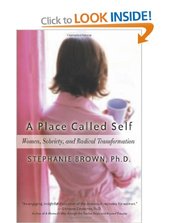
In the Resources section of the website, I have a series of my posts under the title Stephanie Brown on Recovery. These posts are based on Stephanie Brown’s wonderful 2004 book A Place Called Self: Women, Sobriety, and Radical Transformation. In her book, Stephanie talks about what happens to women in recovery, how they think, how they feel, their problems, the good things, etc. (The book is relevant to men as well!) Here is the main part of the first of my posts, entitled ‘What is Recovery’, according to Stephanie Brown (Part 1).

“‘Recovery has held so many surprises for me. Some good. Some bad. I didn’t know I could hurt so much. But I also didn’t know I could love so much and be so loved. I had no idea that recovery was also learning how to be in intimate relationships, learning how to have close, wonderful friends. Then there’s my marriage. My husband and I have developed a rich life together. And get this – I really like myself now. Learning about who I am and accepting me, that’s been the hardest part of recovery – and the best. I wouldn’t trade this path for anything in the world.’ Anne, Recoveree

Read More ➔

Factors Facilitating Recovery: Mutual Support

I continue with my series of blog posts relating to the factors that facilitate recovery from addiction, which I have detailed in the second last chapter of my eBook Our Recovery Stories: Journeys from Drug and Alcohol AddictionThese factors are also relevant to recovery from mental health problems.

“Acceptance is just one aspect of the fifth key factor underlying recovery, being supported by others. People in recovery stress the importance of having someone believe in them, particularly when they don’t believe in themselves. They also stress the importance of having a person in recovery as a mentor or role model as they travel their journey.

Read More ➔

Factors Facilitating Recovery: A Sense of Belonging

I’ve emphasised the importance of hope, empowerment and self-responsibility in facilitating recovery. The fourth important factor is gaining a sense of belonging. Here is what I wrote in my new eBook Our Recovery Stories: Journeys from Drug and Alcohol Addiction.

“Recovery cannot be achieved in isolation. In fact, many people with serious substance problems have become isolated and alienated and this has a further debilitating effect on their already vulnerable psychological state. People who have had such problems need to belong and feel part of something. They need to feel the acceptance, care and love of other people, and to be considered a person of value and worth.

Read More ➔

Learning About Me: Paul

In a previous series of blogs starting here, I have emphasised that the effects of a psychoactive drug are not just dependent on its biochemical actions in the brain. They are related to the drug, set (person) and setting (social context). The problems that arise from drug-taking, such as addiction and dependence, are not just related to the drug—it’s drug, set and setting. And the same is true of recovery.

In an earlier blog, I revealed how Brad had been told by a  colleague that his drinking problem was not just due to alcohol. It was about him. In this blog, I’ll use the words of Paul to describe how he learnt the same truth in relation to his drug problem, a drug problem that was a ‘little’ different to what most people experience.

Read More ➔

Factors Facilitating Recovery: Self-Responsibility

In my last blog posting focused on factors that facilitate recovery, I discussed empowerment. This is a key factor, as it the person with the problem who does the work in recovery.

The flip side of the fact that ‘recovery is something done by the person with the substance use problem’, is that the person has to take charge of their own recovery. Although people generally need to be supported in their recovery, they can’t be care-taken or protected into recovery. Setting one’s own goals and pathways, taking one’s own risks, and learning one’s own lessons are essential parts of a recovery journey. No one else can do the work. Self-responsibility is therefore a key factor facilitating recovery.

Read More ➔

Journeys – Making Recovery from Addiction Visible

Huseyin Djemil from the UK has this week launched a new podcast focused on recovery from addiction, which he describes as such:

‘A new series from Towards Recovery CIC – making recovery from addiction visible.

Huseyin Djemil speaks to people who have lived experience of recovery from addiction, people who have been affected by addiction and those working in the addiction and recovery field – in its many contexts. There is a lot of information about addiction, but people get better and their stories need to be visible to give others hope.

Recovery is not a linear path from A to B, it’s more of a winding road and we want to explore those journeys and get those stories heard, because our stories have power.’

Read More ➔

Factors Facilitating Recovery: Empowerment

Following on from my post about Hope, I include another section, this time on Empowerment, from the second last chapter, ‘Factors That Facilitate Recovery’, of my recently published eBook, Our Recovery Stories: Journeys from Drug and Alcohol Addiction.

‘As emphasised throughout this book, recovery is something done by the person with the substance use problem, not by a treatment practitioner or other person. The major sources of power driving the recovery process are the person’s own efforts, energies, strengths, interests and hope. Treatment practitioners, and others involved in the person’s recovery journey, can facilitate the recovery process by encouraging and supporting the person’s own hopes, strengths, interests, energies and efforts.

Read More ➔

Factors Facilitating Recovery: Hope

In an earlier blog, I described the nature of addiction recovery, using what was written in the second last chapter, ‘Factors That Facilitate Recovery’, of my recently published eBook, Our Recovery Stories: Journeys from Drug and Alcohol Addiction.

It  is important to emphasise that everyone’s recovery is different and deeply personal. However, whilst there are a multitude of pathways to recovery, there are a number of key factors that facilitate recovery from serious substance use problems. The importance of these factors has been illustrated in the narratives of recovering people about their journeys into and out of addiction. 

In this and future blog posts, I will describe a number these factors, illustrating their importance using primarily quotes from the Stories in my book. It should be noted that many of these factors are inter-related, so there will be some degree of repetition.

Read More ➔

A Life-Changing Time

In an earlier series of blogs starting here, I described what I initially learnt about addiction treatment at a local treatment agency in Swansea, West Glamorgan Council on Alcohol and Drug Abuse (WGCADA) in the early 2000s. Later, in 2005, I was commissioned to write a profile of the agency, which ended up being over 180 pages long and containing a number of Stories. Here’s is one such Story, of someone recovering from a serious alcohol problem:

‘I am writing about an amazing two years in my life. It has truly been a life-changing time. Not only have I stopped drinking (and that in itself I would never have believed possible!), but I’ve really begun to live life more fully and have been able to put my life back together again in a very positive way. Throughout this time, I have had great support and help from WGCADA. I can’t speak highly enough about the organisation and the staff I have been in contact with…. so please read on…

Read More ➔

Addiction Recovery

Here is a section about the nature of addiction recovery from my new eBook, Our Recovery Stories: Journeys from Drug and Alcohol Addiction.

“There have been various definitions of recovery proposed over the years. For the purpose of this chapter, I am going to use a definition proposed by leading addiction recovery advocate William (Bill) L White [1]:

‘Recovery is the experience (a process and a sustained status) through which individuals, families, and communities impacted by severe alcohol and other drug (AOD) problems utilize internal and external resources to voluntarily resolve these problems, heal the wounds inflicted by AOD-related problems, actively manage their continued vulnerability to such problems, and develop a healthy, productive, and meaningful life.’

Read More ➔

‘Brad, You Haven’t Just Got a Problem with Alcohol.’

‘The most important thing that therapists can do to be helpful is to find ways of supporting, stimulating, and energizing client’s investment and involvement. The second most important thing is to stimulate and support powerful client learning and meaning-making processes.’ How Clients Make Therapy Work: The Process of Active Self-Healing by Arthur C Bohart and Karen Tallman.

I’d like to introduce to another our Storytellers, Brad Miah-Phillips. In many ways, Brad’s life couldn’t have been more different to the last Storyteller to whom I introduced you, Tim. However, they have both come back from very dark places.

I first met Brad in April 2009 when he made Mark Gilman and I breakfast at The Basement Project in Halifax, UK, or the Breakfast Club as it was known then. Mark and I were visiting Stuart Honor, the amazing man who originally set up this recovery initiative. I only met Brad in person once after that, but I came to know him well when he became a regular blogger on Wired In To Recovery. We have spent a lot of time on Skype as I have interviewed Brad about his amazing life.

Read More ➔

Learning About Addiction Treatment, Part 4

I’ve spent three blog posts, the first of which can be found here, describing my experiences and what I learnt during my initial visits to a local treatment agency, West Glamorgan Council on Alcohol and Drug Abuse (WGCADA) in Swansea. In addition, my last blog focused on an article written by my oldest daughter Annalie about a day in the life of an addiction treatment support worker at WGCADA, Dave Watkins.

Many of the clients I met at WGCADA and in other treatment services I visited over the years knew what they wanted—a valued and meaningful life. They just did not know how to achieve what they wanted, and they lacked the internal and external resources to take the journey to recovery and the life they wanted. 

My early experiences at WGCADA resonated loudly when some years later I read How Clients Make Therapy Work: The Process of Active Self-Healing, a seminal book written by Arthur C Bohart and Karen Tallman and published by the American Psychological Association. The following quotes are particularly pertinent. 

Read More ➔

‘A Day With Dave’ by Annalie Clark

In my last post, I talked about Dave Watkins and his past role at the treatment agency West Glamorgan Council on Alcohol and Drug Abuse (WGCADA) in Swansea. Here’s an article that my oldest daughter Annalie wrote in 2005, after spending a day with Dave Watkins. Annalie had just finished her first year of medical training at the University of Edinburgh. She is now a psychiatrist.

What is striking about this article is that Dave’s role resembles what I envisage a recovery support worker (or recovery coach) would be doing today. Annalie highlights Dave’s extensive contacts within, and knowledge of, the local community, which helps the lives of the people with whom he works. In the video below, you can see one of the magic tricks that Dave used to engage the people with whom he was working.

Read More ➔

Learning About Addiction Treatment, Part 3

I continue describing my experiences at the local treatment agency West Glamorgan Council on Alcohol and Drug Abuse (WGCADA) and what I learnt about how treatment facilitates recovery from addiction. You can read the earlier parts here and here.

‘Dave Watkins was a Community Support Worker for WGCADA. He was originally an engineer, but changed career after a member of his family suffered a substance use problem. In simple terms, Dave helped clients with every aspect of their lives that could interfere with their progress on their recovery journey. This included helping put a roof over their heads, getting their social security benefits, dealing with legal problems… and sometimes involved painting walls or cleaning up vomit! Dave immersed himself in his clients’ lives. He worked with some of the most chaotic substance users you would ever meet.

Read More ➔