
Blog

Recovery Stories Blog

‘New Life Acceptance’ by Matt Kay

Manchester-Art-and-Culture-getawayHere’s another old blog from WITR blogger Matt Kay, this one from April 2012.

‘I’ve not been on here for absolutely ages but I’m still living the dream. I made it to two years clean and sober (Aprils Fools Day too!) Just thought I’d share this with you… it’s called “New Life Acceptance”, hence the title.
 
1. I have a life-threatening problem that once had me. I now take charge of my life and my addiction. I accept the responsibility.

Read More ➔

Canada’s Recovery Day Story

Unknown-2When filmmaker Greg Williams created a page on “Kickstarter” he dreamed of raising enough funds to produce what is now The Anonymous People. However, this Kickstarter video and description of the project carried a power great enough to change the lives of many across the world.

The project ignited the spark in two woman in recovery, Lorinda Strang and AnnMarie McCullough who planned and championed the first-ever Recovery Day in Vancouver with only four weeks to prepare.

Please check out their film on ManyFaces1Voice and the Canadian Recovery Day website.

Maetta Broadus on ManyFaces1Voice

Unknown-1“Once you’re an addict and once you are seen in society as an addict or an alcoholic you’re an abnormal to society. You are something that no one wants in their community. you’re that things that they have to hide.

The stigma is that they’re doing it because they want to. But my experience is that I didn’t become a drug addict because I wanted to.”

See Maetta Broadus speak on ManyFaces1Voice, the website promoting The Anonymous People film. Maetta is a community activist and recovery ambassador from Kentucky. She serves on the board of People Advocating Recovery, belongs to Kentuckians for the Commonwealth, and is a certified recovery dynamics instructor.

‘What Amy Winehouse’s Birthday Means to Me’ by Beth Burgess

london recovery coach.jpgBeth is really getting prolific at the Huffington Post. I’ll keep pushing her blogs out as I like her writing. So here we go again.

‘I was 27 when I decided to stop drinking; the same age at which Amy Winehouse sadly died while in the throes of her own battle with the booze. Although I didn’t find immediate recovery after my initial decision to quit, I was already sober when Amy’s death was announced in July 2011.

Even though the rest of the world seemed to be expecting the news, I recall feeling shocked to hear of the British singer’s death. It’s part of the mental block among alcoholics, where you downplay the consequences of drinking. I never thought the worst would happen to me. I never thought it would happen to her. She probably never thought it would either. It’s classic denial.

Read More ➔

Jim’s Recovery Minute

“I love life again, I have… I live in a  great community, my kids are thriving, I am thriving. I get up every day just wanting to face the day… enjoy the day and all the opportunities it has.

And that’s sobriety, that’s life. And that’s me, so I’m just grateful to be able to give you this message.”


‘No-one is broken, just lost’ by Beth Burgess

london recovery coach.jpgHere’s Beth’s latest from the Huffington Post.

‘From around the age of nineteen, I considered myself a broken person; I was an alcoholic, a prostitute and was plagued by a crippling anxiety disorder. Little did I know that one day it would all be resolved, proving that nothing about me was broken, only lost.

If I had been broken, I would never have been able to get over my litre-of-gin per day habit. I would never have ever been able to walk outside without shaking and sweating with fear. I would never have been able to turn my life around to such a degree that I now help others who are suffering as much as I was.

Read More ➔

Bill White on Stigma and the New Recovery Movement

UnknownHere is a really powerful film clip from Bill White. Please pass the link on.

“Almost everyone in America know someone in recovery. The problem historically is that they did not know they were in recovery which means that they can continue to maintain incredible stereotypes about who are the people who develop alcohol and other drug problems in this country and who are the people who recover and don’t recover.

There are a lot of issues about stigma that I cannot educate you out of. I cam give you all the facts. I can read all the books to you. I can show you documentaries but nothing is going to change that embedded prejudice until you encounter personally someone in recovery who means something to you and hear their story.”

Simon’s Moment of Clarity

post1In reading Simon’s Recovery Story, it seems that he had two major Moments of Clarity. Mind you, I’m sure he had many others along his recovery journey!

‘One day, I received a letter from the head of faculty, asking me to come to see him in his office. I’d stopped attending lectures and tutorials, and I was only attending university to collect giro cheques from my mailbox.

I knew that my addiction had come out on top again, and that I’d need all my wits about me if everything was not all going to fall down around me – my brittle facade of lies and last chances and denial that I would retreat into every time I was challenged.

Read More ➔

Michael’s Recovery Minute

“I was ingrained in CCAR to show the positive side of recovery, putting a face on recovery, allowing people to see that recovery was possible. A reality that people in many walks of life would able to get their life together again.

Michael Askew is Manager of the Bridgeport Community Recovery Center, under the auspices of CCAR. Formerly known as Dark Shadow, he has been in recovery from 1989 after being in and out of prison for years (seven visits).

‘If Not AA, Then What? SMART Recovery and the AA Alternatives’ by Tom Horvath

images-2Here’s an article from SMART Recovery President Tom Horvath which appeared in the Huffington Post recently.

‘Alcoholics Anonymous (AA) and other 12-step groups are the leading U.S. approach to addiction recovery. Millions have attended these meetings and “worked the steps.” Popular media include countless references to AA-oriented recovery. Many scientific studies show that attending these meetings is associated with recovery.

However, many individuals will not attend these meetings, or will not attend them long enough to solidify change. Their reasons include not wanting to accept the labels “addict” or “alcoholic,” not wanting to attend groups of any kind, not wanting to consider oneself powerless, not thinking of oneself as having a disease, or not wanting an approach that encourages lifelong attendance.

Read More ➔

Kevan’s Moment of Clarity

images-1A Moment of Clarity for Kevan Martin, taken from his Recovery Story. After spending 25 years problem drinking and eight years in and out of psychiatric hospitals, Kevan runs NERAF which has nearly 100 staff and volunteers and provides a support service across the north-east of England.

‘One Sunday evening, when I was out trying to tire myself out, I walked past a church. I believe in God, but I am not a religious or spiritual person by any means. However, I felt this overwhelming urge to turn back and enter the church.

I sat at the back of the church watching the congregation sing and started to feel comfortable, relaxed and at ease. I must have fallen asleep, as I didn’t realise that people had left until the Vicar woke me.

Read More ➔

The 4th UK Recovery Walk Film

The 5th UK Recovery Walk takes place on 22nd September, 2013 in Birmingham. Hope you folks in UK can make it.

Here’s the film from the 4th UK Recovery Walk in Brighton. Inspirational. Well done all involved in the making of this film.

‘Recovery Stories from the 19th Century’ by Bill White

IntemperateCover (3)Here is a fascinating addition to Bill White’s website, a series of Recovery Stories from the 19th and beginning of the 20th century.

‘In the minds of the public and many helping professionals, the history of addiction recovery in the United States begins with the founding of Alcoholics Anonymous in the mid-1930s. 

That view, of course, obscures the long history of pre-AA recovery mutual aid. That earlier history spans the eighteenth century rise of abstinence-based religious and cultural revitalization movements (recovery circles) within Native American tribes and nineteenth century groups such as the Washingtonians, recovery-focused fraternal temperance societies, the Ribbon Reform Clubs and recovery support groups associated with early addiction treatment programs (the Ollapod Club, Godwin Association, Keeley Leagues).

Read More ➔

‘An intro to SMART Recovery’ by Curtis Boudreau

Mark Gilman spotted this little gem. For those of you who don’t know,  SMART Recovery is based on a 4-point programme that helps a person: build and maintain motivation; cope with urges; manage thoughts, feelings and behaviours; and live a balanced life.

SMART teaches self-empowerment and self-reliance. It provides meetings that are educational, supportive and include open discussions. 

This instructional film is well worth a watch. 

‘It’s called the past for a reason’ by Matt Kay

keld1Here’s an early blog from one of my favourite Wired In To Recovery bloggers, Matt Kay.

‘For all of us in recovery, irrespective of our substance of choice, it’s important to remember to always keep things in perspective.

As addicts, we craved our drug and wanted it immediately and always wanted more. Likewise, in recovery we crave abstinence or sobriety and cannot understand why the little devil on our shoulders just won’t take a long sprint off a short pier!

A friend of mine (eight months sober) rang me recently and, in floods of tears, said they couldn’t understand why they had been out ‘for just one drink’. During this moment of his intoxication, I had a chat, calmed him down, and advised a good night’s sleep and we’d talk again in the morning.

Read More ➔

‘A healed and healthy country: understanding healing for Indigenous Australians’ by Tamara Mackean

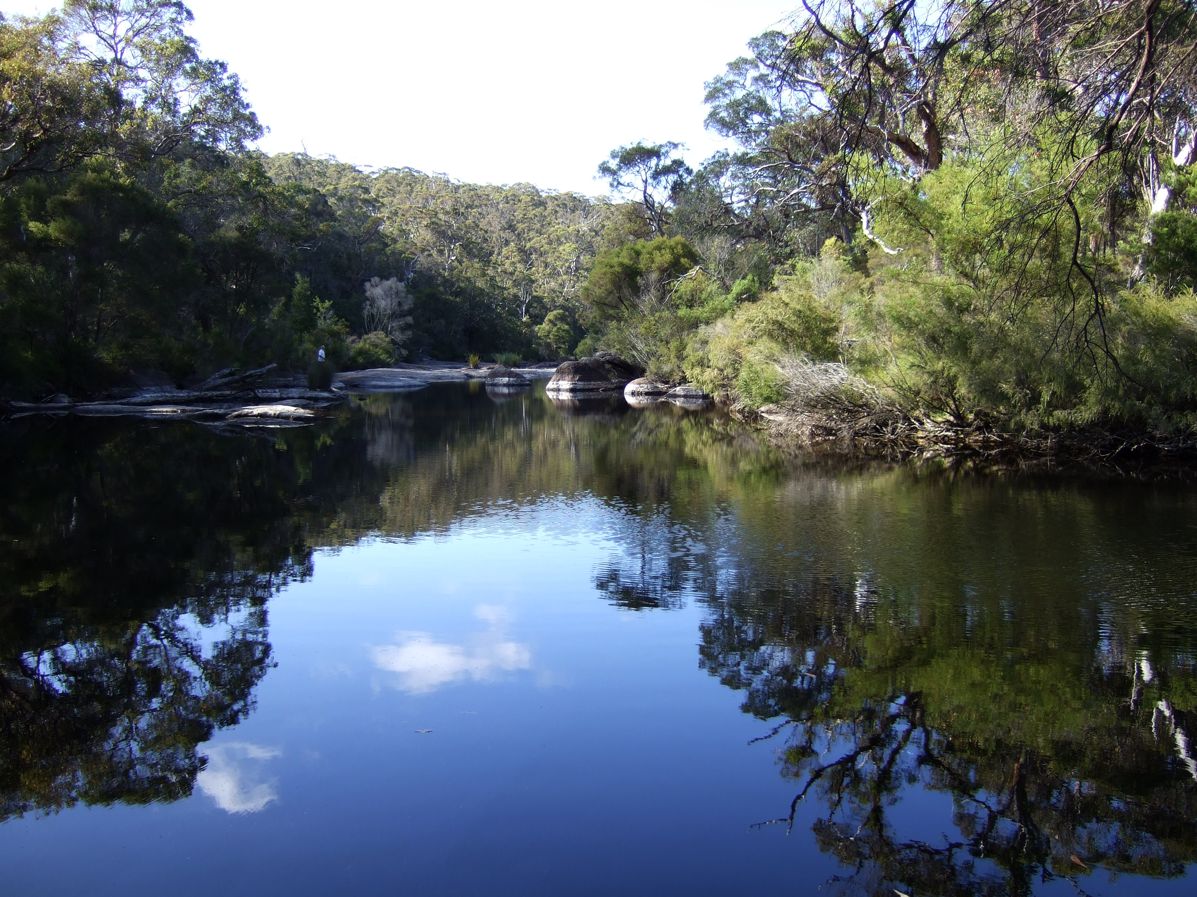
2007_0116walpole0025Yesterday, I blogged about a description of healing by Professor Helen Milroy, an Aboriginal Child Psychiatrist and Australia’s first Aboriginal doctor. This wonderful description of healing was also included in the article below which appeared in the Medical Journal of Australia, but here I focus on the rest of the article.

Of course, much of what is said here is relevant to recovery, because recovery is healing. I have highlighted some sentences that I think are particularly relevant to people working in the recovery field worldwide, whatever their cultural background.

‘The Apology by the Prime Minister to Aboriginal and Torres Strait Islander peoples of Australia in February 2008 was the first step in a significant healing journey.

Read More ➔

‘The Nature of Healing’ by Professor Helen Milroy

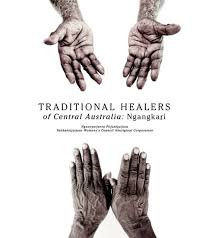
Unknown-1I have recently started collaborating with an Aboriginal lady here in Perth, Dr Marion Kickett, who is an Associate Professor at Curtin University. We’re very excited about the project we are developing, along with my close friend and filmmaker Mike Liu.

I have been fascinated reading about aboriginal history, culture, health, historical trauma – more of which I will talk about in later blogs – and many other things. During this time, I have become very interested in the concept of Aboriginal healing.

Yesterday, I was chatting with good friend Christina Burki about healing and she loaned me a fascinating book Traditional Healers of Central Australia: Ngangkari. In the Foreword, I found this delightful description of healing (I have altered the paragraphs):

Read More ➔

Brad’s Moment(s) of Clarity

stories-04Here’s the second of our Moment of Clarity series, taken from Brad’s Recovery Story

‘At this time, I thought willpower is what I needed to stop drinking, but I soon found out that this wasn’t the case. I was lacking a true willingness and desire to get well. I daydreamed and dreamt about stopping drinking, but I think that’s all it was at that stage. There was no real consideration of the work that would be involved in stopping.

Anyway, I decided I needed a break from the booze. I retired to bed and began going through the terror of a full-blown rattle, something I hope I never have to go through again. Five days later, I was physically dry. I then decided to see how long I could abstain from alcohol. After six weeks of no alcohol, I still wanted a drink. In fact, my desire for alcohol was worse than ever.

Read More ➔

Steve’s Recovery Minute

Here’s Steve’s truly inspiring Recovery Story. Steve is from Birmingham in the UK. Thanks for this, Steve. And thanks to CCAR and their A Recovery Minute series on YouTube.

“… I’m just living a dream. I wouldn’t have had the audacity to believe that I’d be living the life I’m living.

I’m sitting here… I’m in Connecticut… I didn’t move out of my house unless I really had to. I’ve just gone to Philadelphia, gone to Brooklyn. I’ve come to CCAR to look at the service that they deliver, and that’s been really inspiring. I’m going back to New York and then back to Philadelphia.

Read More ➔

Stigma and Recoveryism

UnknownBill White has been pushing out the blogs recently and I have missed some. I want to try and help to increase his readership, so it is catch-up time. Here’s the first, from August 28th – it represents some powerful writing. In my humble opinion, Bill at his best!

‘The suggestion that there are multiple and diverse pathways of long-term addiction recovery has evolved from a heretical statement to a central tenet of an international recovery advocacy movement. As tens of thousands of people representing diverse recovery experiences stand in unison in September’s recovery celebration events, it is perhaps time to explore and then put aside past divisions within and between communities of recovery.

In 2006, Tom Horvath, President of SMART Recovery, penned a brief article in which he coined the term recoveryism.  He used the term to depict assertions that a particular approach to addiction recovery was superior to all others – that there really is only ONE effective approach to addiction recovery. 

Read More ➔