
The Elders are deeply saddened by the death of their founder Nelson Mandela, and join millions around the world who were inspired by his courage and touched by his compassion.
‘The Role of Harm Reduction in Recovery-oriented Systems of Care: The Philadelphia Experience’
December 8, 2013 by
 ‘While harm reduction can be viewed as an end in itself with a focus on mitigating harm to individuals, families and the community as a whole, harm reduction strategies can also be viewed collectively as a platform or point of access for promoting long-term health, and, for those with severe alcohol and other drug problems, long-term personal and family recovery.
If our goal is to promote health and reclaim lives, then we must understand the direct and sometimes circuitous paths through which individuals and families achieve and sustain such health. We must meet each individual and family with fresh eyes in every encounter with a belief that each encounter is an opportunity for movement, no matter how small, towards health and wholeness.’ Arthur C. Evans, Jr., 2013
‘Bridging the harm reduction and traditional addiction treatment and recovery worlds “requires openness to the possibility that our worldview and the cherished concepts we use to describe it may need to become subtler, more fine-grained, amended or even discarded; and, that approaches which don’t work for one person can, equally, be life-saving for others, when all the time our own beliefs, experiences, perhaps even our entire biography, shouts out that this can’t be so.” Neil Hunt, 2012
The GreaterGood website
December 7, 2013 by
 The GreaterGood website from Berkeley University is well worth spending some time on. Here is what they say in the About section:
‘The Greater Good Science Center studies the psychology, sociology, and neuroscience of well-being, and teaches skills that foster a thriving, resilient, and compassionate society.
Based at the University of California, Berkeley, the GGSC is unique in its commitment to both science and practice: not only do we sponsor groundbreaking scientific research into social and emotional well-being, we help people apply this research to their personal and professional lives.
‘Psych drugs can strip folks of caring about hygiene & home environment’ by Monica Cassani
December 4, 2013 by
 I really like Monica Cassani’s blog Beyond Meds. Monica say: ‘This blog documents and shares many natural methods of self-care for finding and sustaining health in body, mind and spirit. My own experience as both (now – ex) patient and a mental health professional allows for some interesting and sometimes uncomfortable insights into the mental health system in the United States.’
In the world of social services they refer to them as your ADLs. Activities of daily living. ADLs encompass more than care of self and home but I’m referring to those two things here as they are the most common and visible dysfunction quite often.
If you’ve been part of the mental health system you’ll know that mental health professionals quite often check in with you to see how well you’re functioning by asking about your ADLs. And people who’ve been highly psychiatrized quite often know the acronym. ADL.
Reflections on Healing: A Canadian Aboriginal Perspective
December 2, 2013 by
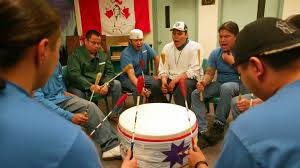 I’ve been reading a fascinating article from the Aboriginal Healing Foundation in Canada entitled Aboriginal Healing in Canada: Studies in Therapeutic Practice and Meaning. What of course is said in this article is relevant to recovery in the western world. Here are some interesting thoughts about healing:
‘The first thing that emerges from our work is that healing is a concept that is difficult to articulate, in part, because most [people participating in the research – DC] seem to feel that there is no need to articulate it and/or simply have never been asked to.
There is no dominant treatment paradigm at work here. Healing proved to be variable in meaning, often vague and fuzzy, and very idiosyncratic.
‘You Can Improve Your Life’ by Matt Kay
December 1, 2013 by
 We haven’t had a Matt Kay blog for awhile, so here is one from Wired In To Recovery in June 2012.
‘Firstly, I apologise for this list having 12 steps. I didn’t realise that it did until it was formatted better. It does seem, that although I don’t follow the 12 steps rule, a lot of my recovery based blogs/posts on here may appear to have the said number of ‘rules’. Hey, I may just like the number 12!. Well here it is, the latest one, entitled “You can Improve Your Life”. Try it!
How many times have you told yourself that you are going to improve your life, but ended doing nothing? How many times have been dissatisfied with some aspects of your life and vowed to change them, but did not follow through with your decision?
Asset Based Community Development & The Big Society
November 28, 2013 by
“Care in a Big Society comes from people. It doesn’t come from programmes and it doesn’t comes from services. And often it can’t be managed because care is the freely given gift of the heart, one person to another.”
“We need to figure out how we become caring again and where the domain of care lies. Systems, services, institutions provide services, very important, very valid services. But communities, families, neighbourhoods is where care is created.”
Cormac Russell, Managing Director of Nurture Development talks to Dominic Lodge, CEO of ROCC about ABCD, and how a big society can be a caring society.
‘Coaching, cajoling, caring: All good for recovery’ by Peapod
November 27, 2013 by
 Peapod was the top blogger on Wired In To Recovery before retiring. Here is a snappy piece on peer-based support, originally published in March 2011.
‘What do people in recovery remember as the key things that helped us initiate and then maintain the recovery journey? Do we remember the doctor getting our medication dose just right? Do we remember a brilliant care plan? Do we remember diaries and charts and exercises? Probably not.
What I remember are the people on my path. The person who answered the phone in my hour of need and who listened; the kindness and wisdom of the staff in the treatment centre; the warmth and practical help shown me when I had very little to draw on and didn’t know where to turn. Sometimes people supporting me cared enough to be honest and told me things I didn’t particularly want to hear.
Trauma and Recovery
November 26, 2013 by
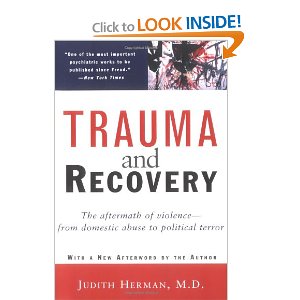 My good friend Christina found a photocopy of a chapter of Judith Herman’s book Trauma and Recovery: The aftermath of violence – from domestic abuse to political terror which had the following in:
‘The core experiences of psychological trauma are disempowerment and disconnection from others. Recovery, therefore, is based upon the empowerment of the survivor and the creation of new connections.
Recovery can take place only within then context of relationships; it cannot occur in isolation. In her renewed connection with other people, the survivor re-creates the psychological facilities that were damaged or deformed by the traumatic experience.These faculties include the basic operations of trust, autonomy, initiative, competence, identity, and intimacy.
ManyFaces1Voice: Jim Ramstad
November 25, 2013 by
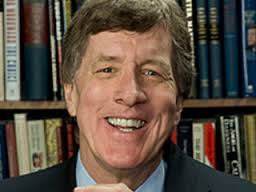 It is wonderful to see politicians advocating for recovery. Here is film of former Congressman Jim Ramstad, who has done so much recovery advocacy work, talking about recovery. This film is from ManyFaces1Voice and The Anonymous People.
“I woke up in a jail cell in Sioux Falls, South Dakota on July 31st, 1981. It was the fifth month of my first term in the State Senate. I was mortified, I was humiliated, I was embarrassed beyond words, I wanted to be dead. I wanted to be dead.
But, instead of being the end of my life, the end of my career, it was just merely the beginning. For the first time in my life, I decided to tell the truth about my drinking. Even though it was very, very humiliating and embarrassing to wake up in jail, to be under arrest, it was also very freeing to be able to talk about who I really was.”
‘Hope and Recovery: Part 2’ by Pat Deegan
November 24, 2013 by
 ‘Recently I was asked to give some brief comments for a German publication. I was asked: “Given that hope is an is an important aspect of recovery, how can professionals give hope. Have you experienced someone giving you hope? Do you remember a special situation?” I replied:
“Professionals can’t give hope. But they can be hopeful. They can root their work in hope. Hope is different than optimism.
Optimism is shallow and trite. Optimism is false hope. Workers who are optimistic are like cheerleaders at a football match. They say shallow, unhelpful things like, “I just know you can recover. Everything will be all right. Tomorrow will be a better day.”
‘Hope and Recovery: Part 1’ by Pat Deegan
November 22, 2013 by
 ‘Hope is important to recovery because hopelessness and biological life are incompatible (Seligman). When faced with adversity, human beings need hope in order to overcome. Mental health professionals can contribute to hopefulness for recovery or they can convey hopeless messages which are toxic and soul killing.
When I was diagnosed with schizophrenia at the age of 17, my psychiatrist told me that I had a disease called schizophrenia and that I would be sick for the rest of my life. He told me that I would have to take high dose haloperidol for the rest of my life. He said, I should retire from life and avoid stress.
I have come to call my psychiatrist’s pronouncement a “prognosis of doom”. He was condemning me to a life of handicaptivity wherein I was expected to take high dose neuroleptics, avoid stress, retire from life and I was not even 18 years old!
‘The Passing of a Pioneer’ by Bill White
November 21, 2013 by
“That’s the issue [recovery]: it is not about any of us. It is to keep our eye on the prize, which is what drove most of us into this field in the first place. And that prize is the person who’s in recovery and seeing them grow.”
 Here is a touching obituary of a special person in the recovery field, David Powell PhD. Bill White talks about David’s contribution and highlights his passion, drive and dedication. He also touches upon the pressing issue of finding new passionate leaders in the recovery field.
‘David Powell, PhD, who recently assumed the position of Assistant Clinical Professor within the Department of Psychiatry at Yale University School of Medicine, is not a person who needs introduction to an audience of addiction professionals and recovery advocates, but some readers may not yet know that David died in a fall at his home on November 1, 2013.
David was ever-present within the addictions field for more than four decades. His work addressed many frontier issues within the field, but he is probably best known for his pioneering work to enhance the quality of clinical supervision in addiction treatment. He pushed this agenda through his numerous publications, frenetic presentation schedule and through consultations with leading addiction treatment organizations.
ManyFaces1Voice: William Cope Moyers
November 20, 2013 by
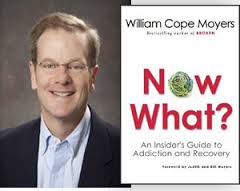 ‘I was invited to give a presentation at the Rotary club in downtown St Paul, where I got up there and started my talk and was telling them all about the statistics of alcoholism. I saw people like just dropping off, you know, checking their watches and people sneaking out the back door and I was losing them.
So I just decided if I was going to hold this audience and take advantage of this unique opportunity to speak at a Rotary club, I better grab them. So I literally threw the speech to the side of the podium there and said, “I am an alcoholic and an addict and I’m talking today about people like me.”
And I told them my Story, not my 12-step Story but my Story of addiction, my Story of recovery and the multiple treatments I’d had. And I had them! That was the day that I realised that the real power is in the Personal Story.’
‘Global Health Futures’ by Cormac Russell
November 19, 2013 by
 Over the next few days I am privileged to be attending the Global Health Futures Conference hosted by the College of Medicine, UK and Soukya Foundation. We are in Bangalore, India, and I can think of no better place to speak about Health beyond sickness and allopathic approaches.
This morning’s conference opening was refreshing, The Prince of Wales who is currently in India addressed delegates via video link, and his message chimed with that of others: Health is not a commodity, it is co-produced and must have the person and their community at the centre with medical systems in service and in reserve. The Prince of Wales cited Hazel Stuteley’s work in England and called for more approaches of this kind.
Brian Fisher and Hazel Stuteley addressed the conference in the afternoon with a passionate invitation to all in attendance to work to ensure that asset based community development is known and practiced globally on the basis that it offers a global opportunity for health improvement.
The Culture of Addiction, Part 2: Influence of Legal Status
November 18, 2013 by
 The second part of this series focuses on the impact of legal status on drug culture. Click here for Part 1.
‘Society makes judgements about different types of psychoactive drug. As Bill White points out in his book Pathways from the Culture of Addiction to the Culture of Recovery, the social status and value attached to a particular drug by society influence several things:
- The risks associated with use of the drug
- The organisation of ‘tribes’ within the culture of addiction
- The characteristics of each tribe and the impairments that members experience from both the drug and the culture itself.
‘The healing journey revealed (trauma and transformation)’ by Monica Cassini
November 15, 2013 by
 I want to introduce to a wonderful blog, Beyond Meds, by Monica Cassini and a highly recommended book which I am just due to start reading. Here, Monica talks about Peter Levine’s book ‘Waking the Tiger: Healing Trauma’:
‘I finally have the book Waking the Tiger, in my keep. It’s been on my list to read for a long time. I’ve read other works by Peter Levine and have posted about some of it on this blog, but I’ve not read this classic by him yet. I posted about his new book on Friday.
Quite wonderfully and like a good omen, when Waking the Tiger arrived in the mail a few days ago, I flipped the book open and landed on a page with no thought whatsoever. I read from the first place my eyes fell. It made me cry tears of relief as some of what he speaks of is already happening (see below), the rest of the healing I await, knowing in my heart that this is how it works and that, yes, there will be a gift in all of this pain I’ve been experiencing. The deep validation I got from reading his words was much appreciated. Like a signpost along the dark and unclear jungle path.
‘Talking to the Dalai Lama about addiction’ by Marc Lewis
November 14, 2013 by
 Can you imagine it, talking to the Dalai Lama about addiction? Well, it happened to some lucky people in the field recently, including Marc Lewis. I suggest that you read Marc’s blog directly, since you can see some photos and comments.
‘I got back yesterday around noon. What a relief it was to be home! India is overwhelming in so many ways, with poverty and raw need topping the list. To get back to this calm, orderly place was a reprieve and a pleasure, tinged with guilt at leaving all that suffering behind.
For anyone just tuning in now, I was at a week-long “dialogue” with the Dalai Lama on the theme of “Desire, craving, and addiction.” I was one of eight presenters, each of whom gave a talk to His Holiness (as he is called) and to the surrounding experts, monks, movie stars and what have you. All the talks are posted here. My talk is here. I want to tell you about two of the talks I found most fascinating and most relevant for people struggling with addiction.
Andy Puddicombe: All it takes is 10 mindful minutes
November 11, 2013 by
When is the last time you did absolutely nothing for 10 whole minutes? Not texting, talking or even thinking?
Mindfulness expert Andy Puddicombe describes the transformative power of doing just that: Refreshing your mind for 10 minutes a day, simply by being mindful and experiencing the present moment. (No need for incense or sitting in uncomfortable positions)
