‘An interview with Greg Williams – The Anonymous People’ by Veronica Valli

20956_610039903223_6779801_n-1-300x280Greg Williams and The Anonymous People are in the news a lot recently which is great. Exactly what we want. Here’s a new interview from Veronica Valli.

‘If you are in the recovery community then you would have heard of the movie The Anonymous People. A ground breaking movie that highlights the need for more advocacy and more access to treatment for addicts and alcoholics.

Many of the participants of the movie have been interviewed for my Recovery Rocks series: Emmy award winning actress and NYT best selling author Kristen Johnston, former NBA basketball player Chris Herron, Recovery advocate and media commentator Joe Schrank.
Read More ➔

Birmingham Recovery Walk

It was inspiring to see the latest cut of the film of the 5th UK Recovery Walk which took part in Birmingham in September 2013. It was great to see and hear so many recovering people having a great time. Recovery certainly rocks!

‘Mistakes are the juice of life’ by Veronica Valli

UnknownI think this new blog from Veronica Valli is a great reminder.

‘When I first got sober I was under the delusion that in order to stay sober, I had to become perfect in all areas.

It got worse when I trained to be a therapist. Because I was a therapist I thought I needed to always be serene, wise and know the right thing to say. I needed to exude a calm, reassuring confident manner with everyone, not just my clients. But no matter how hard I tried, I would f**k up.

Read More ➔

‘Open source sobriety: Getting past chauvinism in early recovery’ by Matt Robert

woman-in-cellHere’s the latest posting on Marc Lewis’s blog, a guest blog from Matt Robert.

‘Here’s another guest post, and it’s a winner. Sincere thanks to Matt Robert, a  SMART Recovery facilitator I met last June in Boston….

I’ve been spending a lot of time these days going in and out of locked detox units. And it’s interesting because, in most important ways, they haven’t changed very much at all. But I’ve changed, and the reason for my going into them has changed as well. Now I go into them because I want to, and I leave because I can.  I go into them now to talk about recovery.

Read More ➔

‘Dying of a Heroin Overdose Does Not Make You a Scumbag’ by A. Thomas McLellan, Ph.D.

Unknown-6Great article in the Huffington Post by one of the leading addiction treatment researchers involving the loss of one of my favourite actors.

‘In the wake of the tragic death of Philip Seymour Hoffman, I am shocked by the vast range of opinions and emotions that have been voiced in the public discourse. Media outlets of all shapes and forms are weighing in on his death – and specifically, the foolish, self-destructive choices he made associated with his addiction.

The explosion of speculation and moralizing surrounding this death brings to light how conflicted our feelings, as a society, are about this disease. And the science is clear on this point.

Read More ➔

‘The True, The Good and The Beautiful’ by Phil Hanlon

‘In this video Professor Phil Hanlon suggests that if we are to transcend the problems of modernity we will have to understand why we are in our current predicament. To do so, he explores Plato’s idea that human beings naturally integrate the true (science), the good (ethics) and the beautiful (aesthetics or art).

We do this in our private lives but modernity has allowed a perverted version of one of the three (a reductionist and numerically driven version of science) to eclipse the other two particularly in government and organisations. The result is ‘scientism’ which is an ideology, as distinct from true science, which is an invaluable tool.

Read More ➔

5th Year Anniversary for Ron Grover’s blog

dm1One of the most popular blog postings on this website is From Discovery To Recovery: My Emotional Journey As The Parent Of An Addict by Ron Grover. Well worth a visit.

Ron celebrated the 5th anniversary of his blog An Addict In Our Son’s Bedroom last month. Here is what he had to say:

‘On January 20, 1999 I began writing this blog. Never when I began did I think it would become what it has and last this long. At this point it has become an old friend and it keeps me connected to friends all over.

Read More ➔

Want to be part of the biggest film festival screening ever?’

HAZELDEN’S SOCIAL COMMUNITY WILL HOST A FREE ONLINE SCREENING OF THE ANONYMOUS PEOPLE AND LIVE Q&A.

On March 1st starting at 12 A.M. Eastern time (U.S.), the Hazelden Betty Ford Foundation, a founding partner of the Manyfaces1voice call-to-action campaign, will host a free online stream of The Anonymous People via the Hazelden Social Community.

On that day, The Anonymous People will be available for people all over the world to watch for 24-hours only. The film’s director, Greg Williams, and other key subjects from the film, including Hazelden Betty Ford Foundation’s William Cope Moyers, will be available for a live chat at 5 p.m. EST.

Read More ➔

‘Amplified Recovery’ by Bill White

Amplified Recovery“There is nothing about a caterpillar which would suggest that it will become a butterfly.” Buckminster Fuller

Recovery from a life-threatening condition can bring far more than the removal of pain and sickness from an otherwise unchanged life.  Confronting one’s mortality through the experiences of illness and recovery can bring unexpected gifts. 

Surviving heart disease, cancer, addiction or other life-threatening experiences can be an unlikely source of renewal and personal transformation – catalysts for living more fully and more meaningfully.  There may be something to that notion of being stronger at the broken places.

Read More ➔

Sharing Culture blog: Recovery from trauma

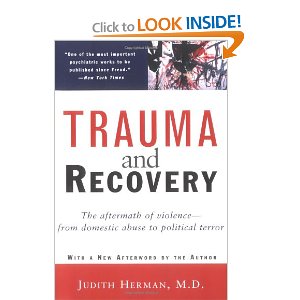
511+Nl1uNdL._BO2,204,203,200_PIsitb-sticker-arrow-click,TopRight,35,-76_AA300_SH20_OU01_I am now blogging on my new website Sharing Culture and here is a recent posting.

‘Judith Herman’s book Trauma and Recovery is a classic. Judith starts the recovery part of her book, in a chapter entitled ‘A Healing Relationship’, with some important insights into recovery and healing.

‘The core experiences of psychological trauma are disempowerment and disconnection from others. Recovery, therefore, is based upon the empowerment of the survivor and the creation of new connections.

Recovery can take place only within then context of relationships; it cannot occur in isolation. In her renewed connection with other people, the survivor re-creates the psychological facilities that were damaged or deformed by the traumatic experience. These faculties include the basic operations of trust, autonomy, initiative, competence, identity, and intimacy.

Read More ➔

Sharing Culture

rsz_img_2891Please check out my new website, Sharing Culture, which focuses on Aboriginal healing. Here is what we say on our home page:

What is Sharing Culture?
Sharing Culture is a unique initiative to empower Aboriginal people to heal and develop resilience to historical trauma and its consequences. These consequences include poor physical health, mental health problems, drug and alcohol addiction, violence, abuse  and suicide.  

Sharing Culture is based on the core values of authenticity, connection, courage, creativity, empathy and forgiveness.

Read More ➔

Stigma and Discrimination of Injecting Drug Users

“I think what we need to do is to just talk about fundamental rights. I think it is such a basic right that someone who is coming for healthcare should receive that healthcare without any judgement.”

An excellent video from the Australian Injecting & Illicit Drug Users League (AIVL). ‘A short video of professionals and drug users discussing the impact of stigma and discrimination towards people who inject drugs.’

Daniel Mackler: Motivators for Growth

One of the best videos I’ve seen in a while. Starts with a bang! Ask those who are going through crisis what they really need for themselves. Found this video on the Mad in America website. Thanks, Daniel.

‘Therapist and folk artist Daniel Mackler discusses the major barriers to creating a more effective and compassionate psychiatric system, as well as the practice of Open Dialogue in Finland, and recognizing pain as a motivator for growth.

Daniel is a musician and documentary filmmaker responsible for such titles as:  Take These Broken Wings, Open Dialogue, Healing Homes, and Coming Off Psych Drugs. For more information please visit Daniel’s website wildtruth.net.

Read More ➔

‘Traditional Healing and Psychosis vs. the Promises of Modern Science’ by Jonathan Keyes

PdxJonMad in America just keeps getting better and better. I strongly recommend keeping an eye on this excellent website. Here’s a fascinating and important blog from Jonathan Keys.

‘As noted by Robert Whitaker in his book Anatomy of an Epidemic, the World Health Organization reported that the prognosis for someone experiencing psychosis is far better in developing countries than in industrialized countries

Mr. Whitaker and others posit that this is  due to the treatment models used in the developing world, as well as to debility and chronicity caused by psychiatric drugs themselves.  I think this is undoubtedly true.

A number of other reasons for the disparity in outcome have been suggested.  Some have put forward the idea that there has been a rush by consumers to apply for this disability money, leading to an increase in apparent chronicity.  While this is quite possible, I doubt that this alone explains the large gap in outcomes.

Other researchers have suggested that family and community support networks are often stronger in developing countries and that there is perhaps more tolerance and acceptance of people with psychotic tendencies.

Read More ➔

Teach Compassion: Don Siegel

“Instead of just Reading, wRiting and aRithmetic, we need to have a new 3 Rs, which is reflection, relationships and resilience.”

Now here is a really interesting talk about us as human beings and a way forward to help improve our education system, society and planet. Though-provoking stuff!

“Dan Siegel emphasizes compassion as a key component of a healthy mind. Presented as part of the TEDxGoldenGateED event on June 11, 2011.’

Why not check out Don Siegel’s website?

My Favourite Blogs: ‘Recovery and the Conspiracy of Hope’ by Pat Deegan

2007_0116walpole0154Here is a classic presentation made by Pat Deegan at “There’s a Person In Here”, The Sixth Annual Mental Health Services Conference of Australia and New Zealand. Brisbane, Australia.

Beautiful writing, a must-read. I’ll whet your appetite:

‘I love the word conspiracy. It comes from the Latin “conspirare” which means to breath the spirit together. What is the spirit we are breathing together here today?

It is a spirit of hope. Both individually and collectively we have refused to succumb to the images of despair that so often are associated with mental illness.

Read More ➔

My Favourite Blogs: Beth Burgess – ‘What is Recovery from Addiction?’

I love this piece of film from Beth Burgess, a recovery coach with Smyls.
 
There’s a big difference between sobriety and recovery. Beth points out that many people give up trying to stop drinking after a few days because it feels too difficult. They don’t realise that these bad feelings don’t last if you make the journey to recovery.

Beth describes her first experience of sobriety – “It was horrible” – before she relapsed. Now she is in recovery, she doesn’t think about alcohol. She loves her life. How do you get to that stage?

Excerpt from Anna’s Recovery Story: ‘Should I or shouldn’t I?’

stories-02Through his heroin addiction and recovery, Anna’s brother has taught her so much about life, including the most valuable lesson she could ever learn – you can get through anything.

“… there’s no way I can tell this story without saying that my brother is truly the most inspirational person I know. I am in awe of who he is and what he’s achieved. He has taught me so much about life, including the most valuable lesson I could ever possibly learn – that you can get through anything.”

‘6. Emotional release
My parents could see that I wasn’t really coping with what was happening and they convinced me to go and see a counsellor. I went to see a very expensive psychologist for three sessions. The first two sessions were spent crying and telling the same story I’d told everyone else a thousand times.

Read More ➔

Excerpt from Brad’s Recovery Story: A Spiritual Awakening

stories-04Here’s an excerpt from Brad’s Story. Brad was in the process of breaking away from a life of drinking, crime and violence.

‘3. Starting with The Breakfast Club
In 2006, Thames Valley Police informed me that Paula had taken her own life. This made me angry. I thought she was selfish leaving three kids behind, although I’d left my kids behind years ago.

I continued drinking and six months to the day my best friend Mick died in my arms at Calderdale Royal, having fallen and banged his head. Mick’s death crushed me. It was this was the first time I can remember showing any real emotion. To this day, I shed a tear when talking about him, as I am now. We had done everything together.

Read More ➔

‘Endgame’ by Phil Hanlon

Continuing the excellent series of videos from Professor Phil Hanlon’s website Afternow.

‘In a finite world, infinite growth is not possible: this is the crisis of sustainability that people everywhere must now face. In this video Phil Hanlon describes how issues like climate change, peak oil, population growth and resource depletion provide convincing evidence that there are limits to conventional economic growth.

Almost every aspect of life is characterised by growth, peak and decline. This is true of species, physiological systems, businesses and much else. The problem is that we are not good, as a species, at seeing the point at which decline is likely.  

Read More ➔