‘Prescribing Influences in Mental Health’ by Heather Ashton

Talk given at the Adverse Psychiatric Side Effects Conference, April, 2008.

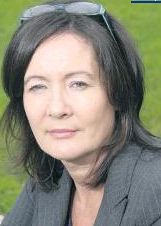
‘C Heather ASHTON DM FRCP, Emeritus Professor of Clinical Psychopharmacology, Newcastle University, worked in the drug and poisons information unit at Newcastle Royal Infirmary for 15 years. An expert on the effects of prescription drugs on the mind.

Professor Ashton’s manual for benzodiazepine withdrawal is available worldwide at no financial benefit for the author but of great emotional and personal benefit to many thousands of people who have accessed this detailed manual. The manual is available on benzo.org.uk and many other web sites.
Read More ➔

‘Recovering from Psychiatry – Tips and Some Hope For Those in Psychiatric Drug Withdrawal’ by Laura Delano

This video offers tips, suggestions, and hope for those in psychiatric drug withdrawal from ex-“Bipolar” patient and psychiatric liberation writer and activist, Laura Delano. An excellent video.

Psychiatric Epidemic (Part 1): The Roots – Robert Whitaker

The Psychiatric Epidemic – does long-term use of medication decrease the chance of recovery?

PsykoVision in Denmark has recently translated and published Robert Whitaker’s book, “Anatomy of an Epidemic”. In honor of this, PsykoVison has invited Whitaker to speak at a small conference in Copenhagen.

This is Part 1: The Roots of the Epidemic, where Robert Whitaker guides us through the history of psychiatric medication and presents the scientific evidence that proves that the common wisdom about theses drugs is mostly based on falsehoods.

‘Complexity’ by Jonathan Keyes

PdxJonThis powerful blog is one of the best I have read in some time. Jonathan recognises the challenges we face in trying to improve the mental health system. Essential reading!

‘The movement to radically reform the modern mental health system is rooted in a desire to offer people going through emotional distress a wider variety of options for care.  As a society we have largely shifted to a model of care that is limited to a select few options that primarily advocates the use of strong psychotropic drugs and simplistic diagnostic labels for complex and widely varying narratives. 

Recently I read that from 1998 to 2011 there has been a 400 percent rise in the prescription of antidepressants.  Likewise in Canada, at least 60 percent of female prison inmates are prescribed psychiatric drugs.   

Most people receive psychiatric medication from their general practitioner.  The stigma of going on an antidepressant has been lessened to such a degree that one out of nine people in the US now takes this class of drug.

Read More ➔

‘PROTEST PSYCHIATRY – My Newest Film, Free!’ by Daniel Mackler

‘I just made a new film, called PROTEST PSYCHIATRY, on the psychiatric survivor-lead protest of the American Psychiatric Association’s annual meeting in New York City.  And I’m thrilled by how it turned out.  For starters, I filmed it on no budget whatsoever, created the entire film in three days, and have uploaded it straight to Youtube, so it’s freeeeeee!

This film, for me, was an experiment.  I have been feeling lost as a filmmaker for the past year or more.  I think the big reason has been the process:  it’s huge and expensive and time-consuming.  Each film has absorbed months, literally months, of my life.  Well, all that changed five days ago.

Five days ago (May 2) I was hit with the inspiration bug:  to make a film a new way.

Read More ➔

‘Psychiatry: We Need a Truth and Reconciliation Commission in Mental Health’ by Leah Harris

lharris‘Speech written for the protest of the American Psychiatric Association – May 4, 2014 

My name is Leah Harris and I’m a survivor. I am a survivor of psychiatric abuse and trauma. 

My parents died largely as a result of terrible psychiatric practice. Psychiatric practice that took them when they were young adults and struggling with experiences they didn’t understand. Experiences that were labeled as schizophrenia. Bipolar disorder.

My parents were turned from people into permanent patients. They suffered the indignities of forced treatment. Seclusion and restraint. Forced electroshock. Involuntary outpatient commitment. And a shocking amount of disabling heavy-duty psychiatric drugs. And they died young, from a combination of the toxic effects of overmedication, and broken spirits.

Read More ➔

‘People with psych labels suffer discrimination: mental health professionals are often guilty of such prejudice’ by Monica Cassani

Epiphany - 2014-03-23_240560_sense-of-place.jpgExcellent posting from one of my favourite blogs.

‘People with psychiatric labels suffer discrimination that is not only demeaning but can also be dangerous.

A 2007 UK study by the Royal College of Psychiatrists revealed that prejudicial treatment of mentally ill patients extends to physical medical care; they receive poorer quality of care and doctors spend less time with them possibly leading to higher rates of death and preventable disease.

Though tragic, the more scandalous aspect of the phenomena is the fact that mental health professionals apply the same prejudices to those whom they attempt to treat. The worst thing someone in mental distress can experience is dehumanizing treatment from other human beings who are supposed to be caring for them.

Read More ➔

‘Neutralising Suffering: How the Medicalisation of Distress Obliterates Meaning and Creates Profit’ by Joanna Moncrieff

jmoncrieffThere is so much great content on Mad in America. Here’s a piece from British psychiatrist Joanna Moncrieff, one I wholeheartedly endorse. In fact, this blog is essential reading. I first posted this blog on Recovery Stories in 2014. The original article on Mad in America has all the references.

‘People have used psychoactive substances to dull and deaden pain, misery and suffering since time immemorial, but only recently, in the last few decades, have people been persuaded that what they are doing in this situation is rightly thought of as taking a remedy for an underlying disease. The spread of the use of prescription drugs has gone hand in hand with the increasing medicalization of everyday life, and a corresponding loss of the previous relationship that people had with psychoactive substances.

Elizabeth Gaskell’s novel Mary Barton was originally to be named after Mary’s father John Barton, a working class factory hand addicted to opium. The novel depicts the unimaginable poverty and exploitation of industrial Manchester that made opium-induced oblivion an appealing escape.

Read More ➔

‘Challenging the Status Quo’ by Maria Bradshaw

lfennellI was greatly moved by this recent article on Mad in America. Having spent 25 year working as a neuroscientist and interacting with drug companies and psychiatrists, i can see the frustrations (and the hypocrisy of the system) here:

‘In 2009, my friend Leonie’s 22-year-old son Shane killed himself and another young man after taking Citalopram for 17 days.

Shane is the kind of son every mother dreams of. A student at prestigious Trinity College in Dublin, he was devoted to his younger brothers and sister, regularly gave money and the clothes off his back to homeless people, didn’t drink or smoke and was kind, handsome, gentle and much loved by his family, friends and college professors.

Read More ➔

‘About Mad in America’ by Robert Whitaker

“We started Mad in America as a webzine in February of 2012 and we launched it with the thought that it would become a forum for rethinking psychiatry and also for building a community of people, an international community of people interested in that topic.”

I love the Mad in America website and have been inspired by Robert Whitaker’s books. We’ll be referring to content on this website a great deal. In this short film clip, Robert describes the purpose, history, achievements, community, and future plans of Mad In America.

Development of the recovery model in the mental health field, Part 1

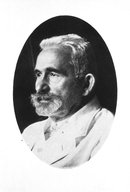
rsz_emil_kraepelin_1926A recovery revolution is occurring in both the addiction and mental health arenas that is challenging practices within both fields. In various places in different countries, recovery is becoming the concept around which addiction and mental health systems of care are being organised.

A transformation of systems of care is underway, shifting away from systems based on pathology to ones that promote wellness and recovery. Hopefully, these changes will also see a much needed bridging between the addiction and mental health fields.

Where did this interest in recovery arise? And why do we feel that we need to change our present systems of care? In this, and in following blogs, I will look briefly at the development of the recovery model in the mental health field.

Read More ➔