
Marion talks about York and the surrounding area where she was brought up and her family have been living for generations.
Marion’s Story: My Family, Father’s Side
September 17, 2013 by
Marion learnt a great deal about her culture, land and spirituality from her father and his side of the family. They had lived in York and surrounds for generations.
Marion’s Story: My Family, Mother’s Side
September 17, 2013 by
Marion’s mother was well-educated and had lived with wealthy white families. She taught her the ‘white’ way of doing things.
Marion’s Story: My Identity
September 17, 2013 by
Marion has a strong identity which has helped shape her into who she is today.
Marion’s Story: ‘My Spirituality’
September 17, 2013 by
Marion’s spirituality is very important to her and is central to everything else that matters in her life.
Marion’s Story: My Culture
September 17, 2013 by
Marion believes her culture is changing and she has learned to adapt when changes occur.
Marion’s Story: My Education
September 17, 2013 by
Marion’s parents knew how important a good education was for her. Despite racism, set-backs and a low confidence, Marion kept pushing forward.
Marion’s Story: My Resilience
September 17, 2013 by
A number of factors have contributed to the development of Marion’s resilience and her ability to live successfully in two cultures.
Anna’s Moment of Clarity
September 17, 2013 by
 Anna’s brother had developed a heroin addiction and she was becoming overwhelmed by the whole situation.
In her Recovery Story, here’s the lead up to Anna’s Moment of Clarity:
‘After this incident in the city, I became unhealthily obsessed with finding out as much as I could about heroin, as well as trying to monitor my brother’s behaviour and uncover his lies. I read every book I could get my hands on, including a few books I’d had as a teenager – Go Ask Alice, Junky and H: Diary of a Heroin Addict.
Marion’s Story: Conclusion
September 17, 2013 by
Marion’s family have faced adversities, risen above them, and taught Marion to be the resilient person she is today.
‘New Life Acceptance’ by Matt Kay
September 16, 2013 by
 Here’s another old blog from WITR blogger Matt Kay, this one from April 2012.
‘I’ve not been on here for absolutely ages but I’m still living the dream. I made it to two years clean and sober (Aprils Fools Day too!) Just thought I’d share this with you… it’s called “New Life Acceptance”, hence the title.
1. I have a life-threatening problem that once had me. I now take charge of my life and my addiction. I accept the responsibility.
Surviving What?
September 16, 2013 by
Marion’s research findings provide insights into the following question: In what context do Aboriginal people need to be resilient?
Surviving What?: Experience Surviving Racism
September 16, 2013 by
Most of Marion’s study participants talked about having to survive racism, with some experiencing racism every day.
Canada’s Recovery Day Story
September 16, 2013 by
 When filmmaker Greg Williams created a page on “Kickstarter” he dreamed of raising enough funds to produce what is now The Anonymous People. However, this Kickstarter video and description of the project carried a power great enough to change the lives of many across the world.
The project ignited the spark in two woman in recovery, Lorinda Strang and AnnMarie McCullough who planned and championed the first-ever Recovery Day in Vancouver with only four weeks to prepare.
Please check out their film on ManyFaces1Voice and the Canadian Recovery Day website.
Surviving What?: Surviving Colonialism
September 16, 2013 by
All study participants discussed racist policies, arising from colonialism, that excluded Aboriginal people from having any rights or dignity.
Surviving What?: Experience of Being Taken Away
September 16, 2013 by
The taking of Aboriginal children from their families by the authorities still impacts on Aboriginal people today.
Maetta Broadus on ManyFaces1Voice
September 14, 2013 by
 “Once you’re an addict and once you are seen in society as an addict or an alcoholic you’re an abnormal to society. You are something that no one wants in their community. you’re that things that they have to hide.
The stigma is that they’re doing it because they want to. But my experience is that I didn’t become a drug addict because I wanted to.”
See Maetta Broadus speak on ManyFaces1Voice, the website promoting The Anonymous People film. Maetta is a community activist and recovery ambassador from Kentucky. She serves on the board of People Advocating Recovery, belongs to Kentuckians for the Commonwealth, and is a certified recovery dynamics instructor.
‘What Amy Winehouse’s Birthday Means to Me’ by Beth Burgess
September 14, 2013 by
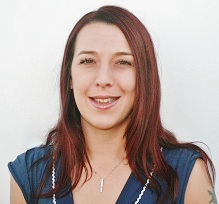 Beth is really getting prolific at the Huffington Post. I’ll keep pushing her blogs out as I like her writing. So here we go again.
‘I was 27 when I decided to stop drinking; the same age at which Amy Winehouse sadly died while in the throes of her own battle with the booze. Although I didn’t find immediate recovery after my initial decision to quit, I was already sober when Amy’s death was announced in July 2011.
Even though the rest of the world seemed to be expecting the news, I recall feeling shocked to hear of the British singer’s death. It’s part of the mental block among alcoholics, where you downplay the consequences of drinking. I never thought the worst would happen to me. I never thought it would happen to her. She probably never thought it would either. It’s classic denial.
