
Recovery Stories Weekly, Issue 5

In addition to my regular blog posts this week, I added three YouTube films to the Film section and four posts to the Healing Section of the website this week (one also appears as a blog post. Here are all the week’s new posts on the website:

Women: Drinking and Recovery by Dr David McCartney: David describes a research paper that examined 23 published studies focused on women’s pathways into dependence and then into recovery. Four major themes were identified.

Factors Facilitating Recovery: A Summary: Provides a summary for each of 11 factors and links to my earlier blog posts describing each of the factors. Taken from a chapter of my eBook Our Recovery Stories: Journeys from Drug and Alcohol Addiction.

Read More ➔

Alcohol Dependence

Here is an article I first wrote as a Background Briefing for Drink and Drugs News (DDN), the leading UK magazine focused on drug and alcohol treatment, in February 2005.

‘There has been a considerable scientific effort over the past four decades in to identifying and understanding the core features of alcohol and drug dependence. This work really began in 1976 when the British psychiatrist Griffith Edwards and his American colleague Milton M. Gross collaborated to produce a formulation of what had previously been understood as ‘alcoholism’ – the alcohol dependence syndrome.

The alcohol dependence syndrome was seen as a cluster of seven elements that concur. It was argued that not all elements may be present in every case, but the picture is sufficiently regular and coherent to permit clinical recognition.

Read More ➔

Learning About Addiction Treatment, Part 7

I continue my story about what I learnt about addiction recovery and treatment from Noreen Oliver, and her staff and clients, during my visits to the structured day care programme at BAC O’Connor back in 2004. (See here for my first blog post relating to these visits).

The majority of the clients at BAC O’Connor had severe and chaotic drug and/or alcohol use, a variety of other problems, including being homeless, and a strong engagement in criminal activities. Many referrals came from criminal justice services. The supported housing programme allowed BAC O’Connor to house and rehabilitate this particularly vulnerable population of clients.

Read More ➔

Learning About Addiction Treatment, Part 6

I earlier began a series of blog posts (starting here) describing what I learnt about addiction, addiction recovery and addiction treatment after I had closed down my neuroscience laboratory in the early 2000s. I started visiting a local treatment agency, local treatment agency West Glamorgan Council on Alcohol and Drug Abuse (WGCADA), in Swansea, South Wales. At the same time, I was conducting an evaluation of projects supported by the Drug and Alcohol Treatment Fund in Wales.

I continue this series of blog posts by describing what happened, and what I learnt, after I first visited the treatment agency BAC O’Connor in 2004. Here is the start of a new story, one where I saw recovery literally oozing out of the walls of a building.

Read More ➔

Describing Healing: Professor Helen Milroy

3652715I came across a beautiful description of healing in the Forward of the fascinating book Traditional Healers of Central Australia: Ngangkari. I quote this description here, although I have altered the paragraphs

“Healing is part of life and continues through death and into life again. It occurs throughout a person’s life journey as well as across generations. It can be experienced in many forms such as mending a wound or recovery from illness.

Mostly, however, it is about renewal. Leaving behind those things that have wounded us and caused us pain. Moving forward in our journey with hope for the future, with renewed energy, strength and enthusiasm for life.

Read More ➔

What is Healing to Me?: Australian Aboriginal & Torres Strait Islander Healing Foundation

9157171_origHere are quotes from six different people participating in a national consultation process:

‘Initially, I think healing is about recognition. Recognition, both internally and externally, of self, of others and as a collective that there are ‘issues’. That there is pain. That there is anger and hurt and sadness that stems from past events. And that this anger, hurt and sadness is handed down, like an unwanted legacy, though the generations of our people. Once there is that recognition, collective recognition, of both Aboriginal and Torres Strait Islander people and of all Australians, then begins the process of healing. Healing is a change. A change of attitude, a change of behaviours that have become entrenched.’

Read More ➔

What is Healing to Me?: Aboriginal Healing Foundation in Canada

Unknown-5Here is a summary of the findings from interviews of clients and staff of five healing programmes in Canada:

“… healing is an active, not passive, process: it is something you do, not something you think or that is done to you. In this sense, healing is work, it is ongoing and requires dedication. First and foremost, it requires commitment from the individual. No one can heal you or make you heal. Personal agency is stressed above all else.

The dominant metaphor in our research describes healing as a journey… The journey has a clear direction toward healing, yet it is a journey fraught with challenges. Falling off the path of healing is common, even expected by treatment staff. There is no shame to temporary setbacks, nor are these seen as failures; rather, the individual is welcomed back to continue on his or her journey when he or she feels ready…

Read More ➔

On the Nature of Healing: Judy Atkinson

As some of you know, I was inspired to work in the healing trauma field in large part by Judy Atkinson’s wonderful book Trauma Trails: Recreating Song Lines – The Transgenerational Effects of Trauma in Indigenous Australia. Here is a short bio of Judy, taken from the We Al-li website:

‘Emeritus Professor Judy Atkinson is a Jiman (central west Queensland) and Bundjalung (northern New South Wales) woman, with Anglo-Celtic and German heritage.

Her academic contributions to the understanding of trauma related issues stemming from the violence of colonisation and the healing/recovery of Indigenous peoples from such trauma has won her the Carrick Neville Bonner Award in 2006 for her curriculum development and innovative teaching practice. In 2011 she was awarded the Fritz Redlick Memorial Award for Human Rights and Mental Health from the Harvard University program for refugee trauma.

Read More ➔

Factors Facilitating Recovery: A Summary

In a series of blog posts over the past eight weeks, I have described a variety of factors that facilitate the process of recovering from addiction. These descriptions have come from a chapter of my eBook Our Recovery Stories: Journeys from Drug and Alcohol Addiction. Here, I briefly summarise these factors and provide links to the relevant blog posts.

Hope: This hope is based on a sense that life can hold more for one than it currently does, and it inspires a desire and motivation to improve one’s lot in life and pursue recovery.

Empowerment: To move forward, recovering people need to have a sense of their own capability, their own power.

Self-Responsibility: Setting one’s own goals and pathways, taking one’s own risks, and learning one’s own lessons are essential parts of a recovery journey.

Read More ➔

‘Women: Drinking and Recovery’ by Dr David McCartney

My good friend Michael Scott, of Michael’s Recovery Story, and I attended a Public Awareness Meeting of Alcoholics Anonymous (AA) in a Perth suburb today. I was asked to talk for five minutes about my recovery work over the years. I also described some of the factors that facilitate recovery.

We listened to a number of AA members share their stories and I have to say that I was blown away by the high quality of the shares. They were moving, inspirational and insightful. More women than men spoke. It was such a good meeting and I really enjoyed talking to people after the actual meeting ended.

Imagine my surprise when I got home to find that my good friend Dr David McCartney had just uploaded a blog post about women, drinking and recovery.

Read More ➔

Recovery Stories Weekly, Issue 4

This week’s blog posts were some of my favourites from earlier times. I haven’t added anything else in other sections of the website, since I’ve been busy with other activities. Here are this week’s posts:

‘A Journey Towards Recovery: From the Inside Out’ by Dale Walsh: ‘Discovering and participating in this culture of healing has given me the hope and courage to travel the path of recovery. This is a culture of inclusion, hope, caring, and cooperation; of empowerment, equality, and humor; of dignity, respect, and trust.’

Read More ➔

How Trauma Flows Through the Generations

‘Our first generations were killed and imprisoned, and females sexually misused. Our second generations turned to alcohol or drugs as their cultural and spiritual identity was damaged; in our third generations we had spousal assault and societal trauma.

In our fourth generations the abuse moves from spousal abuse to child abuse or both. In the fifth generations, the cycle repeats as trauma begats violence, begats trauma. And in our sixth generations the grown children of the conquerors begin to live in fear of the grown children of the conquered.’ Judy Atkinson

The title of Judy Atkinson’s book is particularly well-chosen—trauma leaves trails across the generations. In the quote above, Judy briefly summarises the violence that has been experienced by Aboriginal people, violence that has produced trauma which has become cumulative and more complex across generations. This trauma has impacted upon individuals, families and communities.

Read More ➔

Research Shows the Dynamic Spread of Happiness in a Large Social Network

I am continuing this week’s focus on some of my favourite blog posts from the earlier days of Recovery Stories and our online community Wired In To Recovery. I first wrote this blog not long after the launch of our online recovery community.

‘Last week, the British Medical Journal published a very interesting article on the dynamic spread of happiness in a large social network. This high quality research involved a longitudinal analysis over 20 years of participants in a long-term health study in America (the Framingham Heart Study, see at end of Blog for further details].

The research involved 12,067 individuals who were connected to someone else in this population at some point between 1971 and 2003. Researchers measured happiness by a questionnaire and conducted a complicated statistical analysis of the relationships between people in this large social network.

Read More ➔

Treatment and Recovery Disconnection

William White describes how somewhere in the process of the professionalisation of addiction treatment in the US, treatment got disconnected from the larger more enduring process of long-term recovery.

He points out that we are recycling large numbers of people through repeated episodes of treatment. Their problems are so severe and recovery capital so low, there is little hope that brief episodes of treatment will be successful. We end up blaming them for failing to overcome their problems.

Read More ➔

‘An Intervention Gone Wrong’ by Bill White

I first spotted an earlier version of this article on Bill White’s website in 2013. The article really made me laugh so I couldn’t resist posting it. Since then, Bill has posted this version of the little gem (in 2017), so I decided to post it.

‘The most famous and controversial treatment for addiction in the 19th century was Dr. Leslie Keeley’s Bichloride of Gold Cure.  Dr. Keeley franchised his cure procedures through more than 120 Keeley Institutes scattered across North America and Europe.  These Institutes became the preferred drying out institutions for the rich and famous in the 1890s. But the problem then (as today) was this: Even where there are financial resources to pay for such treatment, how can the afflicted person be convinced to enter such a treatment institution?

Read More ➔

‘Experiences of a Mother of Two Young Heroin Addicts’ by Mark

A very moving blog which first appeared on Wired In To Recovery (WITR) in May 2009. Mark blogged regularly on WITR until the community closed. I also published this on Recovery Stories in June 2013.

‘We found my 20 year old brother dead of an overdose. He had just kicked the habit so tolerance was low. He started a job and the first payday was his last. Mum wrote this after I got clean. Copy and use it anywhere it can be of use.’ Mark

‘What is it like being the mother of an addict? (Experiences of a Mother of Two Young Heroin Addicts)

Read More ➔

‘A Journey Toward Recovery: From the Inside Out’ by Dale Walsh

I’ve been away visiting family this weekend and haven’t had a chance to prepare a new set of blog posts for this week. I therefore thought I would re-post some of my old favourites from the past this week, which will give me time to prepare new ones for next week. 

One of my favourite articles about recovery was written by Dale Walsh back in 1996 which really summed up what recovery and recovery principles mean to a person who has been suffering from mental health problems. I thought I would highlight some of the main points here. 

The Problem
‘For many years I believed in a traditional medical model. I had a disease. I was sick. I was told I was mentally ill, that I should learn to cope with my anxiety, my depression, my pain, and my panic. I never told anyone about the voices, but they were there, too. I was told I should change my expectations of myself and realize I would always have to live a very restricted life.

Read More ➔

Recovery Stories Weekly, Issue 3

In addition to my regular blog posts this week, I added three posts to the Healing Section of the website this week (one also appears as a blog post). Here are all the week’s new posts:
Anna’s Moment of Clarity: Anna’s story highlights the need for family members to accept that they cannot take ownership of their loved one’s addiction. They are not responsible for the addiction and they cannot do recovery for their loved one.

Factors Facilitating Recovery: (Gaining) Recovery Capital: Recovery capital is the quantity and quality of internal and external resources that one can bring to bear on the initiation and maintenance of recovery. It includes personal, family/social and community factors.

Read More ➔

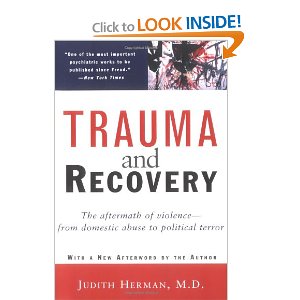
Judith Herman: Trauma and Recovery

511+Nl1uNdL._BO2,204,203,200_PIsitb-sticker-arrow-click,TopRight,35,-76_AA300_SH20_OU01_1. Principles of recovery (healing)
‘The core experiences of psychological trauma are disempowerment and disconnection from others. Recovery, therefore, is based upon the empowerment of the survivor and the creation of new connections.

Recovery can take place only within the context of relationships; it cannot occur in isolation. In her renewed connection with other people, the survivor re-creates the psychological facilities that were damaged or deformed by the traumatic experience. These faculties include the basic operations of trust, autonomy, initiative, competence, identity, and intimacy.

Just as these capabilities are formed in relationships with other people, they must be reformed in such relationships.

Read More ➔

Gabor Maté: Our Strange Indifference to Aboriginal Addiction

Unknown-8“Addicts are made, not born, and the most common precursors are early childhood privation, neglect and abuse. For several generations, Canada’s native children have been far more likely to suffer grinding penury, abuse and childhood substance addictions than non-natives.” Gabor Maté

Marlene, a 46-year old native woman, sat in my office last week, slumped on her chair, blinking away her tears. I’d just shared the news that her most recent blood test confirmed she had “seroconverted” to HIV, become infected with the AIDS virus.

Although an injection drug user, Marlene had always been careful to use clean needles. Her route of infection was sexual contact – with the resigned naiveté characteristic of so many aboriginal women in Vancouver’s Downtown Eastside, she had trusted a man, himself a drug addict, who assured her that he was a safe partner.

Read More ➔